Viking
-
Posts
6,052 -
Joined
-
Last visited
-
Days Won
78
Content Type
Profiles
Forums
Events
Everything posted by Viking
-
The FFH-TRS is an investment for Fairfax. From my perspective there are two important considerations: 1.) What is a share of Fairfax worth? 2.) What are the risks of a big drawdown in Fairfax's shares? (With the probability of it actually happening.) On the first point, to state the obvious, Fairfax KNOWS what Fairfax is worth - or at least they know much better than the rest of us. If they still own the FFH-TRS position it likely tells you something about how they view valuation. On the second point, Fairfax is generating record (or close to) earnings. And they look very well positioned for the next 3 or 4 years (I don't look out longer than that). If Fairfax's stock sells off, Fairfax will likely be in a position to buy back a ton of shares at low prices. That is what they did in 2020 and 2021 when they had no money. Well today, the cash is rolling in. Volatility has been great for Fairfax's earnings (looking at the past 5 years). Active management exploits volatility (that is when Mr Market is behaving like an idiot - acting very irrational). Fairfax investors worry about volatility... it is kind of ass backwards. If history is any guide, Fairfax investors should be praying for volatility. I say this tongue in cheek (a little).
-
@gamma78 You ask the question I am grappling with the most these days: "What will Fairfax do with the significant earnings they are currently generating." But more specifically, what will be the impact on Fairfax's different income streams in 2024 and 2025. We have some answers: 1.) dividend = $15 - this is about 10% of Fairfax's earnings. 2.) share buybacks = $1 billion? - this is about 30% of earnings 3.) buy out minority partners in insurance = $500 million? - this would be about 15% of earnings - this hasn't happened The three items above 'account' for about 55% of earnings - and are built into my 2024 forecast. The remaining 45% of earnings? This is probably a good example of where my forecast is too conservative. Especially when compounded over a couple of years. I am forecasting modest organic growth in net premiums written. And small growth in the investment portfolio (including fixed income). I am not including any large, one time investment gains in my forecast for 2024 or 2025. We know there will likely be some (at some point over the next 24 months) - we just don't know what they will be, their size and the timing. I keep waffling on whether to keep these in the forecast... I removed them from the latest. I would appreciate how other board members are thinking about this same question: "What will Fairfax do with the significant earnings they are currently generating." And what will be the impact on Fairfax's different income streams in 2024 and 2025. ---------- Eurobank dividend: Earlier this year I had assumed Eurobank's dividend would show up in 'interest and dividend income.' But at the AGM the people I talked to said because Eurobank is an associate holding the dividend will not be reported in interest and dividend income but instead will show up in the cash flow statement. Perhaps those who have an accounting background can comment further. --------- The impact of the Digit IPO will be something to monitor. Especially once Fairfax gets their ownership position confirmed. There may be a realized gain (I am not sure how everything will play out from an accounting perspective). I am not concerned.
-
Earnings Estimates – Two Year Summary for 2024 & 2025 Below is my updated two-year earnings estimate for Fairfax. This forecast includes learnings from Fairfax’s Q1, 2024 earnings release and ‘new news’ from the past couple of months (since the last update). Summary My current estimate is Fairfax will earn about $155/share in 2024 and about $160/share in 2025. I think both of these estimates have been constructed using mildly conservative assumptions. Will retained earnings be re-invested in a way that builds value for shareholders? Perhaps the hardest piece to forecast with Fairfax today is what they will be doing with the substantial amount of earnings that they are currently generating (more than $4 billion per year). And the impact the re-investment of current earnings will have on future earnings. Both the size - how much. And the speed - how fast. When it comes to re-investing earnings, Fairfax has lots of very good options: Grow insurance (continuation of the hard market; bolt-on acquisitions) Buy out minority partners in insurance? Buy equities or fixed income securities? Buy back a meaningful amount of Fairfax stock? Other? Looking at the last 5 years, the management team at Fairfax has done an outstanding job with capital allocation. My guess is they will continue to make good decisions (on balance) and this will benefit shareholders in the coming years – likely providing a tailwind to my forecasts for 2024 and 2025. What are current analyst’s earnings estimates for Fairfax? Using Yahoo Finance as a guide (June 3, 2024), analysts estimate that Fairfax will earn: US$138/share (C$188) in 2024 US$152/share (C$208) in 2025 From what I can see, most analysts are assigning little benefit to the reinvestment of Fairfax’s significant earnings and the company’s proven capital allocation skills. My read is most analysts will include these benefits into their earnings estimates only after Fairfax has announced something. Interest rates: I am assuming interest rates remain roughly at current levels (at June 3, 2024). Of course, this will likely not be the case. Given the duration of the fixed income portfolio (a little under 3 years?) is now closer to the duration of the insurance liabilities (a little under 4 years?), changes in interest rates might roughly balance out (in ‘net gains/losses on investments’ and ‘effects of discounting and risk adjustment- IFRS 17’). Below is a 5-year snapshot of earnings for Fairfax. It communicates in a concise manner the dramatic transformation that has happened at the company, beginning around 2021. There has been a spike in operating income per share – from an average of $39/share from 2016-2020, to $192/share in 2023. This much higher amount now looks like the new baseline for the company. For 2024, my estimate has operating income increasing to $199/share, which is a 400% increase from the average from 2016-2020. ‘Normalized earnings’ at Fairfax have moved to a much higher level – and, importantly, this higher level looks durable/sustainable. What are the key assumptions built in to the forecast? 1.) Underwriting profit: Estimate = $1.24 billion in 2024. Net premiums written growth of 12% in 2024 and 3% in 2025. This is being driven by: Continuation of the hard market, which we estimate will add $1 billion of NPW. The Gulf Insurance Group (GIG) acquisition, which will add $1.7 billion of NPW. Combined ratio (CR) of 95% in both 2024 and 2025. Catastrophe losses: 2024 will be a more normal year (higher than 2023). Fairfax continues to modestly shrink their total catastrophe exposure. Reserve releases: continuation of the positive trend observed in 2023. 2.) Interest and dividend income: Estimate = $2.38 billion in 2024. Interest and dividend income in Q1 2023 was $590 million; this provides a good baseline. GIG added $2.4 billion to the total investment portfolio in late 2023. Rate cuts by global central banks could be a headwind in 2H, 2024. 3.) Share of profit of associates: Estimate = $900 million in 2024. Earnings at Eurobank and Poseidon/Atlas should continue to chug along. Stelco (steel) EXCO (nat gas prices) results will be volatile. GIG will be a small headwind as it is now a consolidated holding. 4.) Effects of discounting and risk adjustment (IFRS 17): The two key drivers for this bucket are the trend in net written premiums of the insurance business and changes in interest rates. Net written premiums growth of 12% in 2024 should be a tailwind. This bucket is difficult to model – my confidence level in my estimates is low. 5.) Life insurance and runoff: Estimate = $250 million in 2024. This combination of businesses lost about $348 million in 2023 (not including investment returns). I expect 2024 to be a little better, with life insurance being a modest tailwind. 6.) Other (revenue-expenses) - non-insurance subsidiaries: Estimate = $150 million in 2024. Recipe, Dexterra, AGT, Grivalia Hospitality, Boat Rocker etc. This combination of businesses earned $46 million in 2023. This bucket is poised to grow nicely in the coming years. Yes, the results will be lumpy. 7.) Interest expense: Estimate = $610 million An increase to prior year which was $510 million. 8.) Corporate overhead and other: Estimate = $435 million in 2024. A modest increase to prior year which was $430 million. 9.) Net gains on investments: Estimate = $1.075 billion in 2024. The big driver will be the FFH-TRS position. $250/share x 1.96mn shares = $500 million? Remaining mark to market holdings of $7 billion x 7% return = $500 million? 10.) Gain on sale/deconsol of insurance sub: Estimate = $0 in 2024. Simply being conservative. This is where I put the large asset sales/revaluations. These items are difficult to forecast. I will add these items to my forecast when they happen. 2023 transactions: sale of Ambridge and the revaluation of GIG = total of $550 million. Bottom line, this bucket is a wild card. But Fairfax has a long history of surfacing significant value hidden on its balance sheet. When they do, we see significant realized gains (from both insurance and non-insurance holdings). 11.) Income taxes: Estimate = 19% (historical average rate) 12.) Non-controlling interests: I am expecting Fairfax to take out one of its minority partners in 2024. From my perspective, the leading candidate looks like Brit. My second choice would be increasing their ownership in Allied World to perhaps 90% (from 83.4% today). In the past, I used an average rate of 11% (amount of net earnings that was allocated to non-controlling interests). This has been reduced to 9.5% in 2024 and 7.5% in 2025. This change increases the amount of net earnings going to Fairfax shareholders (the numerator in the EPS calculation). 13.) Shares Outstanding: Estimate = 22.2 million effective shares outstanding (Dec 31, 2024). This would be a reduction of 800,000 shares in 2024 (3.5%). A significant number. To May 10, effective shares outstanding have been reduced by 561,102 to 22.44 million. Notes: Underwriting profit’: Includes insurance and reinsurance; does not include runoff or Eurolife life insurance. Interest and dividends’ and ‘share of profit of associates’: Includes insurance, reinsurance and runoff. ————— Return on Equity Calculation Return on equity (ROE) is calculated using ‘average equity’ which is: (PY ending BV/share + CY ending BV/share) / 2 I think most of the industry (other P/C insurance companies, analysts) calculates ROE using an average number for equity. This should make my ROE estimates comparable with industry numbers.

-
Parts of the Phelan family still own 16% of Recipe (Fairfax owns the other 84%). Interesting story / bit of Canadiana... The food fight for Swiss Chalet’s owner is a lesson for all family companies Hopefully the link below works (the article is behind a paywall): https://www.theglobeandmail.com/gift/ec504d70a4c6763bef7b3e7b87d07bf3bdfd3e8486a41630e08b66b2b94a0e29/UMHHEN6ZJZBDZO5SDLUVLKDVXU/ "In the 1990s, the Phelan family ranked among the country’s wealthiest clans. Their restaurant chains – including Swiss Chalet and Harvey’s – served millions of meals and cranked out millions in profits for parent company Cara Operations Ltd., now known as Recipe Unlimited Corp. Patriarch Paul James Phelan – PJ to those who knew him – wanted the 100-year-old business to remain in family hands for another century. It wasn’t to be. "A bruising, years-long battle for control of the company pitted PJ Phelan and his son against two of his daughters, Gail and Rosemary. It ended in 2003 with the women winning control through a debt-funded buyout, then eventually handing the reins to insurer and asset manager Fairfax Financial Holdings Ltd. "Author Stephen Kimber captures the bitter fight for Cara in The Phelan Feud, published on Friday. Working with surviving family members – PJ Phelan died in 2002 – and with full access to court documents and private family records, he has written a book filled with intrigue, betrayal and high-living, including family-backed yachts vying for the America’s Cup. It’s a story with poignant lessons for any family, with special relevance to the privately owned businesses that are major contributors to the country’s economy."
-
When you compare Fairfax’s income streams to traditional P/C insurers there are big differences. Here is the split for most traditional P/C insurers: - underwriting = 50% - interest and dividends = 45% - misc = 5% A soft market in insurance will impact Fairfax’s earnings much less than it will impact traditional P/C insurers. Fairfax’s split for underwriting income is 20 to 25%. Fairfax is way more levered to investments. Fairfax’s significant share buybacks are also important. It is meaningfully increasing all the per share metrics: - investments per share - float per share - earnings per share I hope Fairfax continues to be aggressive with share buybacks. They are generating so much cash. The stock is cheap. It is such an easy / beneficial use of capital.
-
If you wanted to understand the 'transformation' that has happened at Fairfax over the past 4 years in one chart this would probably be it. Note: my original chart had a calculation error which has been corrected in the chart below. I will talk to quality control to review what happened The 5 income streams below flow into Fairfax's earnings: 1.) The total from all 5 income streams has increased from $1.8 to $5.7 billion. - from $68/share to $259/share or 282%. 2.) Operating income has increased from $1 billion to $4.5 billion. - from $39/share to $204/share or 426%. High quality operating income now represents 79% of all income streams, up from 55%. That is a game changer.
-
I think looking at the flow of people might be a good indicator. People ‘vote’ with their feet. It seems an awful lot of people from the rest of the world desperately want to get into the US/Canada/Western Europe. I don’t think your view is a ‘brainwashed simplistic Western view.’ Hong Kong provides a great case study. They went from a democracy to a dictatorship. My understanding is pretty much everybody who could get out got out (or made alternative arrangements to be able to exit at some point in the future). How about Russia? My son is at an age where he would likely have been conscripted into the army and would be fighting in the war in Ukraine. No thanks (putting it politely). India will be interesting to watch moving forward. I certainly hope they continue to shift towards capitalism (and away from socialism). While maintaining their democratic/rule of law framework.
-
@glider3834 thanks for bringing this forward and for providing so much detail. The first step was getting approval from regulators. Getting that done and this quickly is a big deal. The Hellenic Bank acquisition is shaping up to be a significant near-term catalyst for Eurobank’s business and earnings. Hellenic Bank’s pending big move into insurance adds another really interesting layer to this story. Step 2 is proceeding with a mandatory offer and that is where we are today. The article you linked to says this process should be completed by the end of July. It will be interesting to see what quantity of shares get tendered at EUR 2.56. I have no idea how this plays out. I am confident Eurobank has a plan. Their Q2 earnings call should be interesting. Perhaps a few of the research houses (like Morgan Stanley) shed some light on how things might unfold.
-
Sanjeev, thanks for managing a great forum. The fact you have been able to keep it going for +20 years is amazing. The stuff i have learned, and the value i have received over the many years has been priceless - it has been a life changing experience for me and my family. More recently, the relationships built has been icing on the cake.
-
Given Ben's critical role at Fairfax in the coming years this likely makes a lot of sense (as an interim step). Given Prem's age, time for Ben to get more responsibilities. Ben has been pretty focussed on India (based on his comments the past year). Importantly, Prem and Chandran will still be at Fairfax India and will be able to mentor Ben. ---------- From the Corporate Governance Institute https://www.thecorporategovernanceinstitute.com/insights/lexicon/what-is-the-role-of-the-chair-of-the-board/ A good chair provides leadership to the board rather than the company. The chair’s primary role is to ensure that the board is effective in setting and implementing an organisation’s direction and strategy. Therefore, the chair is responsible for leading the board and focusing it on strategic matters, overseeing the company’s business, and setting high governance standards. The chair plays a pivotal role in fostering the effectiveness of the board and individual directors, both inside and outside the board room.
-
@petec, as is usual, you make a very insightful point. There has been an enormous amount change in the results that Fairfax is delivering today compared to 5 short years ago. I thought it was refreshing to hear Prem at the AGM say even Fairfax did not see it coming (the magnitude of the change). To capitalize on Fairfax the past 5 years, an investor has needed to: - stay inquisitive - keep an open mind These are two traits Stan Druckenmiller said he looks for in new hires. Investors who were unable ‘stay inquisitive’ and ‘keep an open mind’ completely missed the opportunity that has unfolded with Fairfax over the past 5 years. They probably still are. I started to get interested in Fairfax as an investment again (in a big way) back in 2019. I had no idea this is how things would play out. It has been an absolutely crazy ride (in a good way). Many long-term Fairfax watchers have made similar comments in the recent past. The ‘facts’ have been changing at a mind-boggling pace pretty much every year for the past 5 years. So much so, it has been hard to keep up. External events certainly helped. You have highlighted this in the past. - Hard market in insurance. - Interest rates normalizing at much higher levels. - Record bull markets in steel and lumber. - Wicked volatility in bond and stock markets. And Fairfax’s execution has been unbelievable. They have hit the ball out of the park on numerous occasions. The end result is we are now in uncharted territory with Fairfax. 1.) What is a ‘normalized’ level of earnings? 2.) How much will earnings grow in the comings years? 3.) What is the intrinsic value of the company as it exists today? Of the three questions i ask above, i think we are probably able to answer the first with some accuracy. Because we have 2023 in the books. The second question? This is where i think investors are way off base today (too low). And this is then resulting in a big miss with question 3 (also too low). Looking ahead another 5 years… I can’t wait to see how things play out. ————— Looking 5 years into the future (2028), what will Fairfax deliver? 1.) Float per share? 2.) Investments per share? 3.) 5 year average return on investments? 4.) Net Premiums written per share? 5.) 5 year average combined ratio? 6.) Earnings per share? For each of the measures above, ‘amounts accruing to common shareholders.’
-
@modiva I included the numbers since inception because those are the numbers that Fairfax has actually delivered. Having said that, i did not include those numbers to suggest that is the performance that they will deliver (across all metrics) moving forward. I think Fairfax can deliver mid to high teens growth in BV in the coming years. Float? No, not that high. I do think the numbers Fairfax delivered from 2010-2020 are artificially low. If we think it makes sense to throw out the numbers from the early years (because they are artificially high) then i think it might also makes sense to throw out the numbers from 2010-2020. The numbers from 2010-2020 contain so much noise (like $5.4 billion in losses from the equity hedge/short positions that won’t be repeated in the future) that it affects their usefulness as a baseline to project what might happen in the future. But i do get your point.
-
@bluedevil I agree. This is another very important piece of the Fairfax puzzle. @SafetyinNumbers has pointed this out to me numerous times in the past. This topic would make a great future post - there are so many interesting angles to it. Here are two angles i find interesting. The overarching theme to this topic is how Fairfax views financial markets. 1.) Fairfax aggressively exploits its share price. Issue shares when the stock is at a high valuation. Aggressively buy shares back when the stock is at a low valuation. It this context, high volatility in the stock price has been a very good thing for Fairfax. But what about those investors buying Fairfax stock issued at high valuations? Of course Fairfax is simply doing what Ben Graham teaches: use Mr Market to your advantage. He is there to be exploited - take advantage of his irrationality/extreme mood swings. But at the same time, Prem/Fairfax appears to want to attract long term shareholders. And most investors - even those who expect to hold for the long term - do not appreciate extreme volatility, especially of it is stretched out over many years. Now contrast this with how Berkshire Hathaway operates. Now as a Fairfax shareholder, i love what Fairfax does. But i wonder if it fits the ‘we want long term shareholders’ mantra. 2.) There is a second angle to this. Fairfax takes a similar approach with its equity and insurance holdings. Sell stakes when they can fetch a high valuation. Buy them back when they can be re-purchased at a low valuation. Minority shareholders need to have their eyes wide open here. Again, i like what Fairfax does - it tends to build lots of value for Fairfax. But i wonder as Fairfax gets larger/more visible if it ‘tweaks’ this part of its business model. What do others think?
-
@Maverick47 I really appreciate (and enjoyed reading) your story. Thanks for sharing. My earlier post took me about 8 months to write (for all the different ideas to come together). Buffett's 'float' model includes so many interesting layers. I am still digesting all of them. (One miss from my write-up is how 'type of insurance written' is likely another important piece of the puzzle). I am an outsider... I have never worked in P/C insurance or in investment management. So this topic does not come naturally / intuitively to me. So I do appreciate when people from inside the P/C insurance world comment. It helps me to understand if I am on to something. And how I need to revisit my thinking. Yes, when I post I do try and be 'thought provoking.' I try and have an opinion. And I like to sometimes exaggerate to make a point. And I try and keep things interesting for the reader. The goal is to develop a thesis on an idea. Stay inquisitive. Keep learning. And course correct over time. This board provides a wonderful platform to do this.
-
@gamma78 Great point. But I would add a caveat. Sometimes management loses their way - for extended time periods (a decade or longer). And when they do lose their way, it is not a given they will actually get the train back on the tracks. When this happens 'buy and hold' can be a terrible strategy. Therefore, it is important for investors - when they invest in individual companies - to be rational and do so with their eyes wide open. This applies equally to investments that are family controlled and those that are not family controlled. My strategy with Fairfax over the past 21 years has been to own it when the company is managing its business (insurance and investments) in a way that fits with how I am wired. There have been long periods when what Fairfax was doing was not a good fit for me. So I shifted to other investments that were. I love what Fairfax has been doing the past 5 years. I love how the company is positioned today. And I think the table is set for them to do something special over the next 5 years (perhaps longer). But I will continue to be rational and monitor what they are doing. This strategy has served me very well over the years. It is not Fairfax specific - it is how I manage all of my investments.
-
Fairfax’s Secret Sauce Fairfax has compounded BVPS at 18.9% over the past 38 years. The share price has compounded at 18.3% over the same time frame. These calculations are in US$ and include dividends. Importantly, Fairfax’s performance has been very strong over the past 3 years. Fairfax’s outstanding performance is not some numerical/statisitical aberration - some relic of the distant past. When compared to the universe of US listed companies since 1985, Fairfax’s compound return (18.3%) puts it in the top 1% of all companies. Fairfax calculates the numeric ranking at #17. That is an amazing stat. Note: All slides used in this post are from Prem's presentation at Fairfax's AGM held on April 11, 2024. https://www.fairfax.ca/wp-content/uploads/Fairfax-AGM-2024.pdf This leads to 3 very important questions: What caused Fairfax’s significant outperformance over the past 38 years? Are the factors/conditions that led to this outperformance still in place? What does this mean for the future performance of Fairfax? Let’s start by exploring the first question. What caused Fairfax’s significant outperformance over the past 38 years? How did Fairfax achieve and sustain such a high level of performance? Was Fairfax’s incredible performance just luck? Did Fairfax’s performance have little to do with ability/skill and effort? Was Fairfax simply in the right place at the right time - a benefactor of good fortune? Timeframe is the key to answering this question. If Fairfax’s strong performance had happened over a short time period (like 5 or 10 years) then perhaps we could attribute it primarily to luck. But +18% for 38 years? That level of outperformance over that timeframe can’t be attributed to luck. The timeframe is too long. Does Fairfax have a moat? A moat refers to sustainable competitive advantages that a company has that allow it to ward off the competition while continuing to grow its business and profitability over time. Most investors would probably say that Fairfax does not have a moat. Why? Well, when it comes to Fairfax most everyone knows 2 things: Insurance: Fairfax is not very good at insurance. Average at best. Investments: And Fairfax is also not very good at investments. ‘Cowboys’ might be a good way to describe them. But if it’s not luck and it’s not skill then what explains Fairfax’s exceptional long term performance? We come full circle and back to our original question. How was Fairfax able to achieve and sustain such a high level of outperformance? I think Mark Twain might have the answer. “It ain’t what you don’t know that gets you into trouble. It’s what you know for sure that just ain’t so.“ Mark Twain The obvious answer is that Fairfax does indeed have a moat - sustainable competitive advantages. The fact that most investors don’t know what they are doesn’t mean they don’t exist. Instead, it provides great insight into how misunderstood Fairfax continues to be. And if the company is this misunderstood do you think it is fairly valued? Probably not. So as painful as this might be for some, let’s explore this further. What are Fairfax’s sustainable competitive advantages? I have come up with five. Please share your thoughts. 1.) Prem Watsa Brilliant founder. Fairfax would not exist without Prem. Exceptional leader. This was on full display during Covid. High integrity (internally and externally). Greatest strength? The ability to attract and retain talent (at both insurance and investment operations). His age (73) is a concern (he was born in Aug 1950). However, his health (physical and mental) appears good. Importantly, Prem has started to shed some responsibilities. And Fairfax has a deep bench of talent. Prem has been a sustainable competitive advantage for Fairfax. How ‘sustainable’ is this advantage moving forward? Yes, that is debatable. Prem’s age is not a concern for me today. But it is a risk. So it is something to monitor. 2.) Family Control - this facilitates building shareholder value over the long term Most publicly traded companies are slaves to hitting ‘expected’ quarterly results. This can be especially troublesome for P/C insurers. Being family controlled allows Fairfax to focus on building shareholder value over the long term. Having a long term focus is a critical ingredient in the successful operation of both business engines of insurance and investments. It allows Fairfax to accept, ride out and exploit volatility. Long term focus: Insurance: allows for the proper management of the insurance cycle. Importantly, it supports the discipline to walk away from unprofitable business in a soft market (that might last for years). Investments: allows for the investment in assets that will generate higher returns (like equities). Volatility is something to be exploited. Most traditional P/C insurers have the bulk of their investment portfolios (+90%) allocated to bonds. Fairfax invests in a wide array of assets (including equities). This gives Fairfax the ability to generate a higher return on its investment portfolio over time. This provides Fairfax with a structural advantage when compared to other traditional P/C insurers who invest primarily only in bonds. Fairfax - Berkshire Hathaway - Markel - WR Berkley P/C insurance has been a wonderful vehicle to use to build great wealth for shareholders over the long term. Fairfax, Berkshire Hathaway, Markel and WR Berkley are four P/C insurance companies that have produced exceptional long term track records. What else do they have in common? They all are family controlled. I don’t think that is a fluke. Fairfax, Berkshire Hathaway and Markel have something else in common: a significant portion of their investment portfolio is invested in equities. For these three companies, this is another important ingredient that has contributed to their exceptional long term performance. 3.) Fairfax’s Structure Below are three important parts of Fairfax’s structure: Small corporate head office - low overhead This keeps corporate costs low. Also, Prem’s annual salary of C$600,000 (with no stock options) is crazy low. Insurance companies: decentralized and run by their presidents. This structure has enabled the long term, successful growth of the P/C insurance operating companies. Fairfax’s insurance operations have exploded in size. And over the past 15 years they have also markedly improved in terms of profitability / quality. Capital allocation (acquisitions/investments): centralized at Fairfax’s head office / Hamblin Watsa. Allows Fairfax to allocate capital to the best opportunities (within the entire company) on a tax-efficient basis. Successfully utilizes a value investing framework. Partner with strong founders/management teams; financially sound organizations. Want to be passive investors (not a turn around shop). Over the past 6 years the team at Fairfax has been executing exceptionally well. Capital allocation - external relationships - deal flow Over the past 38 years, Fairfax and Hamblin/Watsa has built and cultivated an extensive (worldwide) and diverse (across sectors) network of relationships with external businesses / capital allocators. Fairfax has earned the reputation of being a trusted partner. Generates a steady amount of deal flow. Recent examples? In 2023, GIG and PacWest transactions. Fairfax has built a organizational structure that is similar to the one that Berkshire Hathaway has successfully employed for the past 55 years. It works really well. 4.) Float / Leverage With its insurance business, Fairfax produces an enormous amount of float - $35 billion at December 31, 2023. Float is technically a liability. What is the cost of this float? Fairfax has well run insurance companies. As a result, they produce a sizeable underwriting profit most years. This means Fairfax actually gets paid a significant amount to hold its float. Is Fairfax able to invest the float? Yes. And keep the investment return generated? Yes. With the spike in interest rates, Fairfax is now earning more than 7% on its total investment portfolio. So Fairfax has a $35 billion liability called float. They actually get paid a significant sum to hold this liability (underwriting profit was $1.5 billion in 2023). And they are able to invest the $35 billion and keep the return they generate (7% = $2.5 billion). Fairfax is generating about $4 billion per year, or $177/share, just from its insurance operations and $35 billion in float. But the story gets even better. Float at Fairfax has been growing like a weed - it has compounded at 18% over the past 38 years. And it should continue to grow in the future. It is important to note that earnings from float are in addition to earnings that Fairfax generates from its equity - funds provided by shareholders and retained earnings. Low cost and growing float is an extremely powerful combination. Just ask Warren Buffett. Float was the engine that propelled Berkshire Hathaway’s phenomenal growth in the 1980’s and 1990’s. 5.) Culture ‘Culture eats strategy for breakfast.’ Peter Drucker What does that mean? “…no matter how great your business strategy is, your plan will fail without a company culture that encourages people to implement it.” Corporate Governance Institute For successful organizations culture and strategy are two sides of the same coin - they are aligned with each other. Fairfax has a very strong culture. And it is aligned with its strategy. It has been carefully honed over the past 38 years. It has been forged in the fires of adversity. Its biggest champion has been Prem. A couple of examples: Insurance: What to do in a soft market? Write less business. Even at the expense of short term results (lower top line). Even if it persists for years. Zenith is a great example of this today. Investments: What to do when volatility hits? Do the opposite of what Mr. Market is likely doing. Don’t panic. Look for bargains. Get creative. Exploit the situation. In recent years, Fairfax is littered with great examples of this. The fact that Fairfax has had very little turnover suggests that its culture is aligned with the values/beliefs of its employees. All companies make mistakes. Successful companies embrace and learn from their mistakes. And use them to become stronger companies. Mistakes Made Over its 38 year history, Fairfax has made two big mistakes: Insurance: the acquisitions of Crum & Forster and TIG in 1998/1999. Investments: equity hedge/share positions (2010-2020) + poor equity purchases 2014-2017. Importantly, the mistakes made were solvable. The poor insurance acquisitions resulted in what Prem called the ‘biblical seven lean years’ for Fairfax from 1999 to 2005. And the poor equity investments resulted in a lost decade for Fairfax shareholders (2010-2020). But here is the silver lining for investors: each mistake drove Fairfax, over time, to make important and meaningful internal changes. These changes make Fairfax a much stronger company today. Insurance: the C&F and TIG fiasco taught Fairfax that they needed to re-think their approach to P/C insurance. Regarding acquisitions, they needed to flip from the Ben Graham ‘cigar butt’ approach to ‘quality at a fair price’ approach. They also needed to improve the quality of their owned P/C insurance businesses. As part of this evolution, in 2011 Andy Barnard was appointed President and COO of Fairfax Insurance Group to oversee all of Fairfax’s insurance operations. Fast forward to 2024. Fairfax’s collection of P/C insurance companies are now high quality. They have never been better positioned. Investments: Fairfax’s string or poor investments from 2010-2020 taught Fairfax that they needed to: End the equity hedge / short program. Equity hedges were exited in late 2016. The final short position was exited in late 2020. Fairfax publicly committed that it would no longer short indexes or individual stocks. Modify the stock selection framework used at Hamblin Watsa. With its new equity purchases Fairfax put more of a premium on partnering with founders/strong management teams and companies in a strong financial position. Since 2018, with new equity purchases, the team at Fairfax/Hamblin Watsa has been executing very well. It has also done a great job of exiting/fixing past mistakes. Fast forward to 2024. Fairfax’s equity holdings are lead by strong management teams. They are in strong financial positions and have solid prospects. Fairfax has never been better positioned. Mistakes made summary Each of the mistakes described above that were made by Fairfax were significant. They caused the performance of the company (and its stock) to suffer - for extended periods of time. But the mistakes made also taught Fairfax important lessons that led to substantive internal changes. Those changes have made Fairfax’s two economic engines - insurance and investments - stronger and more resilient. Each time, the mistake made provided the impetus for Fairfax to grow and improve as a company. Are the factors/conditions that led to Fairfax's outperformance over 38 years still in place? In 2023 Fairfax delivered the best year of earnings in its history. Results are being driven primarily by high quality operating income. Its two business units, insurance and investments, have never been better positioned. This suggests the factors/conditions that led to Fairfax’s outperformance in the past are indeed still in place. What does this mean for the future performance of Fairfax? Fairfax has compounded BVPS at 18.9% and the share price at 18.3% (US$ and including dividends) over the past 38 years. What has allowed that to happen over such a long time frame? Fairfax’s ‘secret sauce’ is made with the following ingredients: Prem Watsa - founder led Family control - allows long term focus Structure - small H/O, decentralized insurance subs, centralized capital allocation Float - low cost and growing Strong culture - aligned with strategy; aligned with employees beliefs and values Importantly, each of Fairfax’s sustainable competitive advantages all complement each other. The total value they deliver is much greater than the sum of the individual parts. The future With some trying years behind it, Fairfax has matured as a company. It now has a well run, profitable global P/C insurance business. At the same time it has an experienced well run investment operation. Fairfax’s collection of sustainable competitive advantages has never been stronger. The company looks like it is just entering its prime. The interesting thing is Fairfax is still a small company (relatively speaking). It still has a lot of growth ahead of it. It looks today an awful lot like a much younger Berkshire Hathaway (1980’s/1990’s version?). This bodes well for Fairfax’s future results. ————— The P/C insurance model: Why isn’t everyone doing it? Fairfax’s collection of insurance businesses and investments has created a virtuous circle of growth. The insurance businesses generates an underwriting profit. The investments (significantly augmented by float from insurance) generate more profits. The profits are then re-invested to grow insurance (which grows float further) and investments. Importantly, new money goes to best opportunities. This results in profits being compounded at high rates of return. Executed over many years - this results in exponential growth. If the model used by Fairfax, Berkshire Hathaway and Markel is so good (leverage P/C insurance and invest in equities) why isn’t more companies doing it? It is exceptionally difficult. And it takes a long time. P/C insurance is, relatively speaking, a small industry. P/C insurance is largely a commodity - it is a very competitive industry. It takes decades to build out/scale a P/C insurance company. Capital allocation (something other than bonds) is very difficult to do well over the long term. Volatility is a feature of the insurance industry, not a bug. Does this sound like a business Wall Street would be interested in? Wall Street hates volatility and thinks only in the very short term. If you are looking to get rich quick you would have to be an idiot to pick P/C insurance as your vehicle. As a result, only a few companies have been able to replicate Warren Buffett’s very successful model. Fairfax is one of them.
-
@nwoodman Freaking amazing. Ok… i guess that might have been a better decision than attending the Fairfax AGM this year.
-
@wondering thank you for posting the link. Fokion provides an excellent and concise summary of Eurobank: past, present and future. There is also a link to his presentation in the notes: https://www.ivey.uwo.ca/media/hznli5um/keynote-fokion-karavias.pdf
-
Fairfax Announces the Passing of Ramaswamy Athappan
Viking replied to Parsad's topic in Fairfax Financial
Mr. Athappan was one of the founding members of the $1 billion club at Fairfax - individuals who have built enormous value for Fairfax and its shareholders over the years. "Mr. Athappan was an exceptional leader with an incredible track record of success." In 2017, Fairfax sold First Capital for $1.7 billion and booked a $1 billion gain after-tax. The amount Fairfax received from this sale was a complete shocker at the time. First Capital was an insurance business based in Singapore that in 2016 had shareholders’ equity of $473 million and gross premiums written of $384 million. CR was 86.4% and underwriting profit was $41 million. The story of how Mr Athappan built First Capital is an epic tale. And it highlights beautifully so much of what Fairfax actually does right (that still gets very little attention today). Pick the right partner/founder. Decentralized corporate structure. Nurture. Loyalty. Patience. Let compounding work its magic. Here is what Prem had to say in his 2017 Shareholder Letter: "...Mr. Athappan has had an incredible record with us in building First Capital. We provided $35 million in 2002 to let him establish First Capital; 15 years later, with no additional capital having been added, he had grown First Capital to be the largest P&C company in Singapore and with the Mitsui Sumitomo deal, gave us back $1.7 billion. That’s a compound rate of return of approximately 30% annually. A fantastic track record by Mr. Athappan!” Mr Athappan has his fingerprints all over many of Fairfax’s many insurance acquisitions in Southeast Asia over the past 20 years. As a result, Fairfax has built out a significant platform in a very important region that should continue to grow nicely in the coming years. Below Prem explains why Fairfax agreed to sell First Capital: “For the past two years, Mr. Athappan has come to me saying that he had taken First Capital as far as he could in the commercial property and casualty business in Singapore and that he needed a partner like Mitsui with a brand name to build the personal lines business. I refused him twice as I really did not want to sell First Capital. His continued persistence, his position as the founder of the company, and the fact that he would continue to run Fairfax Asia and First Capital and we would have a 25% quota share in the business of First Capital going forward persuaded us, with unanimous support from our officers and directors, to form a global alliance with Mitsui Sumitomo Insurance Company and sell First Capital to them. We worked very closely with Matsumoto san, the Senior Executive Officer of International Business of Mitsui Sumitomo, and his team, and the partnership is going very well. Through our cooperation agreement with Mitsui Sumitomo, we have been working together on a number of fronts including opportunities on reinsurance, shared business and products and innovation to name a few. We are very excited to be a partner with Mitsui Sumitomo. Total proceeds from the sale of First Capital were $1.7 billion, resulting in an after-tax gain of $1.0 billion. I do want to emphasize that we agreed to this global alliance and sale only because of its truly unique circumstances and we do not see this being repeated! Our companies are not for sale, period!” -
@nwoodman you nailed so many important points in your post: 'right investing framework' 'patience' the incredible value of Fairfax's 'network' - slowly built up over decades 'deal flow is in very good shape' - despite what detractors think, Prem's phone is ringing luck is when preparation meets opportunity - Roman philosopher Seneca And yes, it has been fascinating to watch everything play out over the past 3 years. Almost bizarrely so. But i think you last point is the best: 'the investment model has evolved from the crappy turnaround to those more consistent with idea of the “100 year company’’. Your point gets to the core of how Fairfax should be valued today - and what its intrinsic value is. I don't think this point is fully understood or recognized by most investors, including a large swath who currently own the shares (I don't mean to be disrespectful when I say this). So I will continue to bang on the drum PS: But just to show a little humility, I am still trying to figure out what Fairfax's intrinsic value actually is. The problem is the story just keeps getting better. The past three years, I feel a little bit like a dog chasing his tail. Although I will say I have been having a lot of fun!
-
A Review of Fairfax’s Resource/Commodity Holdings Fairfax holds a number of different resource/commodity stocks in its equity portfolio. Let’s do a review of this interesting and important collection of holdings. Fairfax holds a total of 10 positions (that we have been able to identify) with a market value of about $2.5 billion. The largest weighting is oil and gas, at about 45%. The remaining 55% is diversified across copper, gold, other metals, energy and potash. Context Fairfax has a total investment portfolio of about $65 billion. Its resource/commodity holdings represent about 3.8% of the total. Fairfax’s has an equity portfolio that is about $20 billion in size. Resource/commodity holdings represent about 12.5% of the equity portfolio. Bottom line, Fairfax’s has a modest weighting to resource/commodity stocks. Why hold resource/commodities stocks? 1.) As an investment Fairfax is a value investor. Their style of value investing is pretty broad - they go to where they find the most value. 2.) As a hedge Inflation: When inflation is rising commodity prices usually also go up. As a result, commodities can serve as a good inflation hedge. Bet on the jockey/partnering with outstanding investors: It should be noted that Fairfax is not blindly throwing darts with their resource/commodity investments. They are partnering with other highly successful people / investors - some of whom have extraordinary long term track records. Stelco - Alan Kestenbaum (CEO) Occidental Petroleum - Warren Buffett (largest shareholder) Foran Mining and Orla Mining - Pierre Lassonde - ‘recognized as one of Canada’s foremost experts in the area of mining and precious metals.’ Co-founded Franco-Nevada in 1985. Jurisdiction The vast majority of the production for Fairfax’s resource/commodity investments is located in North America. This is a much lower risk jurisdiction than other parts of the world. My guess is this is not a fluke. Fairfax detractors Lots of investors will look at Fairfax’s resource/commodity holdings and quickly conclude that they are terrible investments. Why are they terrible investments? Because they are resource/commodity investments. And everyone knows resource/commodities are terrible investments. The interesting thing is critics don’t actually follow the specific companies that Fairfax has invested in. They don’t know who Fairfax is partnered with. And they don’t know how the holdings have been performing for Fairfax. So their opinion is not based on any of the pertinent facts. It is primarily based on emotion. And that gets to the crux of why consensus opinion has been so wrong on Fairfax over the past 4 years. Investment ‘analysis’ and decisions that are based primarily on emotion rarely work out well - especially over time. What are the facts? How have Fairfax’s commodity holdings been performing in recent years? Very well. Sorry detractors… but the facts are the facts. In recent years, Fairfax’s various resource/commodity holdings have generated a total return of over $1 billion. And a number of the holdings have been home run investments. This group of holdings has been a strong tailwind to Fairfax’s reported results over the past 2.5 years. Of interest, the $1 billion total return does not include Resolute Forest products. In 2022 Fairfax sold Resolute Forest Products at the top of the lumber cycle for $626 million (plus $183 million CVR - tied to potential refund of lumber duties on deposit). At December 31, 2021 Fairfax had a carrying value for RFP of only $276 million - the sale resulted in a significant gain for Fairfax. Importantly, each of Fairfax's resource/commodity holdings are well managed and very well positioned for the future. Bottom line, Fairfax owns resource/commodity holdings as a part of a larger strategy to build long term value for shareholders. "In this business, if you're good, you're right six times out of ten. You're never going to be right nine times out of ten." Peter Lynch Well, based on Peter Lynch's rule of thumb, the team at Fairfax looking pretty good with its execution in recent years. ========== Let’s review each of the individual holdings in a little more detail. EXCO Resources EXCO Resources is a privately held investment. The company emerged from bankruptcy in 2019. At December 31, 2019, EXCO had a carrying value of $243 million at Fairfax. From 2019 to Q1 2024, Fairfax’s ‘share of profit’ from EXCO has been $223 million. As a result, at Q1 2024, the carrying value EXCO has increased to $454 million, an increase of $211 million or 87% from 2019. Stelco In November 2018, Fairfax invested US$193 million for a 14.7% stake in Stelco. Fairfax’s investment has increased in value by $335 million or 174% over the past 5.5 years. Fairfax’s ownership stake in Stelco has also increased from 14.7% to 23.6%. This has happened despite the fact Fairfax has not purchased any additional shares. Stelco has repurchased 38% of shares outstanding over the past 3.5 years. The CEO of Stelco, Alan Kestenbaum, is a rock star. M&A activity looks to be heating up in the North American steel sector: Japanese steelmaker, Nippon, agreed in December 2023 to acquire US Steel - offering a 40% premium. Mytilineos Fairfax first invested in Mytilineos in 2012 and 2013. In December 2022 they significantly increased the size of their position (more than doubled it). We will look at Fairfax’s return since they added to their position. In December 2022, Fairfax’s investment in Mytilineos had a market value of about $188 million. Fairfax’s investment has increased $210 million or 112% over the past 18 months. Occidental Petroleum Fairfax built out the majority of their position in Occidental Petroleum in Q1 and Q2 and 2023. Using the average prices supplied in the 13F releases as a guide, my guess is Fairfax’s built out its position in OXY at a total cost of about $367 million ($61.00/share). Since Q2 of 2023, Fairfax’s investment has increased in value by about $18.7 million or 5.1%. Foran Mining Beginning in Aug 2021, Fairfax has invested a total of $112 million in Foran Mining. The investment today has a market value of $248 million. Fairfax’s position has increased in value by $136 million or 122% over the past 33 months. This investment is a play on copper. And it is still in the very early innings (their copper mine has not yet begun production). The set-up for this investment looks excellent. Orla Mining Orlas is Fairfax’s newest resource/commodity investment. Fairfax built up their position in Orla from Q3 2022 to Q1 2024, spending about $204 million. The investment today has a market value of $245 million. The return on Fairfax’s investment has been about $41 million or 20%. Limited Partnership In their 2023AR, Fairfax reported limited partnerships - oil and gas extraction - with a value of $235.3 million. During the 2023 year-end conference call Fairfax also mentioned they had an investment in Waterous Energy. The fact Fairfax mentioned Waterous suggests it is a sizeable holding. Waterous Energy holds a big position in - and is the engine behind - Strathcona Resources, the 5th largest oil and gas producer in Canada. Connecting the dots, there is speculation that Strathcona is the mystery ‘oil and gas extraction’ holding with a value at Dec 31, 2023 of $235.3 million. Perhaps we get clarity from Fairfax on this holding in the future. Altius Minerals - a royalty company In April 2017, Fairfax invested C$100 in preferred securities in Altius Minerals. In 2022, Fairfax exercised the warrants and Altius redeemed the preferred securities. The investment today has a market value of $111 million. Fairfax has also received $21 million in interest and dividend payments. The total return on Fairfax’s investment has been $53 million or 67% over the past 7 years. =========== Company Presentations / Overviews Stelco: Q1 2024 Earnings Call Presentation https://s201.q4cdn.com/143749161/files/doc_earnings/2024/q1/presentation/Q1-2024-Earnings-Presentation-FINAL.pdf Mytilineos: Corporate Presentation October 2023 https://www.mytilineos.com/media/fpxfna55/mytilineos_corporate_presentation_october_2023.pdf Occidental Petroleum: Q1 2024 Earnings Call Presentation https://www.oxy.com/siteassets/documents/investors/quarterly-earnings/oxy1q24conferencecallslides.pdf Foran Mining: Corporate Presentation May 2024 https://foranmining.com/wp-content/uploads/2022/09/Foran-Corporate-Presentation.pdf Orla Mining: Q1 2024 Update https://orlamining.com/site/assets/files/6008/ola_may_q1_2024.pdf Altius Minerals: Corporate Presentation April 2024 https://altiusminerals.com/_resources/presentations/corporate-presentation.pdf?v=0.510 Strathcona Resources: Corporate Presentation May 2024 https://www.strathconaresources.com/wp-content/uploads/2024/05/Strathcona-Corporate-Presentation_May_vFF.pdf EXCO Resources this is a private holding so there is limited public information available on the company. ————— Pierre Lassonde: The Founding of Franco-Nevada with James Connor https://youtu.be/YMWeAbZQSEE?si=H7ZshbgglmKxycTF At 2 minute mark, Pierre talks about optionality. Price optionality is well understood. Land optionality is not understood and not calculated. Source of enormous wealth creation for investors.
-
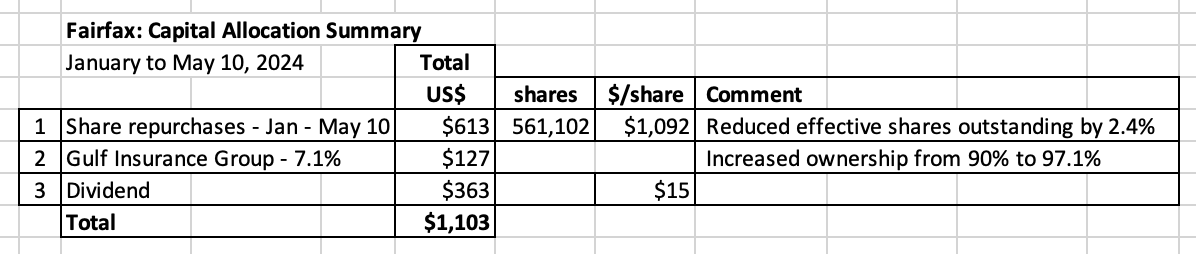
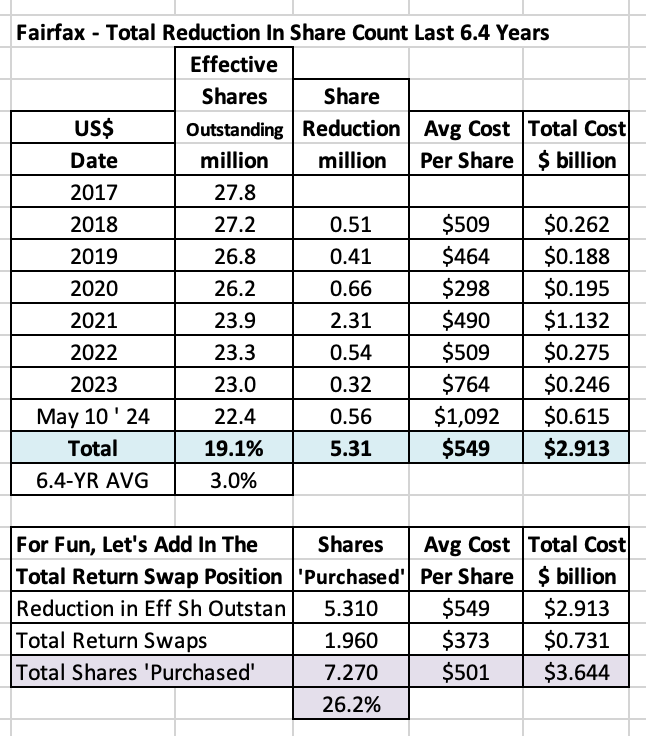
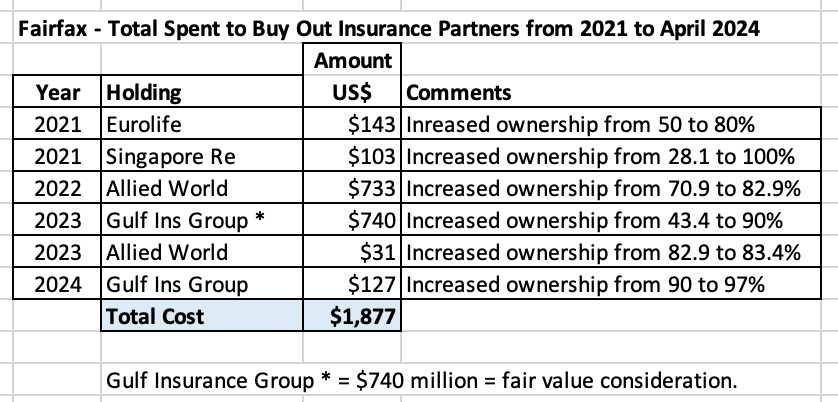
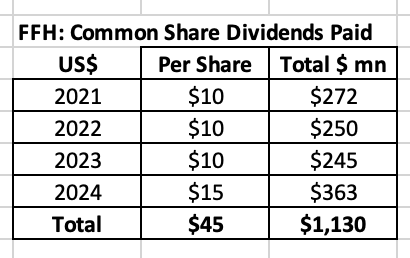
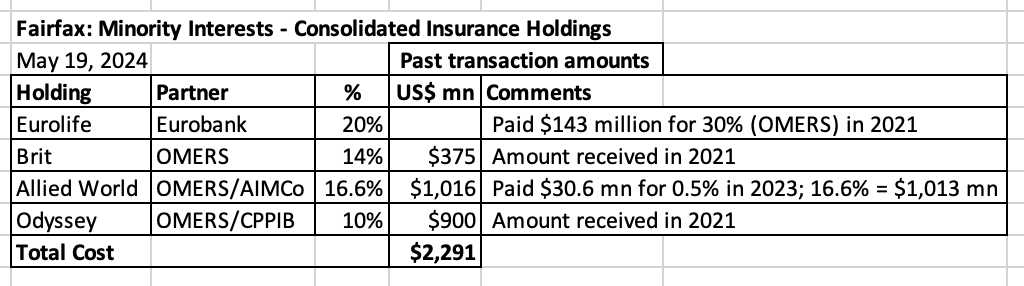
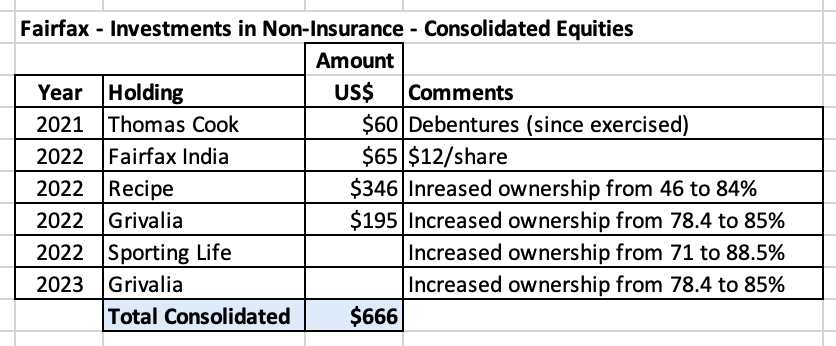
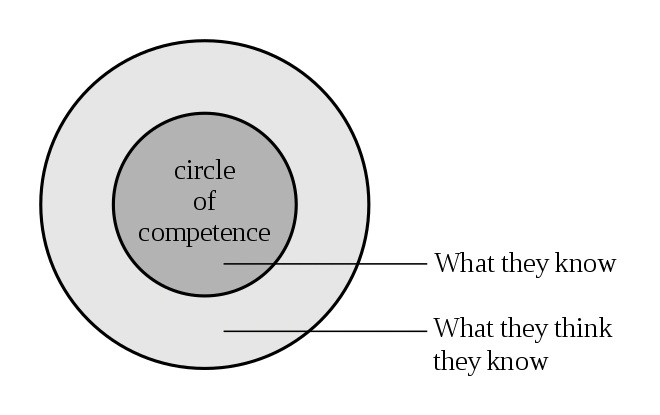
How to be a good investor / capital allocator: Part 2 For Part 1 - scroll up to read the previous post ‘Look at the cannibals’ One of Charlie Munger’s investing strategies was to look for ‘financial cannibals.’ This referred to companies that were buying back a large amount of their own stock over long periods of time. Of course, the price paid for the stock was important. Buying back large amounts of stock at cheap prices creates extraordinary value for shareholders. The math: (Important: Net earnings attributable to non-controlling interests (minority shareholders) is not part of EPS calculation. We will come back to this later.) Assuming net earnings stays the same, a lower share count will result in an increase in EPS. And if net earnings grows (numerator increases) at the same time the share count is reduced (denominator decreases) then EPS will increase even more. This becomes quite a powerful combination if it can be sustained over many years. This strategy can work so well because it checks all three boxes of a successful capital allocator: circle of competence - the management team has a big edge here - it understands the company/business better than anyone else. margin of safety - the management team also has a a big edge here - it understands the intrinsic value of the company better than anyone else and how it compares to the market price. concentration - when shares get wicked cheap (intrinsic value is much greater than the market value) management can buy back shares in volume. “…what those (prosperous) companies had in common was they bought huge amounts of their own stock and that contributed enormously to the ending record. Lou, Warren, and I would always think the average manager diversifying his company with surplus cash that’s been earned more than half the time they’ll screw it up. They’ll pay too high a price and so on. In many cases they’ll buy things where an idiot could see they would have been better to buy their own stock than buy this diversifying investment. And so somebody with that mind-set would be naturally drawn to what Jim Gibson used to call “financial cannibals,” people that were eating themselves.” Janet Lowe - Damn Right: Behind the Scenes with Berkshire Hathaway Billionaire Charlie Munger Fairfax: Record earnings and capital allocation Today Fairfax is generating a record amount of earnings. And given their sources (high quality), very high earnings are expected to continue for the next 3 or 4 years. This means Fairfax will be generating and allocating a record amount of capital over the next 4 years. Like all companies, Fairfax has three basic options when it comes to capital allocation: Re-invest in the business (organic growth or acquisitions) Buy back stock Pay a dividend What exactly will Fairfax do? Of course, this is the rub. The answer is we don’t know exactly what Fairfax will do. What Fairfax does will depend on a number of factors (internal and external). So when it comes to future capital allocation decisions, investors will need to trust the management team at Fairfax. Should we trust the management team at Fairfax? Will they be rational? Will they allocate capital in a way that it builds long term shareholder value? To help answer these questions we need to look into the past. But how far back do we need to go? Given Fairfax’s colourful history, this is a really interesting question. My view is investors should focus primarily on the past 5 years, with emphasis given to the past 3 years. Let’s start by looking at what Fairfax has been doing so far in 2024. And then let’s zoom out and look at what they have been doing over the past 4 years. What has Fairfax been doing on the capital allocation front so far in 2024? With three different activities, over the first 4.5 months of 2024, Fairfax has allocated $1.1 billion of capital. That is a significant number. 1.) Share buybacks = $613 million To May 10, Fairfax has reduced effective shares outstanding by 561,102 or 2.44%. The total cost was $613 million or $1,092/share. Book value at March 30, 2024 was $940/share. The shares were taken out at 1.15 x BV which is a very low valuation given the quality of Fairfax and its very strong earnings outlook over the next couple of years. It should be noted that Fairfax’s book value does not capture the excess of fair value (FV) over carrying value (CV) for the associate equity holdings of $1.2 billion pre-tax (about $50/share). “At March 31, 2024 the excess of fair value over carrying value of investments in non-insurance associates and consolidated non-insurance subsidiaries was $1,185.6 million.” Fairfax Q1 2024 Earnings Release If we include the excess of FV over CV ($35 after-tax) and expected 2024 earnings (US$140/share - current estimate at Yahoo Finance), Fairfax is buying back its shares at less than 1 x estimated 2024YE BV. That is very cheap. Lowering the share count boosts earnings per share. Share buybacks, when done at attractive prices, is a very shareholder friendly action. 2.) Take out minority interest in insurance companies = $127 million In April of 2024, Fairfax increased its stake in Gulf Insurance Group (GIG) from 90% to 97.1% “Subsequent to March 31, 2024, the company completed a mandatory tender offer for the non-controlling interests in Gulf Insurance and increased its equity interest from 90.0% to 97.1% for cash consideration of $126.7.” Fairfax Q1 2024 Interim Report Taking out minority partners means ‘net earnings attributable to non-controlling interests’ (minority shareholders) decreases. And ‘Net earnings attributable to shareholders’ increases. Taking out a minority partner means Fairfax shareholders are now entitled to receive a larger share of the future earnings at GIG. Like a share buyback, this activity also boosts earnings per share. 3.) Dividend = $363 million On January 3, 2024, Fairfax increased the dividend from $10 to $15/share, an increase of 50%. At the time Fairfax shares were US$914. The $15 dividend provided a yield to shareholders of 1.6%. “Given Fairfax’s substantial growth since it inaugurated a US$10 per share annual dividend 14 years ago, and given Fairfax’s current position of foreseeing strong earnings for the next few years based on insurance company underwriting income, locked-in interest and dividend income and income from associates, we felt it was appropriate to raise our annual dividend this year to US$15 per share, and we believe that this should be a sustainable level,” said Prem Watsa, Chairman and Chief Executive Officer of Fairfax.” Fairfax New Release January 3, 2024 Dividend payments provide an income stream for investors that can be reinvested to compound returns over time. Paying a consistent and growing dividend is seen as a sign of financial strength for a company. It is important to note that Fairfax is has been making many more capital allocation decisions than just the three highlighted above. Importantly, they continue to grow their P/C insurance operations in the current hard market. And they continue to actively manage their large fixed income and equity investment portfolio. Summary With these three activities highlighted above Fairfax allocated $1.1 billion of capital in the first 4.5 months of 2024. Investors want to see Fairfax grow earnings per share over time. Share buybacks reduce the denominator. Buying out minority shareholders increases the numerator. One of these activities would have been good. Both of these happening at the same time is even better - resulting in even larger EPS growth. And paying a dividend allows an investor, should they choose, to buy more shares - and increase their ownership share in the company even more. All three of these activities are very shareholder friendly - each delivers a solid return for shareholders. Importantly, they are also very low risk. Fairfax is also exercising good ‘plate discipline’ - with these capital allocation decisions they are swinging at pitches that are in their sweet spot. Each of these are what I would call ‘solid single’ types of investments. They move the runners around the bases. And of course, that is how you win the game. Importantly, the management team at Fairfax is acting rationally and building long term shareholder value with these decisions. This bodes well for the future. What if we look at each of these decisions - but over a slightly longer time horizon? When we look out a couple of years we see ‘cannibal investing’ at its best. Stock buybacks Over the past 6.4 years, Fairfax has spent $2.9 billion and reduced effective shares outstanding by 19.1%. That is a massive reduction in the share count. The average cost was $549/share. Book value at Dec 31, 2024 was $940/share. Intrinsic value is likely north of 1.4 x BV = $1,300. Bottom line, shares were repurchased at a price that was well below intrinsic value. For fun, let’s add in the total return swap position - giving Fairfax exposure to 1.96 million Fairfax shares at an average cost of $373/share. Over the past 6.4 years, Fairfax repurchased/got exposure to 26.2% of shares outstanding at an average cost of $501/share. These purchases have been very accretive for long term shareholders. This is a great example of superior capital allocation. These string of transactions will likely go down as one of Fairfax’s greatest investment decisions (to aggressively take out/get exposure to shares). Buying out minority partners Insurance Holdings Over the past 3.4 years, Fairfax has spent $1.9 billion to take out its partners and increase its ownership stake in its existing P/C insurance businesses. There were two big moves: 1.) In 2022, significantly increasing its ownership in Allied World from 70.9% to 83.4%. 2.) In 2023/24, obtaining a control position and increasing its ownership in Gulf Insurance Group from 43.4% to 97.1%. This move solidifies Fairfax’s position in the rapidly growing Middle East North Africa (MENA) region. These are quality P/C insurance companies. These decisions are very low risk and deliver a solid return to shareholders. Taking out minority partners is a solid way for Fairfax to grow ‘net earnings attributable to Fairfax shareholders.’ Price paid matters: I think the take-out price that Fairfax will eventually pay is largely set when the initial deal is struck with the minority partners in the insurance businesses. This provides Fairfax with some degree of certainty - and it provides the minority partners with an acceptable return over the life of the transaction. Do I have this generally right? I would appreciate hearing what others think on this topic. Non-insurance Consolidated Equities Over the past 3.4 years, Fairfax has spent $700 million to increase the size of its collection of consolidated equity holdings. This is slowly growing another income stream for Fairfax - one that is unrelated to its insurance business. This makes Fairfax a stronger, more financially resilient company. It will be interesting to see if Fairfax continues to grow this bucket of holdings in the future. Dividends Over the past 4 years, Fairfax has paid a total of $1.13 billion in dividends on its common shares. Summary Buying back shares on the cheap: over the past 6.4 years, Fairfax has spent $2.9 billion and reduced effective share outstanding by 19.1%. Buying out partners in its consolidated insurance and non-insurance holdings: over the past 3.4 years, Fairfax has spent $2.5 billion taking out minority partners in its insurance and non-insurance businesses. When it comes to capital allocation, for years now Fairfax has been a ‘financial cannibal.’ The kind that Charlie Munger would have really liked. Over the past 4 years, Fairfax has also paid out $1.1 billion in dividends. These are funds investors can reinvest to compound returns even more over time. But the Fairfax story gets better. Thats not all Fairfax has been doing with capital allocation over the past 4 years. Its has also been: Aggressively organically growing its P/C insurance business - taking full advantage of the hard market that started in late 2019. Selling assets at premium valuations - pet insurance, Resolute Forest Products, Ambridge Parners - for +$2 billion. Fixed income team navigated greatest bond bull / bear market in history. Protected balance sheet. Now earning record interest income. Dramatically improved the overall quality of their equity portfolio. Exited many poor investments. Merged others with stronger companies. New investments have been performing well. Some legacy investments have turned around. Group has never been better positioned. As a result of all of Fairfax’s capital allocation decisions, earnings at Fairfax have spiked higher. At the same time, the share count has come down meaningfully. Earnings per share have increased dramatically. What have we learned about the management team at Fairfax? The management team at Fairfax has been acting very rationally with their decisions - over many years. They have been swinging at pitches that are in their sweet spot - that are in their circle of competence. They have been scaling/concentrating their best opportunities appropriately. Their decisions have been building an enormous amount of shareholder value. When it comes to capital allocation, Fairfax’s track record in recent years has been outstanding. The team at Hamlin Watsa has been hitting the ball like Ted Williams. Not only have they been hitting for a very high average, but many of their decisions have been the financial equivalent of a home run. This is very encouraging for Fairfax shareholders. Guess what Fairfax is going to do in the future? Fairfax continues to have many good options in front of them: Buy back Fairfax stock - it still very cheap Buy out minority partners in its insurance operations (Eurolife, Brit, Allied World, Odyssey) - the table is set. Of course, Fairfax will also continue to do all the other regular things: Organically grow its P/C insurance business. Actively manage its fixed income and equity investment portfolio. Pay a modest dividend. And Fairfax will be opportunistic and take advantage of volatility in financial markets. As a result, we should see earnings continue to grow. And share count continue to shrink. And, like the past 4 years, this should result in much higher earnings per share. As we said earlier, we don’t know exactly what Fairfax will do in the future. It will depend on a number of factors (internal and external). But with their actions over the past 4 years they certainly have earned our trust. With record earnings coming over the next 4 years, Fairfax is in a great position - the set-up for Fairfax shareholders has never looked better. In 2024, Fairfax has entered a new phase in its evolution as a company - the 'wonderful business' phase. And as Buffett teaches us: “Time is the friend of the wonderful business...”
-
Capital allocation - Circle of Competence - Margin of Safety - Concentration In this section we are going to explore the topic of capital allocation. Capital allocation is the most important responsibility of a management team. Why? Capital allocation decisions are what drive the long-term performance of a company and important metrics like reported earnings, growth in book value and return on equity. In turn, these metrics drive the multiple given to the stock by Mr. Market - and finally the share price and investment returns for shareholders. When done well, capital allocation does two important things: Delivers a solid return. Improves the quality of the company. Therefore, the fundamental task of an investor is to determine if management, over time, is making intelligent decisions regarding capital allocation. How to be a good investor / capital allocator Being a good investor is the same thing as being a good capital allocator. Warren Buffett is a great teacher. In his 1996 shareholder letter, Buffett succinctly lays out what an investor needs to do to be successful. This is the same approach that Berkshire Hathaway has followed - quite successfully - for decades. We have included Buffett’s full quote below. In his framework, Buffett introduces the concept of ‘circle of competence.’ Given its importance, we will explore it more fully in the next section. Warren Buffett - 1996 Shareholder Letter “Let me add a few thoughts about your own investments. Most investors, both institutional and individual, will find that the best way to own common stocks is through an index fund that charges minimal fees. Those following this path are sure to beat the net results (after fees and expenses) delivered by the great majority of investment professionals. “Should you choose, however, to construct your own portfolio, there are a few thoughts worth remembering. Intelligent investing is not complex, though that is far from saying that it is easy. What an investor needs is the ability to correctly evaluate selected businesses. Note that word "selected": You don't have to be an expert on every company, or even many. You only have to be able to evaluate companies within your circle of competence. The size of that circle is not very important; knowing its boundaries, however, is vital. “To invest successfully, you need not understand beta, efficient markets, modern portfolio theory, option pricing or emerging markets. You may, in fact, be better off knowing nothing of these. That, of course, is not the prevailing view at most business schools, whose finance curriculum tends to be dominated by such subjects. In our view, though, investment students need only two well-taught courses - How to Value a Business, and How to Think About Market Prices. “Your goal as an investor should simply be to purchase, at a rational price, a part interest in an easily-understandable business whose earnings are virtually certain to be materially higher five, ten and twenty years from now. Over time, you will find only a few companies that meet these standards - so when you see one that qualifies, you should buy a meaningful amount of stock. You must also resist the temptation to stray from your guidelines: If you aren't willing to own a stock for ten years, don't even think about owning it for ten minutes. Put together a portfolio of companies whose aggregate earnings march upward over the years, and so also will the portfolio's market value. “Though it's seldom recognized, this is the exact approach that has produced gains for Berkshire shareholders: Our look-through earnings have grown at a good clip over the years, and our stock price has risen correspondingly. Had those gains in earnings not materialized, there would have been little increase in Berkshire's value.” ————— Mental model: circle of competence A mental model is simply a framework that helps us understand how something works. Mental models guide our behaviour and they help us solve problems. “The more models we have, the better able we are to solve problems. But if we don't have the models, we become the proverbial man with a hammer. To the man with a hammer, everything looks like a nail. If you only have one model, you will fit whatever problem you face to the model you have” Charlie Munger To guide investors, Warren Buffett introduces the concept of ‘circle of competence’ as a foundational mental model. What is it? ‘Circle of competence’ is a subject area when you have an edge. It is a match with your skills and experiences. To be successful at investing, stick to areas where you know more than other people. This might sound obvious. Few actually do it. It allows you to answer the 3 fundamental questions: Do you understand the business? Is it run by competent management? Does it sell for a price that is attractive? Let’s revisit Buffett’s quote: “You only have to be able to evaluate companies within your circle of competence. The size of that circle is not very important; knowing its boundaries, however, is vital.” Warren Buffett 1996 Shareholder Letter Buffett highlights a number of important points: Self awareness: You have to know what your circle of competence is. The size of the circle is not very important. Importantly, it can be expanded over time. Knowing the boundaries is ‘vital’. This is knowing what to avoid. In the HBO documentary linked below, Buffett expands on ‘circle of competence’ and provides additional insight: Patience: wait for the right opportunity - one that is in your ‘sweet spot.’ Think independently: don’t let the mood of Mr. Market influence what you are doing. HBO Documentary: Becoming Warren Buffett (30:30 minute mark) https://youtu.be/2Q5zhl4YVo8?si=A5RY0o3ivBfbPHYz “I was genetically blessed with a certain wiring that is very useful in a highly developed market system that has lots of chips on the table where I happen to be good at that game “Ted Williams wrote a book called the science hitting. In it he has a picture of himself at bat and the strike zone broken into 77 squares. He said if he waited for the pitch that was really in his sweet spot he would bat 400 and if he had to swing at something in the lower corner he would probably bat 235. “In investing I’m in a no-called strike business, which is the best business you can be in. I can look at 1000 different companies and I don’t have to be right on every one of them or even 50 of them. So I can pick the ball i want to hit. “The trick with investing is to sit there and watch pitch after pitch go by and wait for the one that is right in your sweet spot. If people are yelling ‘swing you bum!’ Just ignore them. “There is a temptation for people to act far too frequently in stocks simply because they’re so liquid. “Over the years you develop a lot of filters. I do know what is called my circle of competence. So i stay within that circle. I don’t worry about things that are outside of that circle. Defining what your game is… where you’re going to have an edge… is enormously important.” ————— Margin of safety “If you were to distil the secret of sound investment into three words we venture the motto, margin of safety.” Ben Graham The Intelligent Investor - Chapter 20 Margin of safety is one of the most important principles/concepts in investing. It is defined as the difference between a stock’s price and its intrinsic value. Buying a stock with a large margin of safety does two things at the same time: Limits the downside risk. Provides a high return opportunity. Circle of competence and margin of safety Only invest in opportunities that: fall within your circle of competence. can be purchased at prices that provide a margin of safety "If you understood a business perfectly — the future of a business — you would need very little in the way of a margin of safety," Warren Buffett - 1997 Berkshire Hathaway Annual Meeting ————— Concentration "Diversification may preserve wealth, but concentration builds wealth." Warren Buffett “If you can identify six wonderful businesses, that is all the diversification you need. And you will make a lot of money. And I can guarantee that going into a seventh one instead of putting more money into your first one is gotta be a terrible mistake. Very few people have gotten rich on their seventh best idea. But a lot of people have gotten rich with their best idea. So I would say for anyone working with normal capital who really knows the businesses they have gone into, six is plenty…” Warren Buffett - Talk at Florida University 1998 (1:05:30 mark) https://youtu.be/2MHIcabnjrA (great 90 minute video) A key part of Berkshire Hathaway’s long term success has been holding a concentrated portfolio of investments. Circle of competence and concentration Only investing in his ‘circle of competence’ gives Buffett conviction - and allows him to concentrate in his best ideas. This further improves Berkshire Hathaway’s long term returns. ————— Circle of competence, margin of safety and concentration Circle of competence, margin of safety and concentration are concepts that are inter-related and synergistic. Combined, they provide results that are far more powerful than those that could be achieved on their own. (1 + 1 + 1 = 5) Circle of competence = good returns Circle of competence + margin of safety = better returns Circle of competence + margin of safety + concentration in best ideas = best returns Key take-away: of the three, circle of competence is perhaps the most important component. It is the lynchpin. It is what allows the other two components to work their magic. ————— As he told us earlier, this has been the approach that Buffett has been using with great success to grow Berkshire Hathaway for decades. This also gives investors a blueprint to evaluate the capital allocation skills of management teams at other companies. Let’s now apply what we have learned. Let’s look at the capital allocation decisions of Fairfax Financial. We are also going to explore something Charlie Munger called ‘cannibal investing.’ Part 2 should be out in the next couple of days.
-
@nwoodman thanks for the updates. Much appreciated. I am liking this company more and more (and i already liked it a lot). Underpromise and overdeliver. Very well run. Continie to execute exceptionally well.
-
Do we know if this is a Buffett purchase? Or one of the lieutenants? Regardless, it is a vote of confidence for the P/C insurance sector. It makes sense that if Buffett wanted to play the sector he would pick someone like Chubb - one of the largest by market cap/liquidity. I think P/C insurance falls in Berkshire Hathaway's circle of competence. Anyone have any stock recommendations for P/C insurance? Asking for a friend... Getting a Berkshire Hathaway 'seal of approval' is just another tailwind for the P/C insurance sector.
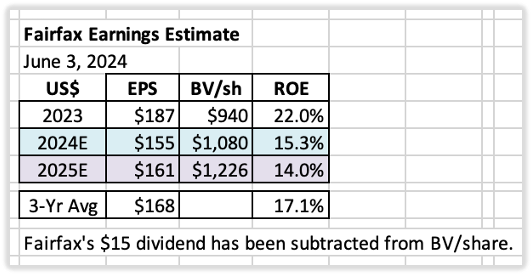
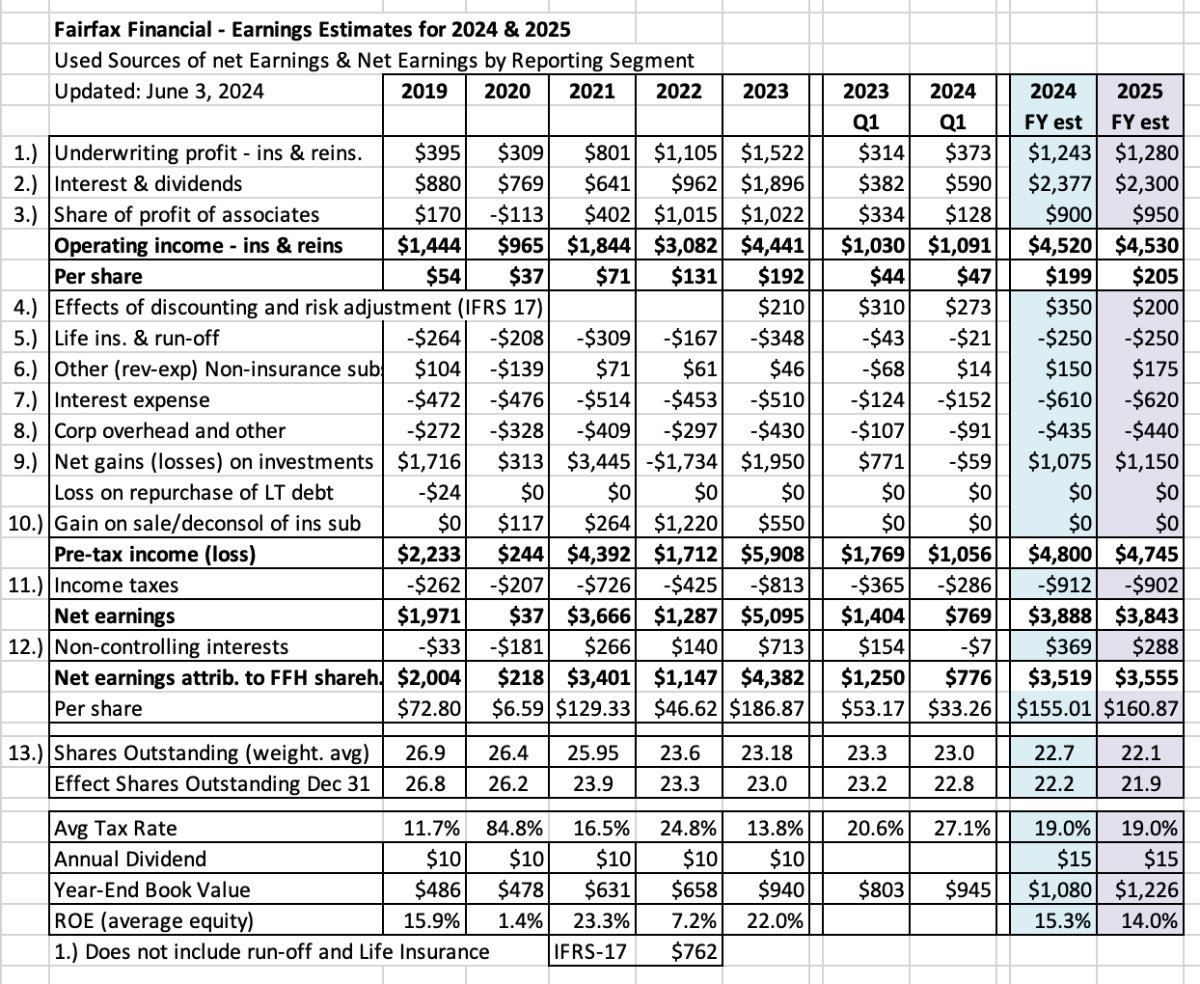
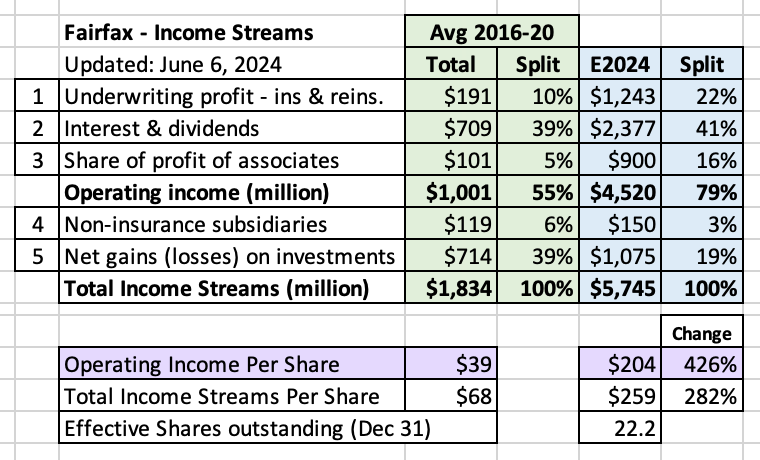
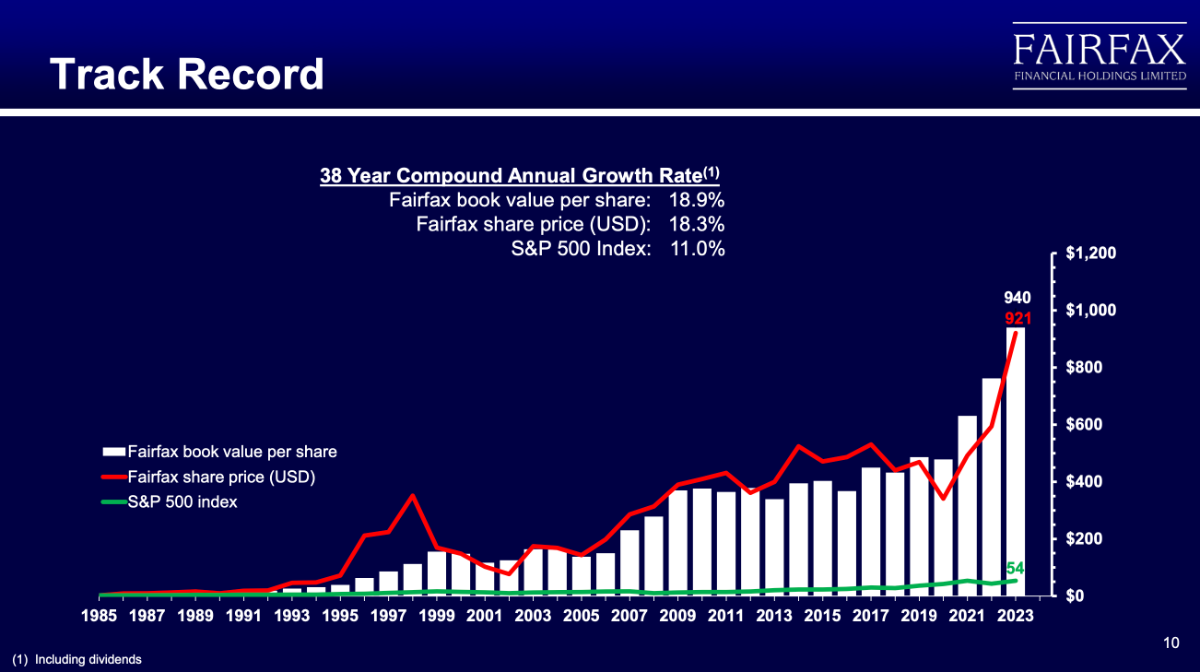
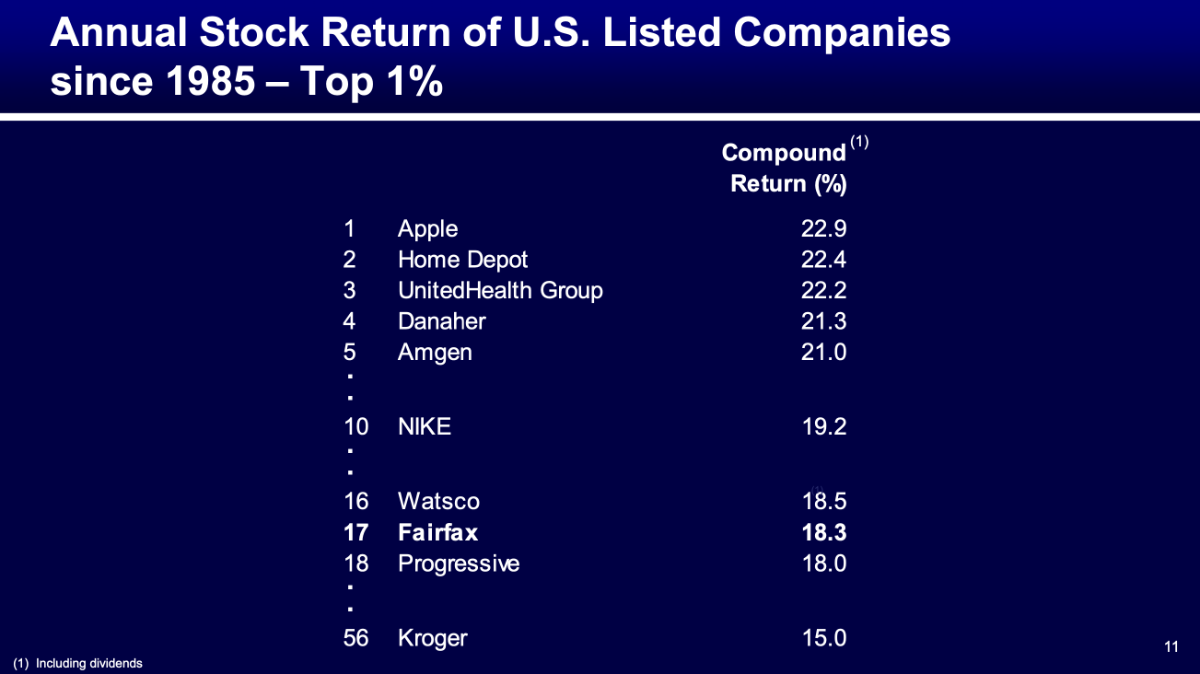
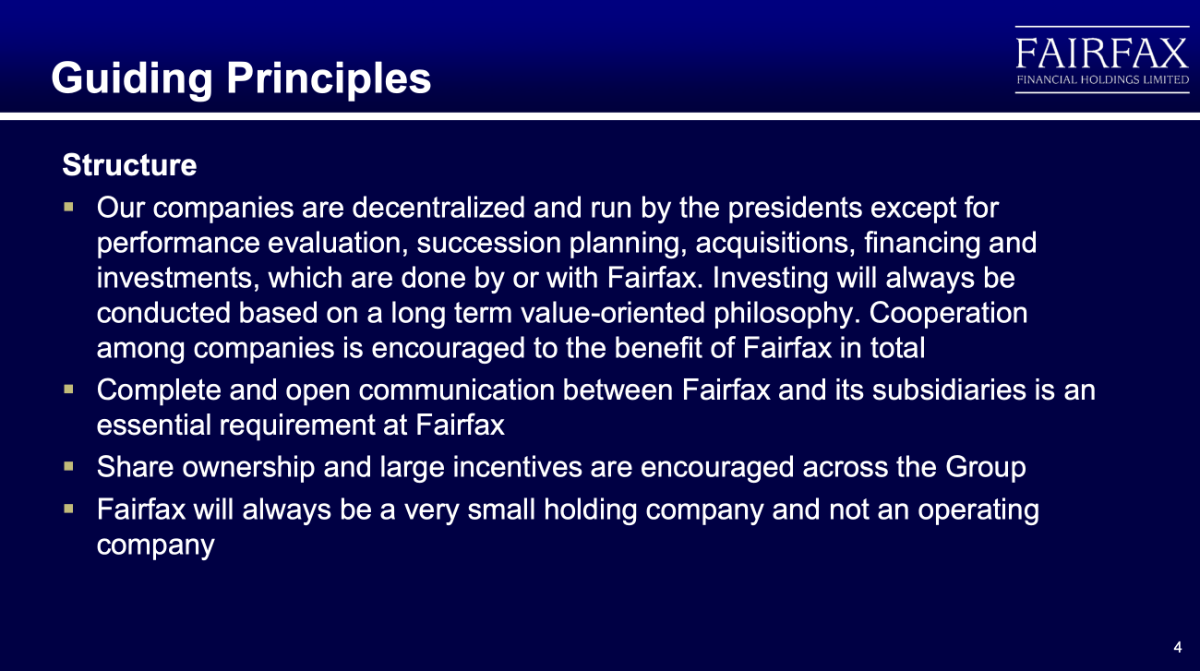
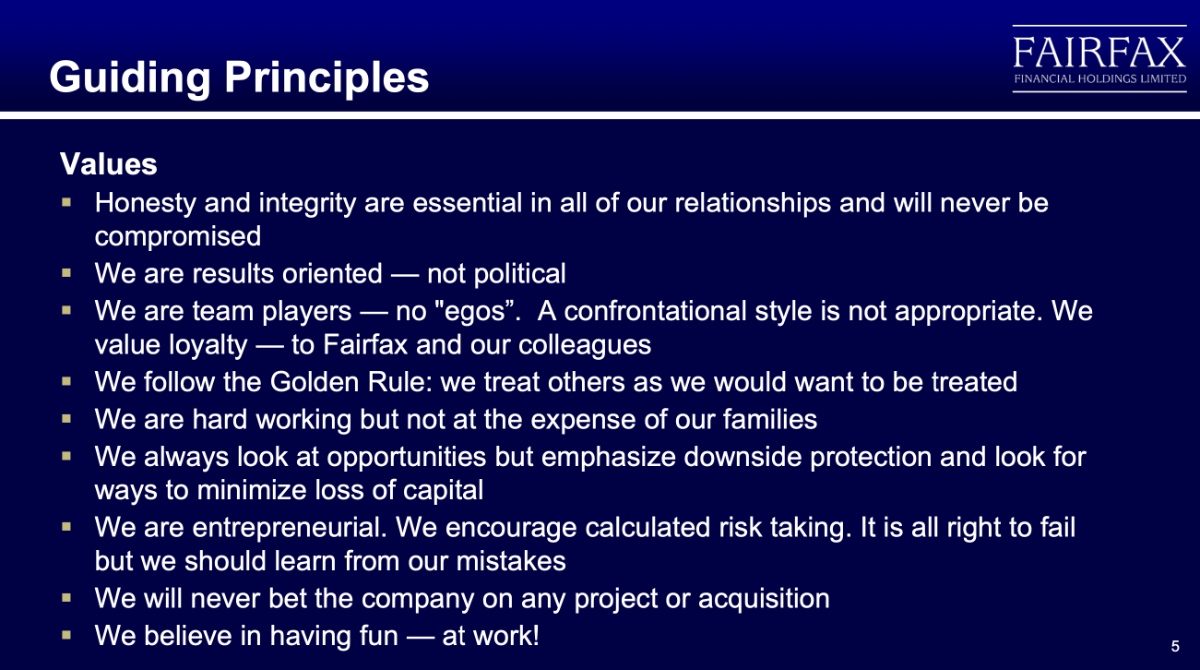
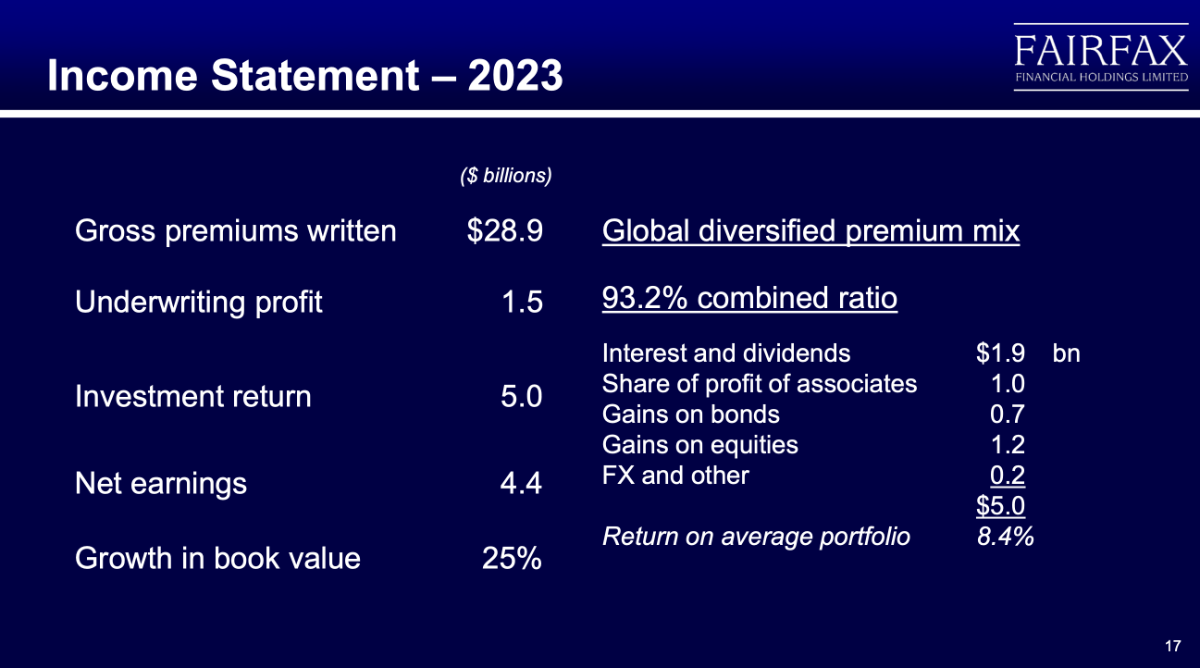
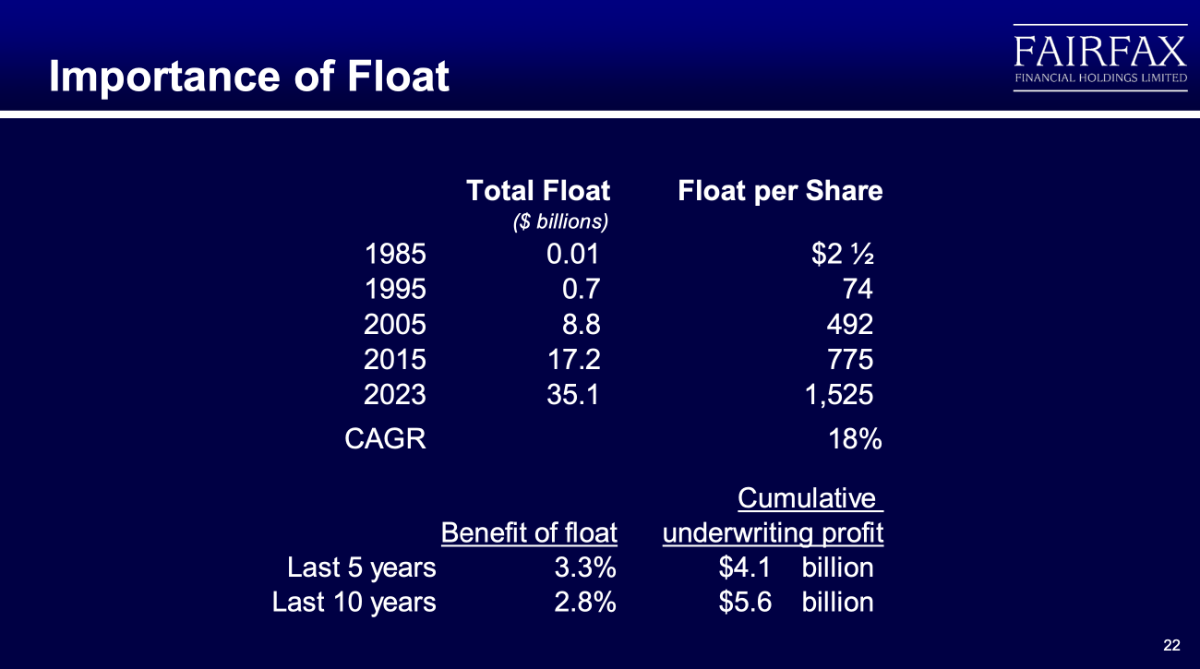
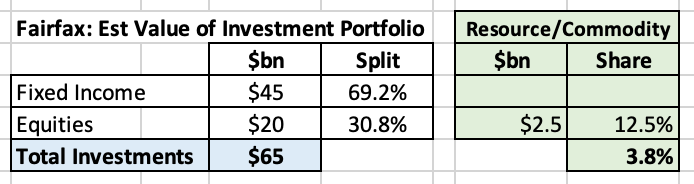
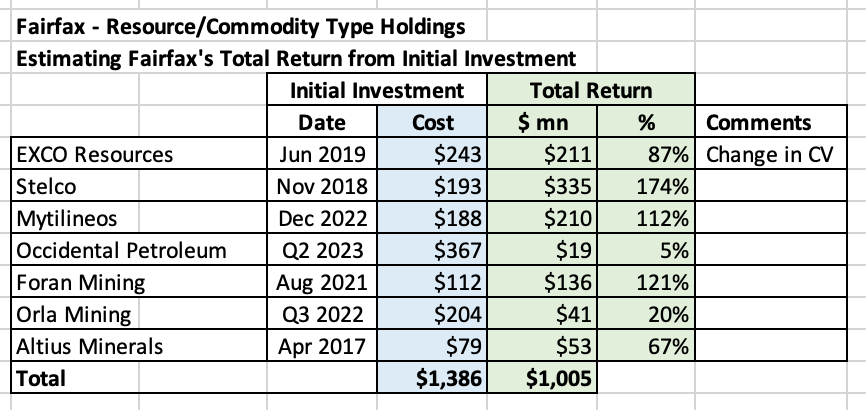
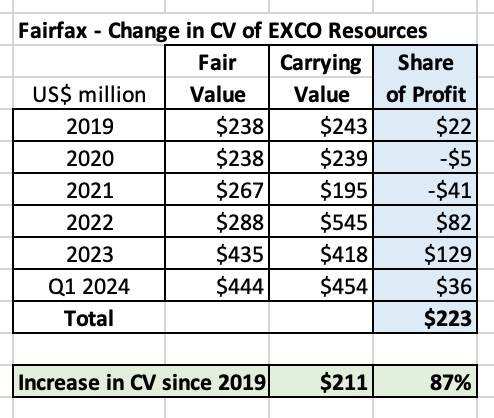
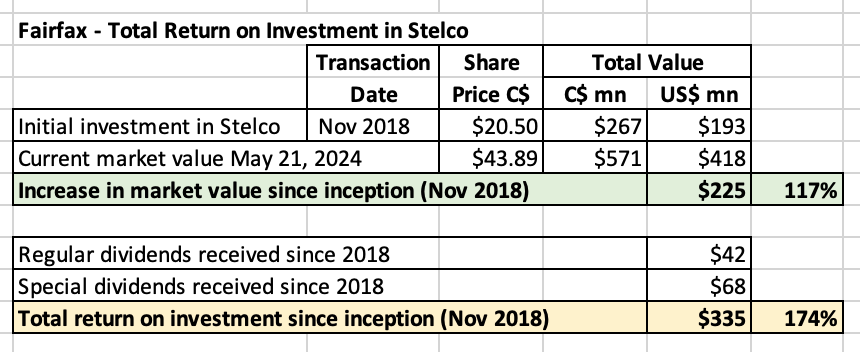
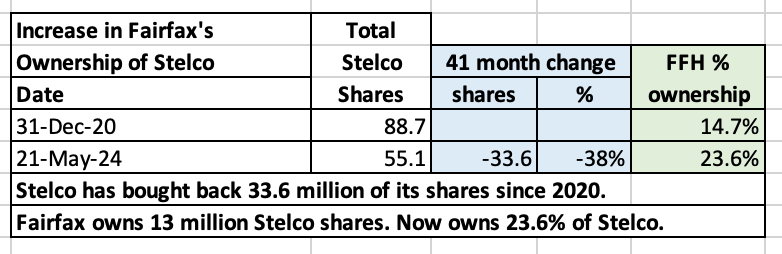
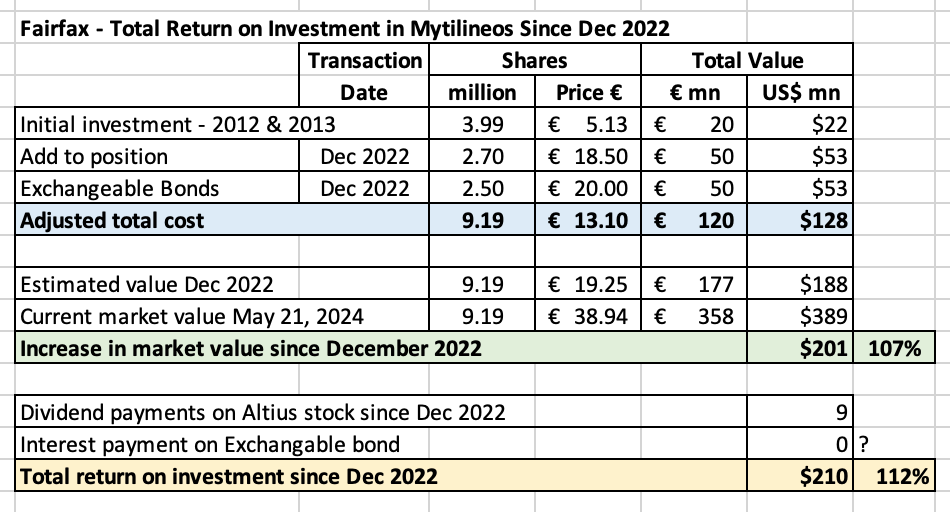
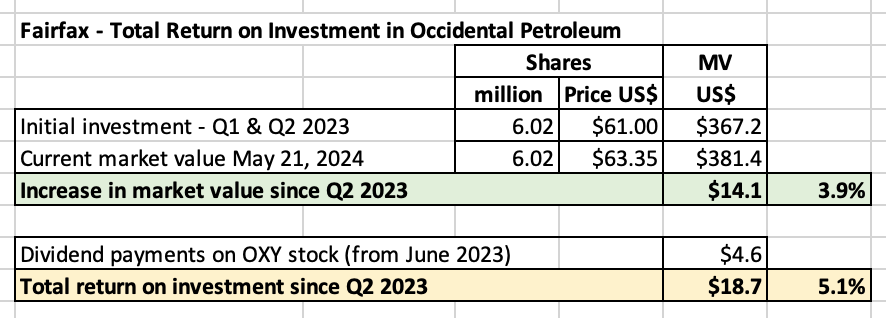
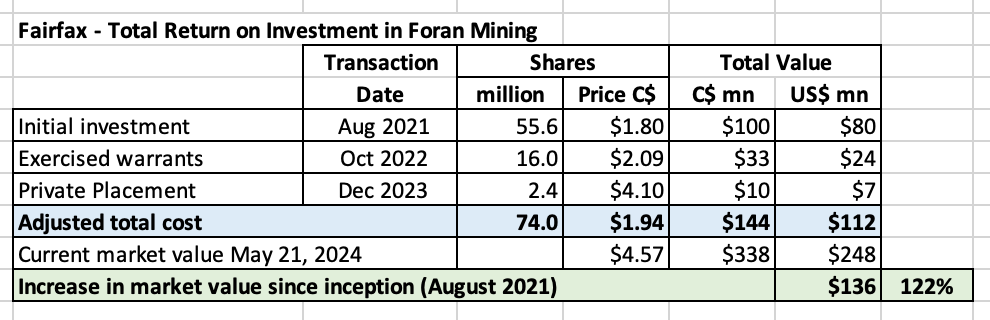
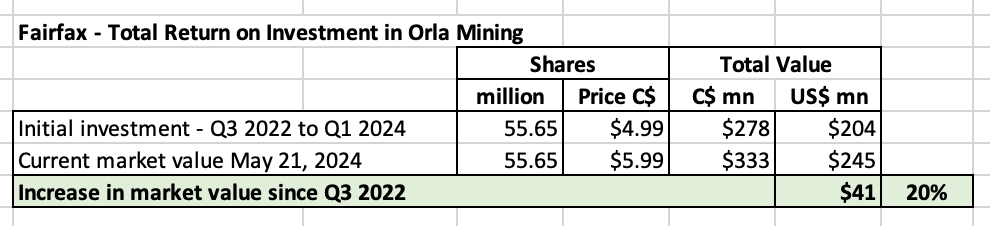
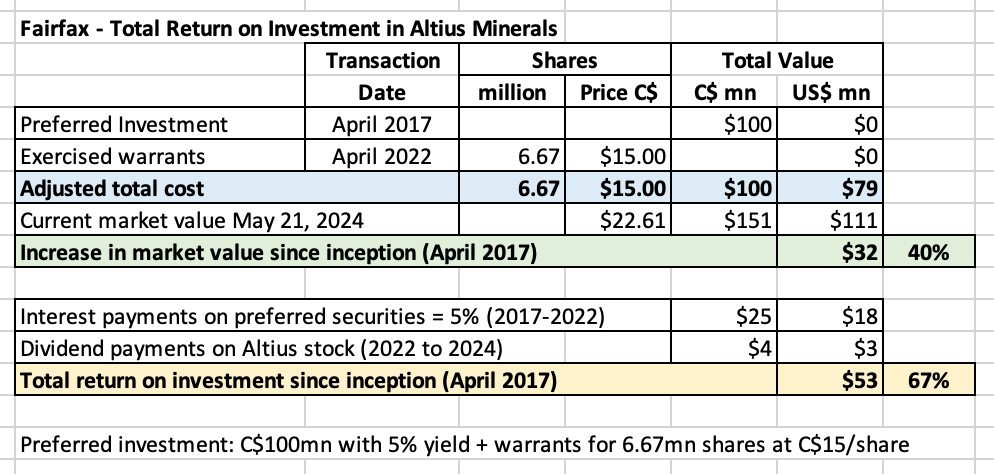
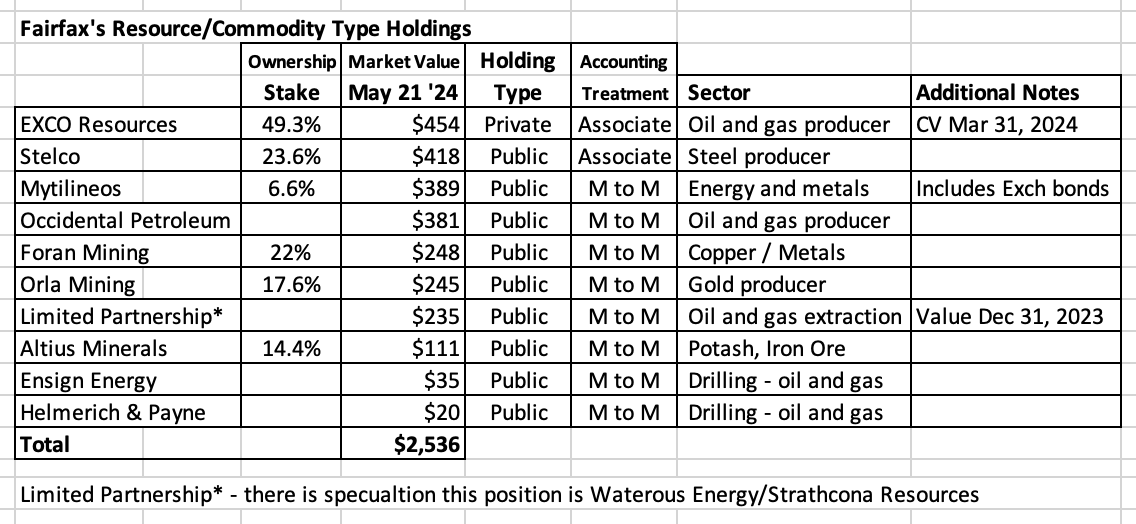
NetEarningsAttributabletoShareholders.png.ea041946b8d30e20c720e0d96b77f7ef.png)