All Activity
- Past hour
-
Personally, as sort of an armchair novice investor, I have often focused in a first pass view of investments, on multiples of earnings per share, the P/E ratio. That works fairly well for investments that have relatively stable, predictable earnings, similar to interest paying bonds, and is less valuable when earnings are volatile, and occasionally even negative, or when earnings growth prospects are extremely difficult to estimate. But for a mature insurance company, or even a conglomerate like Berkshire, it can be a helpful starting point. For example, a hybrid view of valuing Berkshire might look at the market value of the equity portfolio, the cash, and then add to those two pieces a multiple of normalized earnings. Say that equities are worth $300 billion, cash is at $380 billion, and the normalized projected operating earnings of all of the subsidiaries are estimated as $48 billion per year, or $4 billion per month. What multiple would you be willing to pay for those earnings is something you have to determine individually. Compared to risk free bond rates of say 5%, you’d typically want something higher than that, perhaps 8%, for a PE multiplier of the inverse, or 12.5. That would value the operating subs at $600 billion, and added to the equity and cash, you’d get an estimated total intrinsic value of $1.28 trillion compared to a recent market cap of $1.06 trillion. So a bit of a margin of safety at current prices. Of course you might divide the operating subs into categories, and assign typical PE multipliers used by the market for similar industries…say about 30 for the railroad and something less than 10 for the electric utilities, but that’s too far into the weeds for me personally on a quick first pass. Looking at the history of earnings per share for Fairfax prior to about 2018, this was all over the place, with not a very predictable pattern. But since then, we’ve had a good track record of earnings per share well above $100, and my own expectation would be closer to the $200 level and above going forward, particularly in light of the impact of share buybacks on the earnings per share going forward and the interest rates locked in for the bond portfolio. Ignoring the cash and market value of equity piece of the Berkshire approach, and using the same 12.5 multiplier for an estimated earnings per share value of $200 gives me an intrinsic value per share of $2500 US. If we were to add in cash and equity, I would not be at all surprised to see a result closer to $3,000 per share US, similar to @SafetyinNumbers preference for using a 15 multiplier to an estimated EPS of $200. With management retiring shares at less than US $1700 a share recently, I am confident that they are buying back well below any reasonable estimate of intrinsic value.
-
That’s football nowadays, trying their best for fouls and getting the opposition sent off. It should be another level again with England vs Argentina, the latter completely loathes England.
-
Let me clarify: There have been 90 days of negotiations during a CEASEFIRE, along with, perhaps 40 days of actual fighting by the USA. Imagine the sustained damage with just another 40 days of fighting, where Iran cannot touch the USA. Bill Clinton brought Serbia to surrender with an 70 day bombing campaign, taking out power plants, electric grid, all the bridges and communication assets - once the Serbs showed they were not serious about peace with NATO. Barrack Obama brought Libya to surrender with a non-stop 7 month bombing campaign - at the insistence of France and the Europeans. You are now almost 30 years later - where the American military has "eyes in the sky" showing every single movement of assets in the IRGC. Furthermore, the precision weapons employed by the USA dwarf anything imaginable in the 1990's. Notice that the IRCG has not touched Israel for months. Telling, that IRGC understands, unlike Trump, if they dare to launch missiles into Israel - Netanyahu knows where all their leaders/families live. Trump will be far kinder to Iran's leadership than Bibi - while the Donald fights to restrain Bibi. The momentum on controlling the SOH has shifted dramatically. Time is not on the side of the IRGC, just like Libya and Serbia.
-
It’s possible Fairfax has shortened the duration of its reserves which would dampen the impact of higher rates on discounting. Perhaps another way to defer earnings.
-
Maybe! BVPS growing again and a 100% increase in sequential earnings might offset the sellers though.
-
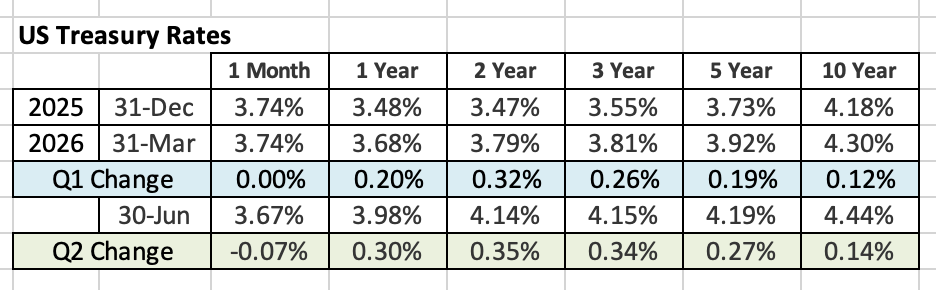
Interesting. I'm speaking in generalizations of raw interest rate moves, but the generalization didn't seem to hold true for that quarter (when it has been true in others). There's probably some component of what credit and mortgage spreads did too since Fairfax doesn't just own straight treasuries and that may explain the difference in Q1. But as a ballpark, if they're under in duration, they'll outperform their liability when rates rise.
-
I wouldn't complain about that, although I do think our government needs to be funded somehow, I'd love to see reduced government spending, but it's pretty obvious that's not going to happen. I feel like we should avoid incentivizing bad behavior (government handouts / a tax system that encourages under the table work) and try to incentivize good behavior (saving/investing/earning more money). Our progressive tax system/income based safety nets create a lot of moral hazard. If I were king, I'd try to create a more balanced tax system. Tax all investment income at the same rate, so lower taxes on cap gains/dividends/interest while increasing the tax on stock buybacks to the same rate. Lower the higher income tax brackets, or just use a flat tax rate. Incorporate a VAT tax (and maybe exclude essential goods/services). Reform entitlement programs so that they serve to help bring people out of poverty instead of keeping them there. Close the huge endowment loophole for avoiding taxation on unrealized capital gains/estate tax (no need for a wealth tax).
-
So after earnings release potentially another big down day and Fairfax with the opportunity to buy back more shares? I’ll take it
-
The battle for the SOH needs to have been decidedly won, and with traffic flowing freely both ways, by Nov-03 (US MidTerm) at the latest... 3 1/2 months. Should both Netanyahu and Trump lose their elections, it will be the allies withdrawing; and a global coalition stepping in to negotiate peace, security, reparations, and a return to 'normal' flows. The US and Israel have been at it for 4 1/2 months ... and the SOH is still closed; no reason to think that it will be much different come Nov-03. Were the Iranian people pre-disposed to overthrow the regime, it would have already happened; now the growing misery just makes the population want to see Trump gone by Persian New Year (WW II bombing effect). Of course the SOH will reopen ..... just most likely with different players. SD
- Today
-
@TwoCitiesCapital, is that what happened in Q1? From the Q1 conference call: "In the first quarter, net earnings included a $184 million unrealized loss due to increasing interest rates in the quarter. This consisted of unrealized losses on our bonds of $364 million, as I previously mentioned, offset by the increase in discount under IFRS 17 on our insurance and reinsurance reserves of $180 million. For the first quarter of 2025, this number was a net gain of $120 million."
-
Bond losses would be offset by the liability adjustment on the insurance if they ran equal duration. The bonds have typically been shy of duration of the insurance, so should actually be a sight net positive
-
Almost like when you ignore the shitty politicans and chronically online trolls, the US is a welcoming, friendly, accepting place for all people. At least much more so than many countries out there....
-
Basically the Berkshire problem, no? I know there are better ways to value it, but I have high confidence that when Berkshire trades at 1.3-1.4x book, it is trading below intrinsic value. Likewise, I have high confidence Fairfax trades at a discount when it trades at 1-1.2x book. And I think intrinisic value is growing quickly. Don't need to be exact to know when you got a deal. I also like the idea of valuing float. Smarter people than I can do SOTP for a better valuation..
-
What I found hilarious, is that for all the whining we ve heard about how horrible the US is and how hostile we are to foreigners….millions of them just had the time of their lives traveling here for the World Cup and seeing many different pieces of America. Somehow another dumb fuck liberal narrative gets exposed as a lie, go figure!
-
@73 Reds, great question: "Why use BV as a valuation metric?" The primary reason for me is habit - it is built into my models/mental framework. Another important reason is it also the key metric that the investment community focusses on for P/C insurers (rightly or wrongly). I do include "excess of FV over CV" in my models - that provides an important improvement to accounting BV - getting us closer to "economic BV." But that is incomplete. Is book value still relevant as a valuation measure for Fairfax? Great question. I need to think more about it. What do others think? PS: When I value Fairfax I like to use "normalized earnings" and PE. Much of their EPS is very stable. And for investment gains I use a three year average - which makes this part also very stable. As a result, PE works for me. Bottom line... stock is trading today at about 8.5 x "normalized earnings." Crazy cheap from my perspective.
-
@Viking I love your work but have a lingering question for you and others: Since most acknowledge the benefit of share buybacks even above BV which also go to reduce BV, why does everyone seem to focus on BV as a valuation metric? Can't we find a better valuation metric that doesn't overtly reduce the estimated value that we are trying to measure? Is it just because BV is so easy to measure or is there another reason why every time someone seeks to value Fairfax, book value is always considered?
-
Falkland War 2.0 My money is on General Belgrano going down … again
-
How do you gauge this?
-
It has been mentioned by the Indian press which is why I brought it up. It doesn’t make as much sense as IIFL Capital but we’ll see.
-

Buffett/Berkshire - general news
Spekulatius replied to fareastwarriors's topic in Berkshire Hathaway
I can’t help it:
-
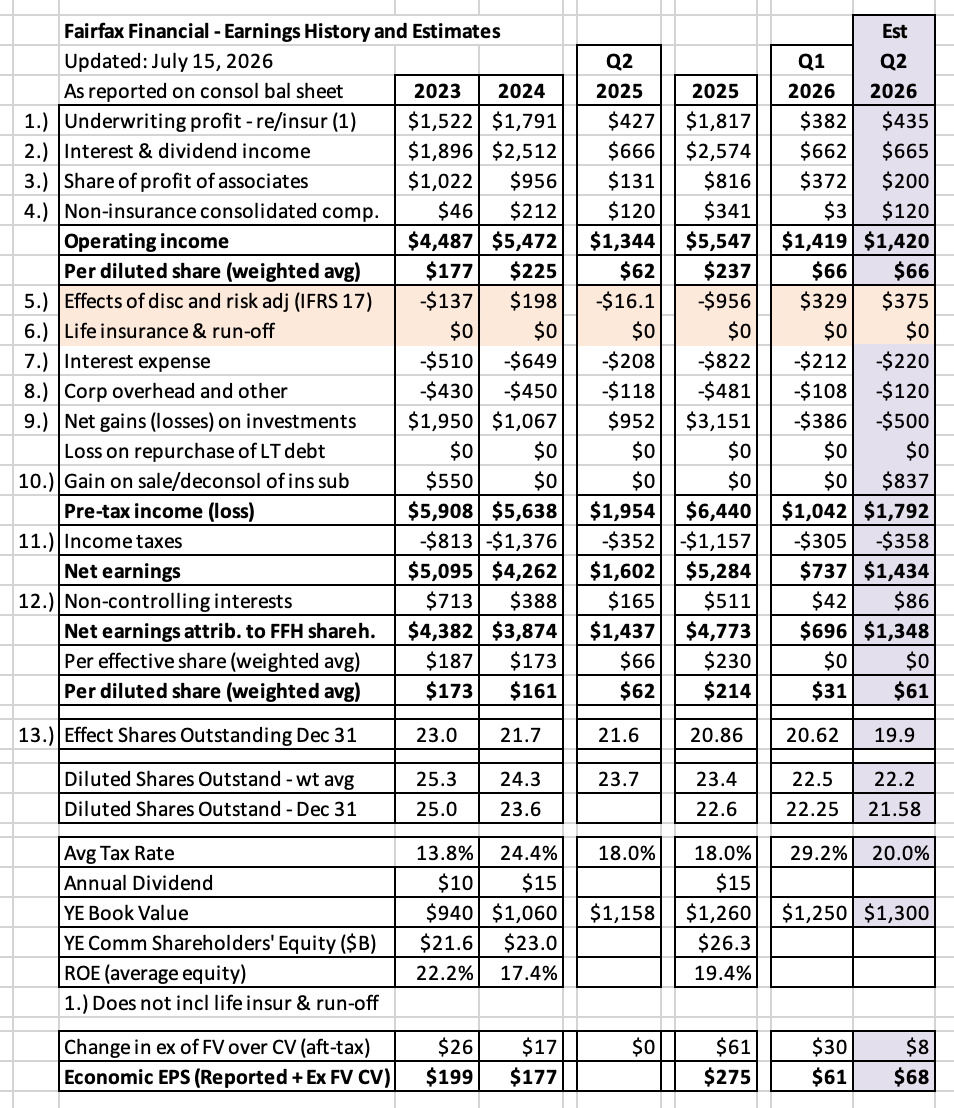
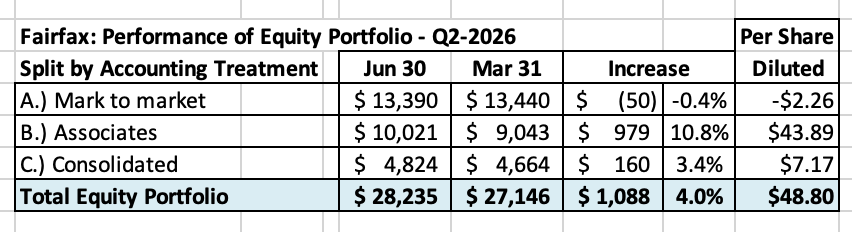
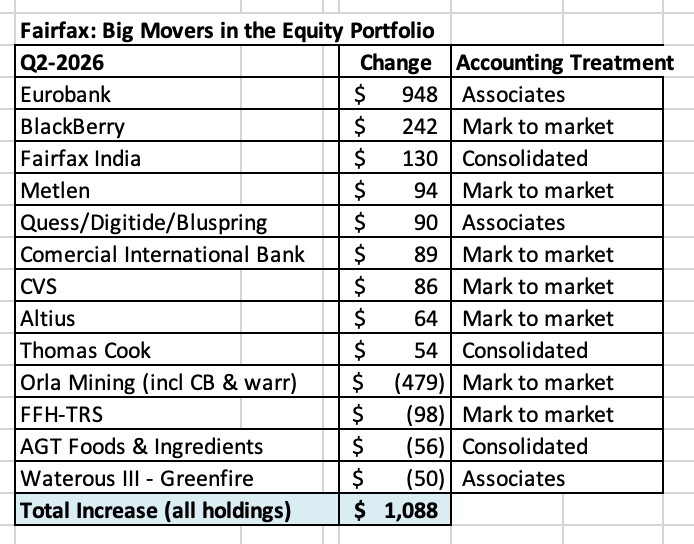
Fairfax Q2 2026 Earnings Preview My very rough guess is earnings will come in around $60/share when Fairfax reports Q2 results. Analyst consensus is about $80/share. I look forward to getting feedback from board members. This would put book value at June 30, 2026, at about $1,300/share. BVPS at March 31, 2026: $1,250 Earnings: +$60 Impact of buying back shares above BV: -$12 per share Accounting results for Fairfax are an incomplete measure of value creation. If we include excess of FV over CV for market traded non-insurance associate and consolidated holdings, '"economic earnings" increases to $68/share. 6-Month "economic earnings" are $129 per share. Outstanding. Note, I am not doing this exercise to come up with a high conviction specific number (I know it will be wrong) for EPS or BVPS. Rather, I do it for the build of the individual items - to help prepare me for Fairfax’s earnings release. Below is the logic I used to come up with my forecast. ————— Details Underwriting profit: Q2 2025 Net premiums written: $7.17B CR: 93.3% Underwriting profit: $426.9M Net favourable prior year reserve development: $163.2M Catastrophe losses: $140.1M Q2 2026 Estimate: similar to Q2 2025 Net premiums written: modest growth (low single digit) CR: 93.5% Underwriting profit: $435M ————— Interest income: Q4 2025: $646M Q1 2026: $662M At March 31, 2026: Duration: 2.2 years Average maturity: 3 years Yield: approximately 5%. Q2 2026 Estimate: similar to Q1 2026 $665M ————— Share of profit of associates Waterous Energy III (Greenfire). Q1: $117 million tailwind Q2: $50 million headwind (loss)? Poseidon sale closed May 29. Normal contribution: $75 million per quarter Adjusted for sale: $62 million ($13 million reduction) Sanmar??? (Sale in March) Q1 2026: $372M Q2 2026 Estimate $200M ————— Non-insurance consolidated companies Q2 2025: $120M Q1 2026: $3M (seasonality, AGT IPO costs) My annual estimate is $450M. Q2 2026 Estimate $120M —————— Investment gains (losses) Equities From an accounting perspective, it is only the market to market equity holdings that impact this bucket each quarter. Q2 2026 Estimate for equities loss of $50M Fairfax has been slowly selling down their position in BlackBerry over the past year. BlackBerry was one of the big gainers in the quarter. If Fairfax continued to sell BlackBerry shares in the quarter the gain may be much smaller than $242 million. As a result, the loss estimate for equities of $50 million would be larger. Big movers: Fixed Income Interest rates were higher in Q1. Impact on fixed income? Q1 2026: loss of $364 million Fixed income portfolio at end of Q1: Size: $49.8B Duration: 2.2 years Average maturity: 3 years Yield: approximately 5% “zero traditional private credit exposure” Interest rates continued their move higher in Q2. Q2 2026 Estimate for fixed income: Larger than loss in Q1 loss of $450 million Large one time investment gain Poseidon: $837 million I like to separate this number out in my model. Total investment gains (losses) Q2 2026 Estimate: Equities: -$50M Fixed income: -$450M Poseidon: $837M Total: $337M There are couple of other items that impact investment gains each quarter: Digit Insurance Fairfax India - change in value of the individual holdings Digits share price was flat on the quarter, so no impact of Fairfax. I do not track the holdings in Fairfax India from quarter to quarter, so not sure of the impact here to Fairfax. —————— IRFS 17 and Life Insurance and Runoff This is a catchall bucket for our model. IFRS 17 - Interest rate impact Rising interest rates are a tailwind for IFRS 17. This offsets some of the loss in the fixed income portfolio. Q1 2026: Gain of $180M (about half the loss in fixed income) Q2 2026 Estimate Gain of $225M Total IFRS + Life/Runoff Q1 2026: $329M Q2 2026 Estimate for this bucket $375M This number is low conviction. —————- Interest expense Q1 2026: $212M Q2 2026 estimate: $220M Corporate expense and other Q1 2026: $108M Q2 2026 estimate: $120M Tax rate Q1 2026: 29% Q2 2026 estimate: 20% Q1 was elevated. Not sure why. Q2: Significant gain ($837 million) from sale of Poseidon is likely taxed at lower capital gains rate. Minority interest Estimate is 6%? —————- Share count Shares outstanding Q1 2026; Effective: 20.62M Diluted: $22.25 It appears Fairfax was very aggressive buying back stock in Q2: 675,000? Total: $1.08 billion? Per share: $1,600 Estimate of shares outstanding at June 30, 2026: Effective: 19.95M Diluted: 21.58M —————— Impact on BVPS of share buybacks above book value Shares were purchased above book value: BVPS: $1,250 Difference: $350 per share or $236.25 million Reduction in BVPS due to buybacks above book value: $236.25 million / 19.95 million effective shares = $12/share —————- Excess of FV over CV for associate and non-insurance consolidated holdings March 31, 2026: $3.9B June 30, 2026 Estimate: $4.1B, or $206/share pre-tax or $175/share after-tax (15% tax rate) Quarter over quarter change: $200 million, or $8 per share after-tax Headwind: Sale of 50% of Poseidon was a reduction of $837M. Tailwind: Driven by Eurobank, remaining holdings had a strong Q2. Net result in the quarter: an estimated increase of $200M to $4.1B. Economic EPS estimate: $61 + $8 = $69 Economic BVPS Estimate: $1,300 + $175 = $1,475/share Fairfax share price (July 10): $1,660 P/BV: 1.13x
-
Agreed, that kind of behavior made me quit football and switch to Futsal.
-
I think we Buffett nerds need the full interview: https://www.cnbc.com/video/2026/07/15/watch-cnbcs-full-interview-with-berkshire-hathaway-chairman-warren-buffett.html or excerpts as a transcript: https://www.cnbc.com/2026/07/15/cnbc-exclusive-excerpts-berkshire-hathaway-chairman-warren-buffett-speaks-with-cnbcs-becky-quick-on-cnbcs-squawk-box-today.html Cheers!
-
You forgot the punchline SD. After terrible bombing campaigns, the Nazis and Japan lost the war. Trump has given the IRGC every opportunity to submit. Like Japan and Hitler - they refuse to.. The battle for control of the SOH is now on. That's pretty much all that matters now.
-
Great post @rajpgokul, highly appreciated insights! many thanks