All Activity
- Past hour
-
starter in HUBB
-
C'mon...Shakira's hips definitely did not lie! It was the only part of the half-time show I thoroughly enjoyed! Cheers!
-
The best chocolates and 7,000 types of beer powered Belgium! I didn't even recognize Ronaldo! Cheers!
-
I just asked ChatGPT what percentage of Americans work full time, and the answer was 48.6% with another 10% working part time. It doesn't seem like any huge surprise that the bottom 50% generally possess less purchasing power since they're not working... If 50% of a society doesn't work, then they will have the most purchasing power when there's a stronger safety net. Meanwhile, it seems like a lot of the countries with great safety nets don't have as much opportunity for wealth creation from looking at the numbers you're presenting. As far as the median net worth, I feel like the health insurance setup in the USA probably plays the biggest role in this. The biggest obstacle (in the USA) to starting a business, is being able to maintain/afford health insurance. Same problem for anyone who doesn't have a corporate/government job. But you can get free or nearly free insurance by keeping a low income (with ACA) and almost zero assets (with Medicaid). There are plenty of Medicaid recipients that could save some money, but it would be foolish to do so since it would mean getting kicked off of medical insurance. If you're in the bottom 50%, you probably need to bridge the gap to the top 20-30% just to make up for the differential in health insurance costs. When you factor in SNAP, discounted utility rates, section 8 type housing, and EITC, these all act as a huge disincentive for the poor/lower middle class to make otherwise good financial decisions. This framework keeps lots of people poor, costs the taxpayers (almost exclusively the rich by the way) more in the long run, and steers more of our economic activity under the table.
-
Well, Buffett has said that Berkshire's float is better than equity. As a shareholder, I've never bought into that (it is a liability) yet it has some of the same characteristics as equity but solely because of Berkshire's underwriting discipline. In that vein, and with more leverage than Berkshire, do you view Fairfax's float the same or any differently? When does leverage get excessive?
- Today
-
This data is from the UBS Global Wealth Report 2026. Yet the same report in 2025 had median US Wealth Per Adult = $124,041. Was there a Great Depression II that hit the US in the last year? $124k in 2025 to $69k in 2026? lolz. I think this study and its results should be taken with a big grain of NaCl. The Federal Reserve does a triannual Survey of Consumer Finances and the latest study in 2025 pegged median US family net worth at $192,900. FWIW. Bill
-
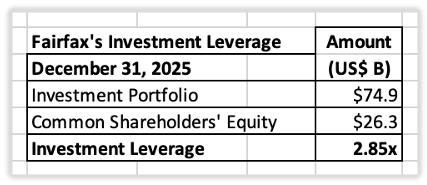
@73 Reds, I am not sure I understand your question. To me float is important. What is perhaps more important is the amount of leverage. @SafetyinNumbers has been talking about this for years... it is slowly sinking in for me. Fairfax is about 2.85x leverage (investments to shareholders' equity. What happens to the amount of leverage over time is important to longevity of the business model. Berkshire Hathaway lost the amount of leverage over time for a bunch of reasons. The end result is BRK's business model has completely changed. Earnings are much lower (still solid). Fairfax appears laser focussed on keeping the amount of leverage high. Which suggests to me it will continue to be a wonderful business for at least the next decade (likely longer). But that is as far as my crustal ball attempts to look.
-
Ok so top 50% is unparalleled in the world basically. And if you tweak a lot of things, the Bottom 50% is maybe top 10 or 15 when compared to small, mostly homogeneous, semi-socialist European countries with no social dynamism. How do you get “poor” from that? You are starting to remind me of the German propagandist on the speaker in Saving Private Ryan “the Statue of Liberty is Kaput”
-
Thanks, Viking. Do you look at Fairfax's float the same as Berkshire's float? If not, how do you view them differently?
-
The best game of the tourney by a mile was England France. The Final was a lopsided beatdown of MS13 lookalikes. What were the shots again? 20-2? Felt bad for the Argentina goalie, though...played a hell of a game, despite his teammates acting like thugs.
-
Thanks a lot @LC! It turns out the process is a bit more nuanced than I had assumed. Just an anecdote: Earlier this year, I experimented with Gemini Pro via Perplexity creating a few PowerShell scripts doing administrative stuff, and I ended up wasting almost more time trying to bypass the overzealous anti-hacking restrictions than on the actual programming. That eventually made me lose interest.
-
That show was terrible. I turned down the sound when Justin f’n Bieber showed up with a Guitar. Might as well let Trump dance a tango with Gianni. I would rather watch some Bud commercials if they are decent.
-
The Unsettling Of America is his Magnum Opus and Nick Offerman narrated the audio book. Very much in line with Thoreau although slightly different focuses. Goes great with a glass of Kentucky Bourbon.
-
Since we are talking about software companies (and IP infringement on code?) in this thread, who even reads code at all outside of some poor senior developers who have to? Soon no one will read the code anymore.
-
I had never heard of Wendell Berry but sounds like an interesting guy. Reminds me a bit of Henry Thoreau. https://en.wikipedia.org/wiki/Wendell_Berry Agree with this take. The anti-corporate criticism all is a bit romantic but I think there's a fair point buried in the sentiment.
-
https://9gag.com/gag/aXP5oAv The dutch analysing the half-time show.
-
Median household income is incomplete without accounting to the cost of living and debt situation ( and how it decrease from the median down the curve...)... What you have said it is true...but at the same time The U.S. bottom 50% generally possesses less real purchasing power than their counterparts in Western and Northern Europe...(source : World Inequality Database (WID) and the OECD Income and Wealth Distribution Databases.)
-
You can design it how you want. But even if you bake it into the deployed LLM, it is essentially a modular feature that the developers can toy with. The base neural networks that drive these LLMs do not by default perform "content filtering": that needs to be specified by developers. How you define the content filter can also be deterministic (i.e. do not deliver any output with the term 'bomb' within) or you can use something like a semantic score or semantic similarity to classify responses against a toxicity database, and filter those with a score > X, or instruct the LLM to generate responses which do not include XYZ. There is a lot of freedom which has pros and cons. Below are some generic resource Gemini's response to the same question, in case you are interested: https://ai.google.dev/gemini-api/docs/safety-settings Here is Gemini's response: Gemini detects and filters explicit content through a combination of built-in automated safeguards, multimodal analysis, and customizable developer thresholds. [1, 2, 3, 4] 1. Core Detection Mechanisms Multimodal Analysis: Because Gemini is natively multimodal, it evaluates text, images, video, and audio simultaneously to understand context rather than relying solely on keyword triggers. [1] Probability Scoring: Safety filters score content based on the probability of it being harmful or unsafe (rather than just its severity). [1] Scoring Levels: Detected content is categorized into four confidence levels: NEGLIGIBLE, LOW, MEDIUM, and HIGH. [1] 2. Built-in Safeguards Prohibited Categories: Certain categories like Sexually Explicit Material are hard-blocked by default in consumer applications and are governed by Google's Gemini Policy Guidelines. [1, 2] Non-Configurable Filters: Core protections, such as detecting child sexual abuse material (CSAM) or personally identifiable information (PII), are strictly enforced and cannot be bypassed or adjusted by developers. [1, 2] 3. Enterprise and API Controls For developers using Gemini via the API or Vertex AI, safety filters are highly customizable. [1, 2, 3, 4] Configurable Thresholds: Developers can adjust blocking thresholds for specific harm categories (e.g., Harassment, Hate Speech, Sexually Explicit, Dangerous Content) depending on their use case. Safety Metadata: When content is flagged, the model returns safety ratings that explain the reasoning and the probability level. [1, 2, 3] If you are asking as a developer, are you interested in learning how to configure safety settings in Google AI Studio, or are you looking for tips on refining system instructions for moderation? [1, 2]
-
Madonna, Shakira, and the Muppets lmao what a bizarre way to "bridge the global entertainment gap." I'm honestly surprised those three are still popular globally?
-
Wealth in a vacuum doesn't mean much. Accessibility to goods, services, and opportunities is far more important. The US does this pretty damn well imo. Sure we don't have the living museum aesthetics (we should have been Art Deco) like much of Europe; and we have gone down the corporatocracy path a little too far (imo)....But there is no question that opportunity is abundant in the US for all and to get started not much effort is needed. Also in the US we like space! Cannot imagine being stuffed in a 100sqft townhome with my kids, parents, grandparents and in-laws.....Sounds like Hell on earth
-
By some measures the US is 5th in median household income and by others it is 2nd. So the average person is doing among the best in the world without the billionaires. The countries above the US are tax shelters or petroleum states. If the median person is 2nd or 5th, how are the majority not doing well exactly? The above average person and entrepreneur class is doing fantastically better than everywhere else. 10% of the US are millionaires. Representing 40% of millionaires worldwide with 5% of the worlds population. The US also has by far the largest economy and almost all of the worlds great businesses. Who is in denial here? Everyone or you?
-
Agreed on everything . The red card really impacted Argentina’s game but it was well deserved - the #24 has been playing dirty for the entire game until he got sent off. Messi was pretty much neutralized by the Spanish defense robbing him of space (they didn’t dedicate a defender to him)- quite a feat. I agree Spain deserved the win.
-
Because the richest people (who are mostly 1st or 2nd generation immigrants) came to the US and built enormous companies in the country with the highest disposable incomes and deepest capital markets. Not because the poor in America are so much worse off than poor Italians. There are just way more rich people in the US.
-
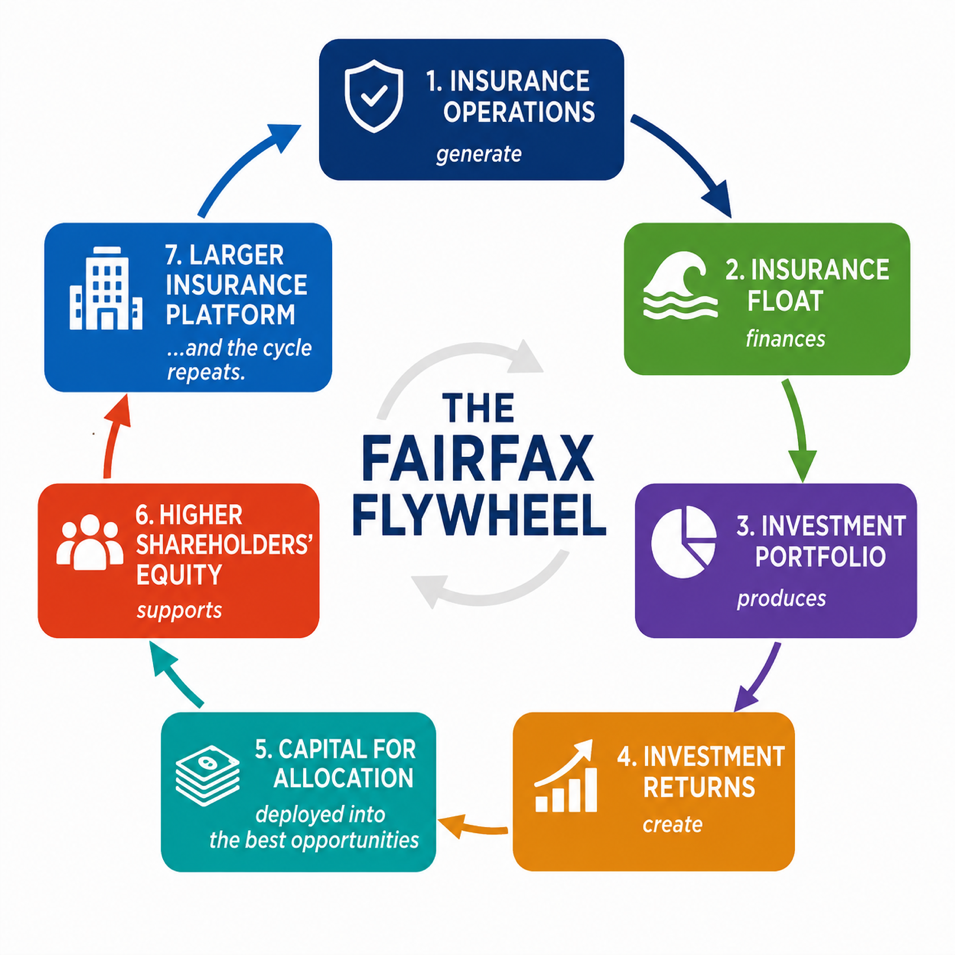
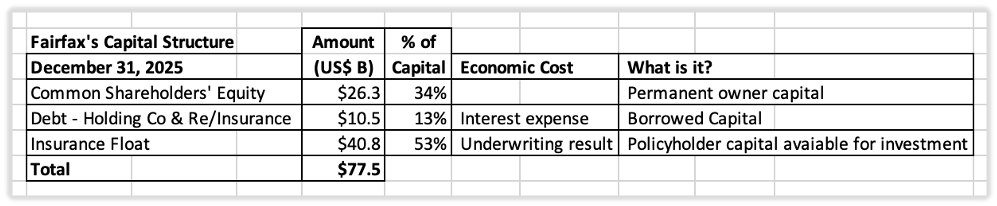
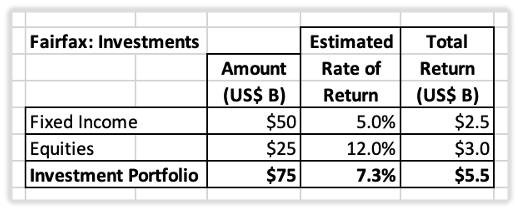
I am in the process of updating the chapter on Fairfax's business model in my book. I keep coming back to this topic because it is important and difficult (this becomes even more apparent to me when I hear others trying to explain Fairfax). Let me know if you think my description below is roughly accurate. What looks right? What is missing? There are 4 articles coming over the next week. Below is the chapter summary and the first article. Chapter Summary A company's business model determines how it creates value for shareholders. It explains how the company earns money, allocates capital and compounds value over time. This chapter explains how Fairfax's business model works, how it has evolved over the past four decades, why its organizational structure creates a competitive advantage and how the company's various sources of earnings fit together to create a unique capital compounding business. Key topics covered include: A Capital Compounding Machine – Introduces Fairfax's business model using the flywheel framework, explaining how insurance, float, investing and capital allocation work together to create a self-reinforcing cycle of long-term value creation. How the Business Model Evolved – A Much Better Business Today – Examines how Fairfax's business model has evolved through four distinct phases—Build, Learn, Optimize and Compound—and explains why today's company is fundamentally stronger than any previous version. The Organizational Advantage – Cenralized Capital Allocation and Decentralized Operations – Explains how decentralized operating businesses and centralized capital allocation work together to maximize long-term per-share value, and why Fairfax's ability to execute this organizational model has become an important competitive advantage. An Income Stream View of the Business Model – Examines Fairfax's business model through its six income streams, connecting the company's three business engines to its financial statements and illustrating why Fairfax differs fundamentally from a traditional property and casualty insurer. Together, these articles explain how Fairfax creates value, why its business model has produced exceptional long-term shareholder returns and why the company is best understood as an integrated capital allocation organization built on an insurance foundation. =========== Understanding Fairfax’s Business Model A Long-Term Capital Compounding Machine Built on Insurance Float, Investment Leverage, Decentralized Operations and Disciplined Capital Allocation Introduction Fairfax describes itself as follows: "Fairfax Financial Holdings Limited is a holding company which, through its subsidiaries, is primarily engaged in property and casualty insurance and reinsurance and the associated investment management. Fairfax's corporate objective is to achieve a 15% growth in book value per share over the long term. Fairfax seeks to differentiate itself by combining disciplined underwriting and investing its assets on a value-oriented total return basis, believing that this approach will provide above-average returns over the long term." The description accurately summarizes what Fairfax does and what it is trying to achieve. It does not, however, explain how the company expects to achieve those objectives. The first step to answering that question is understanding Fairfax's business model. Over the past four decades, Fairfax has built an integrated system that combines insurance, investment leverage, disciplined investing and rational capital allocation. Each component reinforces the others, allowing the company to compound capital at an increasing scale over time. One of the best ways to understand that system is through the concept of a flywheel. A Business Designed to Compound Capital Great businesses are often easier to understand as systems than as collections of individual parts. Rather than focusing on quarterly earnings or individual investments, it helps to ask a more fundamental question: How does this business create increasing amounts of value over long periods of time? A useful way to think about that process is as a flywheel. The concept comes from a mechanical flywheel: a heavy wheel that requires considerable effort to get moving. Once turning, however, it stores energy and builds momentum. Each rotation makes the next one easier. The same principle applies to business. One successful activity strengthens the next, which strengthens the next, eventually feeding back into the original activity. Rather than simply generating profits, each cycle increases the company's capacity to generate even greater profits in the future. A → strengthens B → strengthens C → feeds back into A A successful business does more than earn money today. It increases its ability to create even more value tomorrow. Figure 1: The Fairfax Flywheel Fairfax's flywheel is shown below. The remainder of this chapter examines each component of the flywheel and explains how, together, they have enabled Fairfax to compound capital successfully for more than four decades. Step 1: Build a High-Quality Insurance Business Insurance is the foundation of Fairfax's business model. A high-quality property and casualty insurance business creates value in two ways. First, it generates underwriting profits by consistently collecting more in premiums than it ultimately pays in claims and operating expenses. Second, it generates insurance float. Premiums are collected today while claims are often paid months or years later. During that period, those funds can be invested. Underwriting profits increase current earnings, while float provides investment capital that generates future earnings. As Fairfax's insurance operations grow, both sources of value expand, allowing the investment portfolio to grow without issuing additional shares. Chart 2: Fairfax's Capital Structure The chart above illustrates how Fairfax finances its investment portfolio. At year-end 2025, the company had approximately US$77.5 billion of investment capital funded by three primary sources: common shareholders' equity, debt and insurance float. Insurance float was the largest source of capital, representing 53% of the total. Unlike debt, whose cost is measured by interest expense, the economic cost of float is determined by underwriting performance. Because Fairfax has generated consistent underwriting profits in recent years, its largest source of investment capital has also been profitable. Over the past four decades, Fairfax has built a global insurance franchise while steadily improving underwriting performance. Better underwriting increases current earnings while producing larger, lower-cost float to support the investment portfolio. That combination gives Fairfax a financing advantage that relatively few companies possess. The next question is how Fairfax invests that capital. Step 2: Invest the Capital Insurance float is not idle cash. It is invested alongside shareholders' equity and debt in a diversified portfolio of fixed income securities, public equities, private businesses and other investments. As a result, Fairfax controls an investment portfolio that is much larger than shareholders' equity alone could support. If invested successfully, that larger capital base can generate substantially higher earnings than equity alone would allow. Chart 3: Fairfax's Investment Leverage At year-end 2025, Fairfax managed approximately US$75 billion of investments—about 2.85 times common shareholders' equity. Investment leverage creates the opportunity. Investment skill determines whether that opportunity is realized. Most property and casualty insurers treat investing as a supporting function, focusing primarily on preserving capital and matching assets to insurance liabilities. Fairfax takes a different approach. It treats investing as a core business, allocating capital across fixed income, public equities, private businesses and other investments wherever expected long-term risk-adjusted returns are most attractive. Fairfax's decentralized philosophy extends beyond insurance. Rather than simply owning securities, it partners with capable entrepreneurs and management teams, giving them significant autonomy to build stronger businesses over time. As those businesses grow their earnings and intrinsic value, Fairfax participates directly in that value creation through its investment portfolio. Chart 4: Fairfax's Investment Portfolio The investment portfolio generates multiple streams of earnings, including interest income, dividends, earnings from associates, earnings from consolidated subsidiaries and investment gains. Those earnings increase Fairfax's financial resources, providing management with additional capital to allocate in the third step of the flywheel. Step 3: Allocate Capital Rationally Insurance operations generate underwriting profits and float. The investment portfolio generates additional earnings. Together, they create capital available for allocation. The next decision is where that capital should go. Unlike most diversified companies, Fairfax separates operating decisions from capital allocation. Its operating companies are highly decentralized, but capital allocation is centralized. Capital generated anywhere in the organization is not trapped within individual subsidiaries. Instead, management can redeploy it across insurance operations, public equities, private businesses, acquisitions, fixed income securities, share repurchases and other opportunities. This gives Fairfax an important advantage. Capital can continually be redirected toward the opportunities offering the highest expected long-term returns rather than remaining invested where it was originally earned. Decades of relationships with entrepreneurs, management teams, business families and long-term investment partners further expand that opportunity set, giving Fairfax access to investments that may not be available to most public companies. The objective is straightforward: allocate every incremental dollar to the opportunity expected to create the greatest long-term value per share. Successful capital allocation strengthens Fairfax's earnings, intrinsic value and financial position, providing even more capital for the next turn of the flywheel. Step 4: Repeat the Process at a Larger Scale Successful underwriting, disciplined investing and rational capital allocation increase Fairfax's earnings, intrinsic value and financial strength. That additional capital strengthens the balance sheet and expands Fairfax's capacity to write insurance, generate float and grow its investment portfolio. The flywheel turns again—but from a larger capital base. Unlike many insurers, Fairfax is not constrained by any single market cycle. When insurance opportunities are attractive, capital can be directed toward expanding the insurance platform. When expected returns are higher elsewhere, capital can be allocated to public equities, private businesses, acquisitions, fixed income securities or share repurchases. This flexibility allows Fairfax to continually direct capital toward the opportunities expected to create the greatest long-term value. Each successful cycle increases Fairfax's financial resources, allowing the company to write more insurance, control a larger investment portfolio and allocate more capital than before. The flywheel doesn't simply repeat—it accelerates. Why the Flywheel Matters The power of Fairfax's business model lies not in any single component, but in how its components reinforce one another. Insurance operations generate underwriting profits and float. Together with shareholders' equity and debt, float provides the financial leverage to support a much larger investment portfolio than equity alone could finance. Disciplined investing generates multiple streams of investment earnings, while rational capital allocation continually directs that capital toward the opportunities expected to create the greatest long-term value. Each successful turn of the flywheel increases Fairfax's earnings, strengthens its balance sheet and expands its capacity to write insurance, invest capital and allocate even greater financial resources. Over time, the system compounds on itself. Viewed through this framework, Fairfax is best understood not simply as a property and casualty insurer, but as a capital allocation organization built on an insurance foundation. Insurance provides the capital. Investment leverage expands the capital base. Disciplined investing compounds that capital, and rational capital allocation continually directs it toward its highest-value use. Understanding this flywheel provides a framework for understanding Fairfax. The articles that follow examine the business model from different perspectives, providing a deeper understanding of how Fairfax creates long-term shareholder value.

-

Buffett/Berkshire - general news
DooDiligence replied to fareastwarriors's topic in Berkshire Hathaway
My favs: “Since humans love to gamble so much, there’s more money in cultivating gamblers than there is in cultivating investors. If somebody bought Berkshire [stock] 40-50 years ago, a guy would have made one commission. And he should have spent the rest of his time telling the client, ‘Don’t do anything with it!’ And that’s just not the way [it goes]. We can’t expect that of humans. But, every now and then, you do find people that behave far better than other people.” “All I do is think about the downside,” said Buffett. “The upside will take care of itself.”