All Activity
- Past hour
-
Mortgage rates are in line with long term averages and well below when I financed my first, fifth and tenth property. Today's mortgage rates are not the culprit. Its the actual purchase price and cost of insurance, taxes and maintenance.
-
Thanks!
-
These 6.5% mortgage rates are great for first time home buyers... ...in Tehran! Fly that flag, baby! Yeehaw!
-
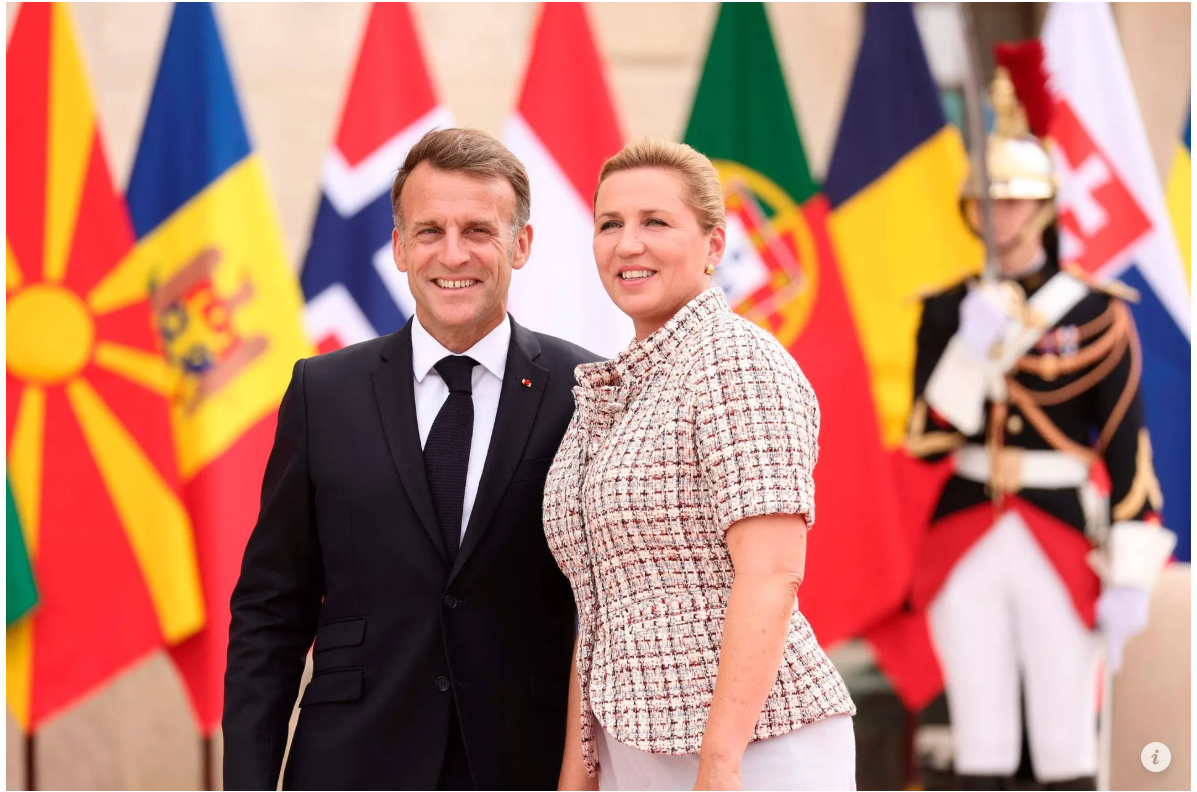
Yeah, @Spekulatius, It is. It's also an important message to Putin, who by now has placed his country in a somewhat deadock situation - primary because of the Eoropean support to Ukraine, where Russia simply can't keep up. With cooperation among the countries in the coalition of the willings this is far from a dream, a mirage. It will happen. - - - o 0 o - - - It looks to me as Danish PM Mette Frederiksen has gained some weight recently? - Maybe too much good food at meetings? -Maybe soon POTUS will call her fat and nasty!, - not just nasty ...

-
HaHa! - It's just awesome!
-
Sometime around the end of this month the US runs out of SPR reserves. Cushing (heavy oil) is already at below minimum level, with what's left as primarily sludge. VZ heavy supply is still very limited, Russian is essentially now only for domestic use; leaving mostly just Mexican and Canadian. And the US formally advising that it wants out of CUSMA ...... the art of the deal. The SOH now locked solid, and the Red Sea now under attack, there will be a lot less leakage covering shortfalls. China will also be reentering the market in the coming months. Absent a sudden change; one has to think that the line ups at the pump start happening by around mid September, maybe earlier. Hang on for ride SD
- Today
-
Signal episode What happened within roughly 20 trading days Result July 12, 2024 COR1M reached its then-all-time low. The subsequent yen-carry unwind culminated in the August 5 selloff; the SPX decline from the signal area was substantially greater than 5%. Hit - 10% February 2025 — apparently around February 19 SPX peaked on February 19 and fell more than 3% during the following week; the decline continued considerably further during the following weeks. Hit -20% October 7, 2025 SPX suffered an approximately 3% intraday decline on October 10, three sessions later. The closing decline was approximately 2.7%. -3% - fail January 12, 2026, approximately COR1M again crossed the threshold, but SpotGamma subsequently said it reversed without a “meaningful vol shock.” -12% after 40 days May 29, 2026, inferred from the May 31 report SPX closed May 29 at 7,580.06. The lowest close through June 26 was 7,354.02, a −2.98% drawdown. The June 26 intraday low was 7,294.18, a −3.77% drawdown. -5% June 29, 2026–present A new episode began at 7.56 on June 29 and remains below 8. As of July 13, fewer than 20 trading sessions have elapsed, so the observation is incomplete. Open/ So maybe even 10% is a good target to shoot for.
-
Heck LC, that's minor league stuff. The major league catastrophe is driving the average age of first time home buyers to 40 years old - by unleashing 21% inflation during Biden's term and then letting 20 million illegals waltz into the country. Nothing like destroying the American dream of home ownership while driving rents through the roof. Don't worry though - your buddy Mandami has a solution - rent controls... and Trump sealed the border shut....
-
Here is a short article that estimates the impact on BVPS of share repurchases above book value. The size of the impact surprised me. Hat tip to @SafetyinNumbers for bringing this topic up in the past. Share Buybacks, Book Value and Intrinsic Value Warren Buffett has long argued that the economics of a share repurchase depend primarily on price. When a company repurchases shares below intrinsic value, continuing shareholders benefit. Their ownership interest increases without requiring them to invest additional capital, increasing intrinsic value per share. Book value is a separate question. Buybacks below book value increase BVPS. Buybacks above book value decrease BVPS. Neither outcome tells investors whether value was created or destroyed. That depends on whether the shares were purchased below intrinsic value. A good share buyback can therefore reduce book value per share while increasing intrinsic value per share. The Emerging Story at Fairfax This framework is becoming increasingly relevant for Fairfax. Since 2018, the company has aggressively repurchased its shares. In recent years, a meaningful number of those shares have been purchased at a premium to book value—but clearly below management's assessment of intrinsic value. The result is a growing divergence: Fairfax's buybacks are reducing reported BVPS while increasing intrinsic value per share. Consider Q2 2026. Fairfax appears to have repurchased approximately 675,000 shares for $1.08 billion, or roughly $1,600 per share. With BVPS of approximately $1,250 during the quarter, Fairfax paid about $350 per share above book value. Premium to book value: $1,600 − $1,250 = $350 per share Total premium paid: $350 × 675,000 = $236 million Assuming approximately 21.6 million diluted shares outstanding at quarter-end: Estimated reduction in BVPS: $236 million ÷ 21.6 million = approximately $11 per share In other words, Fairfax's Q2 share repurchases are estimated to have reduced reported BVPS by approximately $11 per share. The estimated impact was approximately $9 per share in Q4 2025 and $7 per share in Q1 2026. Including Q2, share repurchases above book value may have reduced reported BVPS by approximately $27 per share over the past three quarters. Yet because Fairfax purchased those shares below intrinsic value, continuing shareholders are economically better off. The Impact on Traditional P/C Insurance Valuation For P/C insurers, investors often focus on two closely related measures of performance: BVPS growth and ROE. Share repurchases above book value affect both. BVPS declines. Fairfax is paying more than book value for each share it retires, reducing book value per remaining share. ROE increases, all else equal. The buybacks reduce common equity. If earnings do not decline proportionately, Fairfax generates a higher return on a smaller equity base. Value-creating buybacks can therefore make BVPS growth look weaker and ROE look stronger. Investors need to understand how capital allocation is affecting both measures. Why It Matters Book value remains an important metric for Fairfax, but it is becoming a less complete measure of value creation. As Fairfax repurchases more shares above book value but below intrinsic value, reported BVPS will increasingly understate the economic benefit of those repurchases. This also complicates valuation: Fairfax can increase intrinsic value per share while reducing the book value investors use to calculate its price-to-book multiple. This is an emerging story for Fairfax investors. The pace of buybacks has accelerated, and the cumulative impact on BVPS is becoming meaningful. Buffett's framework provides the right lens: book value measures the accounting impact of a buyback; intrinsic value determines whether it created value. For Fairfax shareholders, the gap between the two is becoming increasingly important. ------------ Appendix: A Partial Bridge from Book Value to Intrinsic Value Book value is an accounting measure. Intrinsic value is an economic measure. The two are not the same. One obvious adjustment for Fairfax is the excess of fair value over carrying value (FV over CV) of its market traded non-insurance associates and consolidated holdings. This is not a theoretical adjustment. The value is observable in publicly traded securities but is not fully reflected in Fairfax's reported common equity. At June 30, 2026, the excess of FV over CV is estimated at approximately $4.1 billion, or $190 per diluted share based on 21.6 million diluted shares outstanding. Assuming a 20% tax rate, the after-tax value is approximately $150 per share. If Fairfax reports BVPS of approximately $1,300 at June 30: Reported BVPS: $1,300 After-tax excess of FV over CV: +$150 Adjusted BVPS: $1,450 This is not an estimate of Fairfax's intrinsic value. It is simply one identifiable adjustment that provides a partial bridge from accounting book value toward economic value. It also provides useful context for Fairfax's share repurchases. A buyback at $1,600 may represent a meaningful premium to reported book value, but only a modest premium to adjusted book value—and a discount to intrinsic value. That is the key distinction. Fairfax is reducing book value per share to increase intrinsic value per share. As the pace of buybacks continues, understanding the difference between the two will become increasingly important for investors.
-
Trump is such a friend of the working class he made it 20% more expensive to drive my F250 to Walmart. Slide over to the end of the bar, Kash Patel - we're gonna need to Shaggy and Scooby to solve this mystery!
-
This is part of the European sovereignty drive but there is a huge difference between announcing a project and having a complete solution.
-
@John HjorthThanks, great advice. We love great beaches, fresh fish and a stressfree environment. So I think it will be a great holiday. Our 2 boys (8 year old twins) love to play at the beach. I bought a good surf board. I hope the north sea is not too cold.
-
Nice job! Different methodology for calculating intrinsic value than I use but they all end up in the same ball park.
-
Screw it, if not all - including USA - are not in on this : Ueractiv [July 13th 2026] : Ten European countries join forces to build anti-ballistic missile capability Subtitle : The initiative will bring together defence industries, research institutions and operational expertise. - - - o 0 o - - - USA has already lost it's control of / power over what's going to happen going forward.
-
Another Trump disaster - all is lost!
-
No, i just hedge from May to October. I use 5% notional value of my portfolio and buy december puts on the DAX 5% out of the money. I buy at the end of april and hold to the end of october or when the DAX is down 20%, at that point the puts will be a 5 to 6 bagger so it covers all losses on the portfolio, assuming it draws down like the DAX. That worked well in 2015 and 2018 where puts made me money. Since than i lost ~4-5% every year, in 2022 it was just 1%, because the market moved down a little. In essence as long as the market tanks 20% in the summer every 5th year, the strategy will break even and reduce market drawdowns to ~0. New strategy for winter: I will use the backtested strategy of the option guy from the excess return podcast. At 41 minute mark he talks about it: In essence when forward https://www.investing.com/indices/cboe-1month-implied-correlation is below 8 i will put 1% of my portfolio in 6 week ATM S&P500 puts. He mentioned that after 20 days the market often draws down ~5% after such a signal so that is my profit target for now. But this strategy is new to me, so i need to see how it goes. I am also not sure about the profit target here, need to do some digging. And because the situation is so insane right now, i also started doing it last thursday, but that is just to test some waters outside of winter.
-

I Need a Laugh. Tell me a Joke. Keep em PC.
rkbabang replied to doughishere's topic in General Discussion
I tend to agree. I have a full block set of Henckels knives, but 2 or 3 of them get most of the use and I could probably do without most of them. I tend to use the 8" & 10" chef's knifes most of the time. I do use the bread knife often though, and the slicing knife sometimes as well. Also the tomato and cheese knives occasionally. OK, I think I just convinced myself you're wrong while typing this. That's me though, my wife just uses the paring knife for everything. -
He has no good choice because Iran was blockading the Oman side of the SOH by attacking ships going that route which circumvents their tolls. Anyways, this Iran war mess will last a while. It would not surprise me if the next administration will have to deal with this.
-
@Fly This is the real question and probably not. it depends on what i was saying about will there be a way for individual to say I want to hold my own assets and can i play on the broader blockchain. I do know these institutions are building blockchain rails internally. what i am uncertain of is if there is a application layer that is cross institutions yet. This can still be private and the validators / nodes can be held by the various institutions. But this is what would allow you to sell your shares to me if you hold your shares in IBKR and I hold mine in Schwab. it needs to leave one and go to the other and they can both hold their own ledgers internally but the application layer needs to be shared with validators on both sides. I'm betting this is happening. Also probably happening in health care with your health records. So yea, it comes down to will they let individual people play in the broader application layer saying I dont want to hold my shares in my wallet and not on schwab? Realistically there probably not a strong investment thesis other than in theory JPM, and other banks/brokers. should be able reducing opex and improving margin and customer experience as they implement the changes.
-
Looks like Trumpy has put the blockade back on...as you know the working class loves high oil prices so it's obvious that Trump has an incredibly deep love of the working class. For all the blue collar folks here, I hope you feel deep inside of you, how much Trump loves you
-
So if everything is held on internal private blockchains will there be any investable angle for us besides these JPMs of the world? As far as I know JPM basically did a cut/paste of the Ethereum blockchain and internalized it so it is closed to the public and they have all of the validators.
-
Was this just some roundabout way to steal the SOH...cuz starting a war, and then using the counterparty's response to then militarily seize the asset and then charge tolls is......a bit out there lmfao
-
Only the US (The Guardian Of The Homuz Strait) .... can be this warped https://www.theglobeandmail.com/world/article-us-iran-attacks-kuwait/ “The U.S.A. will be, from this point forward, known as ’THE GUARDIAN OF THE HORMUZ STRAIT’, but as such, and as a matter of FAIRNESS, will be reimbursed, at the rate of 20% on all cargo shipped.” The Iranians charge maybe USD 3/bbl (high) ... or 4% on a USD 75/bbl; the US charges 20%. The strait is now guaranteed to remain closed, and the Gulf incentivized to support Iranian tolling of the strait instead. SD
-
Thanks! The article was a pretty good summary actually though it missed that I recommended 2 books not one, and stressed that @Viking's compendium is a must read for anyone who wants to learn deeply about Fairfax.
-
With a new baby I don't have much time for paper books but I still try to listen to audiobooks when I drive or walk the dog. Since I was looking at exchanges lately (CME, CBOE, MIAX, OTCM) this new book was timely and I really enjoyed it. I finished it in 2 days. It's about the CME's purchase or CBOT and how ICE tried to step in and buy it out from under them. CME eventually bought them and NYMEX and became the dominant futures exchange in the US. It's well written and really informative. I have a background in this stuff, but it's pretty hard to explain some of the esoteric stuff to people not involved in it. This does a good job of that. It also goes over some stuff that I wasn't aware of like the origin of ICE. It started as a competitor to Enron by some enterprising traders and they kept evolving to go where the money is. (Now they own NYSE and some other stuff). The behind the scenes Game of Thrones manuevering is very interesting. There are FOUR books with the title "Zero Sum Game" on Amazon, this is the one I'm referring to: https://amzn.to/4biPBtK Highly recommend!