All Activity
- Past hour
-
@LC, perhaps another way to ask the question is what cost base are you using when projecting future returns from the equity portfolio? Is it Fairfax’s carrying value? Or market value? The starting point matters. I use CV. Therefore, I think Fairfax will be able to outperform the broad market averages over the next 5 years. It really is an interesting thought exercise. The up-front assumptions matter a lot. I appreciate you taking the time to comment… this stuff really is complicated.
-
I’m not sure the index return has much to do with what Fairfax’s portfolio does. Do you consider the difference between economic return and accounting returns in your analysis?
-
I understand where you guys are coming from and share your disgust of the actions Iran supports indirectly and carries out directly - but your making the standard error in IR, which is your falling to walk a mile in your opponents shoes. The madman fallacy (like with Iran) is the oldest narrative in conflict - first between neighbouring tribes, then between Kingdoms, now between States. The story goes that your enemy is crazy, psychotic & irrational. The the more truer reality is your enemy is paranoid, scared and has no way of knowing what YOUR true intentions are. The cost in international security of attributing benign intent to a rival and getting it wrong - is that you don't get to exist anymore. The problem is compounded by the fact that in war all defensive military spending when viewed through the lens of fear and paranoia looks an awful lot like offensive spending. This leads States to act in ways that you perceive as crazy but is essentially survivalist paranoia driven by incomplete information (i.e. rival intentions) The reality is if you take a step back and re-frame the Iran & Israel rivalry from a purely classical realist, offensive & defensive perspective - as a regional security competition between two powers vying for regional hegemony it is depressingly similar to so many regional security competitions throughout history. The novelty with Iran/israel (say versus France and Germany's European competitions) is the use of proxies AND the involvment of non-regional global hegemon in the competiton. When you get down to it - both countries, Iran and Israel'sp, are deeply insecure and hyper-concerned about their survival & security - they should be they live in a bad neighbourhood. They are both adolescent regimes - one created in 1947, the other in 1979 . Both have had existential territorial events in the last 80yrs (i.e. living memory). So they are both paranoid - as they should be. Paranoid geopolitical actors are the ones that survive. When you reframe things with this lens what you find is that Iran since 1979 has been operating a very rational (albeit brutal) relative power/survival playbook. Has it been effective? I mean the proof is in the pudding - the Islamic revolution is still in existence, Iran's territorial map hasn't changed since 1979 despite being the least preferred regime option of the global superpower and its pal in the neighbourhood Israel. Its this still there. Indeed Iran just had the US gunsights on it for a full two months and walked away with an MOU and sanctions relief. @inofeisone above kind of sums it up well here, my view on Iran.....hate the regime, the behaviour is morally abhorrent.....you can say many things about what they've done, all true.....but irrational isn't one of them....in fact its extreme moral & ethical bankruptcy is a function of its extreme rationality when viewed through the lens of the power asymmetry that exists between them and the US/Israel I'll tackle your points @Marco Van Basten line by line. Before I do - you need to hold the following realist framework principles constant as they underpin the explanation around Iran's behaviour over time that hopefully helps you see them less as lunatics intent on Israel's destruction and more like the paranoid, weak state that drives much of their decision making. Seen through this lens - Iran's foreign policy is quite rational and dare I say it quite innovative in its construction given the unique security puzzle it has to solve for itself....its not often a regional foe has the complete and almost unfettered support of the Global hegemon as Israel has. Which makes this regional security competition somewhat unique and that uniqueness drives a lot of Iran's novel response to its novel regional security competition. Anyway here are the principles - it's hard to argue with any of them: (1) there are no actors in the system above States, the system is anarchic by nature, when you call 911 in the international system nobody answers - its fundamentally a self-help system (2) States, therefore, are chiefly concerned with their own survival (they have to be, nobody is coming to help) (3) it's impossible to know the true intent of your international rival, as intent lives in the minds of men (4) Because the cost of intent miscalculation is "national death,". States must constantly weigh the costs and benefits of their actions based on imperfect information. Paranoia in international relations isn't a psychological defect, it is a structural requirement. You must assume the worst in your rival. Put all that together you get the output (5) (5) Because you must assume the worst, and because you can never know how much power is enough to guarantee survival against future threats, the only truly rational choice is to maximize your relative power in whatever way you can. Taken to its extreme the ultimate goal of any highly capable rational state is to become the regional hegemon—to be so overwhelmingly powerful that no other state in the region would even dare to challenge you (similar to the position the US enjoys in the Western Hemisphere). China, as we know, is on this mission in East Asia. Now let's look at the actions you highlighted as being somehow irrational. Taking the hostages wasn't an irrational act - it was a deeply insecure, newly formed regime prioritizing its own survival. Because the US had previously orchestrated the 1953 coup to install the Shah, the revolutionaries acted preemptively to eliminate what they rationally assumed was potentially the main staging ground for a second counter-revolution - the US embassy. Furthermore as you mention the Soviets, Iran shrewdly relied on Cold War calculus here in doing so....they knew their massive border with the Soviet Union served as a geopolitical shield, preventing Washington from risking a full-scale retaliatory war or nuclear strike that could trigger a direct superpower confrontation. It was an ugly violation of international norms, but in the ruthless, zero-sum logic of a self-help system, it was a highly calculated and rational move. Did it work? Well yeah. By seizing the embassy, the revolutionaries successfully blinded US intelligence to preempt a feared counter-coup, while Ayatollah Khomeini weaponized the external crisis to purge his own domestic rivals and consolidate absolute clerical control. Death to America was a shrewd exercise in consolidating power inside Iran. A fundamental law of statecraft is that a looming external threat is the single most efficient mechanism for internal political cohesion. When the revolutionary regime took power in 1979, it was highly fragile and faced massive domestic fractures from various rival factions. By institutionalizing the specter of an ever-present, monolithic external enemy—the "Great Satan"—the ruling clerics engineered a permanent state of emergency. Furthermore, using the hostages as an asymmetric deterrent paralyzed the United States for 444 days, shielding the fragile new regime from superpower retaliation and ensuring its immediate short-term survival. Of course not very nice thing to do, morally abhorrent but brutally effective....a nascent fragile newborn theocratic regime is with us 40yrs+ later via the actions Khamenei decided to take. Death to America - Great Satan...political theatre Disgusting yes, rational if survival of Islamic revolution is the only thing being optimized for. I can argue of course that Khamenei optimized for the short term too much here and created a decades long problem for the regime...."Death to America", the "Great Satan" may have helped him consolidate power inside Iran post-revolution but it became a rallying cry for Israel to recruit the Great Satan himself to help in its relative power games with Iran. You state that Iran "chose war" against the US by funding Hezbollah to bomb the Marine barracks. A realist would counter that Iran emphatically did not want a conventional war with the United States, because its leaders mathematically understood they would be destroyed. Instead, Iran was engaging in asymmetric balancing. In 1983, Iran was already fighting a devastating, existential war against Iraq (a war the US was covertly supporting by the way). Simultaneously, the US and Israel had moved massive military forces into Lebanon—right in Iran's geopolitical backyard. From Tehran's perspective, a hostile superpower was projecting overwhelming force into a vulnerable periphery, bolstering a regional rival in Israel while also supporting a neighbouring state (Iraq) to incur into Iran. Because Iran lacked the conventional capital to challenge the US military directly, it engineered a highly leveraged asymmetric response: Hezbollah. They correctly identified that U.S. survival was not at stake in Beirut and so by consequence Washington’s political tolerance for pain and casualties was naturally low. Iran's leadership mathematically calculated this threshold. The bombing was not a spasm of blind fanaticism; it was a targeted strike on American political will. By inflicting a sudden, unacceptably high cost in blood—241 American servicemembers—Iran fundamentally altered Washington's cost-benefit analysis. The attack forced the Reagan administration to realize that the geopolitical yield of pacifying Lebanon was not worth the asymmetric price being extracted. The true strategic genius of the proxy model, however, lies in risk management. If the Iranian Air Force had bombed the Marine barracks, the U.S. would have been structurally compelled to retaliate directly against Iranian soil, potentially destroying the regime. Proxies keep actions in gray zones and hedge against retaliation. The strategy succeeded perfectly. A few months later, the United States withdrew its forces from Lebanon. Take a step back - Iran successfully forced a vastly superior global hegemon to retreat from a strategic theater without ever triggering a direct war. This 1983 blueprint established an exercise in pure structural deterrence, proving that a weaker state could successfully balance against a superpower by exporting chaos, managing escalatory risk, and bleeding its adversaries by proxy. Brutal, morally abhorrent. - but deathly rational and effective. You correctly point out that pre-1979, Israel and Iran were not at war, and Israeli engineers even built Tehran’s water system. But in international relations, alliances are not built on gratitude or friendship - they are temporary alignments based on mutual interest and threats. Indeed if/when the US goes to war with China people will marvel at how we used to work so closely together on trade. I mean will let them manufacture 100% of our medicine APIs, control all the rare earths we need! Anyway prior to 1979, both Iran and Israel shared a massive common enemy: the Soviet-backed Arab nationalist bloc (Egypt, Syria, Iraq). Israel and Iran engaged in a highly pragmatic "alliance of the periphery" to pool their power and hedge against that Arab core. The cooperation over water systems and agriculture was simply the byproduct of aligned security interests. However, moving into the late 20th century, the structural landscape of the Middle East underwent a seismic shift. The Arab states were neutralized or hollowed out (Egypt signed a peace treaty, Iraq was severely degraded). The geopolitical board was cleared. Suddenly, Israel and Iran found themselves as the two most capable, dominant powers in the Middle East. Realist theory dictates that when a regional system consolidates into a duopoly (with two highly capable states and no higher authority to enforce peace) they will inevitably view each other as the primary threat. Iran didn't just wake up and "choose" to hate Israel....the reality is the structural disappearance of their mutual enemies left them alone in the Middle East room together alone, sparking a classic, inescapable security dilemma and an ensuing wholly predictable security competition between them both. You ask if it is rational to fund groups dedicated to the destruction of Israel. Realist theory teaches us to pay attention to a state's capabilities and structural functions, not its public rhetoric. The rhetoric of "wiping out Israel" is largely an ideological tool used to recruit fighters and legitimize Iran's presence in the Arab world. The actual, on-the-ground function of these groups (for Iran) is fundamentally deterrence and containment. Consider the severe power imbalance: Israel possesses overwhelming technological superiority, total air dominance, deep structural US backing (from the global superpower no less), and a nuclear arsenal. Iran is under heavy sanctions with an aging conventional military. If Iran were to fight Israel in a direct, state-on-state conventional war, Iran would be decimated. The last thing a rational Iran should ever do is to enter into a conventional war but lets remember Iran is interested in maximzing its relative power in the region despite its inherent weakness relative to Israel/USA. Therefore, Iran's only rational play is to avoid a direct war while neutralizing or more precisely minimizing Israel's advantages. They do this through a doctrine of "Forward Defense." By heavily arming Hezbollah in Lebanon and Hamas in Gaza, Iran has essentially built a "ring of fire" directly on Israel's borders. It is a containment strategy. It's a deterrent strategy. A morally bankrupt one - see the horrors of Oct 7th - but ultra rational in its effectiveness given the power, resources asymmetry between Iran on one side and the US/Israel on the other. The brutal logic of the proxy war is that from a strategic standpoint, a proxy network is the most capital-efficient way for a conventionally weaker state to project power. Using proxies like Hezbollah and Hamas allows Iran to cap its downside exposure (actions of these groups never quite rise to the level of state on state conflict). It keeps things in a gray zone. While also keeping the battle lines thousands of miles away from Iranian borders and forces Israel to expend massive resources fighting multi-front wars of attrition. Resources its unable to project further afield. Again morally bankrupt - but if the game is relative power, survival etc etc....its highly rational. I hear you on Iran's "wiping out" aspiration for Israel but you know realist analysis requires us to strictly separate a state's declaratory policy (what it says) from its operational policy (what it actually does with its capital and military). The public rhetoric about "wiping out Israel" serves a very specific utility: it is a low-cost ideological mechanism used to legitimize Iran's influence on the Arab street, recruit proxy fighters, and justify the regime's heavy security state at home. However, their operational policy is deeply pragmatic and deterrence-based. They are trying to build a security buffer to ensure regime survival against structurally superior adversaries. They know they lack the military capital to actually wipe out a nuclear-armed Israel, so they do not operationally attempt it - instead, they attempt to contain it and establish mutual deterrence. If Iran were truly an irrational death cult indifferent to its own survival and dedicated to wiping out Israel/US, it would have launched an unprovoked conventional frontal assault against Tel Aviv or a US aircraft carrier decades ago. Instead, Iran operates with extreme discipline to cap its downside exposure. By utilizing a decentralized portfolio of proxies (Hezbollah, Hamas, the Houthis), Iran imposes continuous costs on its rivals while strictly keeping the conflict in a "gray zone" below the threshold of conventional or nuclear retaliation. You ask - If this is rational, what is not rational? In structural realism, irrationality is defined as a failure to accurately calculate the balance of power, leading a state to take on unhedged, existential risk that guarantees its own destruction. Examples of true state level irrationality are Imperial Japan attacking Pearl Harbor or Saddam Hussein invading Kuwait - Saddam miscalculated the unipolar dominance of the US, inviting a global coalition to utterly destroy his military infrastructure & regime. Iran systematically avoids those actions that would bring a true ground invasion (because its highly rational) - it constantly recalibrates its proxy attacks to avoid crossing existential red lines, calibrates its retaliatory responses to US/Israeli attacks and strictly manages its risk to ensure regime survival while keeping its regional rival (Israel) bogged down in its immediate backyard (Gaza, Lebanon) I find it all disgusting, as I find much of what the US does in the name of its national security at times disgusting - but Iran whatever way you slice operates as a deeply rational, albeit ruthless, geopolitical actor optimizing for its own survival at all costs in an anarchic system where maximizing your relative power best optimizes for the regimes survival over the long haul.
-
@SafetyinNumbers I don't have a great way to quantify that but I'd say a lumpy return that matches the index or underperforms by 1-3 percent. Phrased another way: my expectation is that any future outperformance would more likely be driven by underwriting consistency, superior fixed income investment, and perhaps re-rating of the market multiple driven by more consistency in these two areas. Equity returns I expect to have a much wider range of outcomes (investing in mattresses, stretchy clothes from dying brands, gold miners, CRE and rentals, and emerging market banks kind of gravitates towards that conclusion...). I am not banking on HW to knock it out of the park with those equity investments, but I'd love to be proven wrong!
-
I wasn’t aware you weren’t well John. I’ll keep you in my prayers.
-
What’s middle of the pack numerically?
- Today
-
Khomenei quickly labeled the USA as the “great Satan”. This was likely a reaction to the USA constantly mettling in Iranian politics and enabling the Shah coming to power. The Iran hostage affair occurred in the chaos of the Islamic revolution . Radical students raided the US embassy. This was not government sanction as a stable government in Iran didn’t even exist at that time. Khomenei quickly capitalized on this thigh and put his weight behind the students. This was done for to establish his friction as a ruler of Iran and it worked. Thats a lease that also a explains many action that one could think of not rational. My sense is that if you label someone or a party as not rational, you just don’t understand their motivation at all. Now we mettle in Iranian political again (regime change) and expect a different results. I think we probably stabilized the regime if anything.
-
My base case is a step-up in underwriting and middle-of-the-pack equity/investment returns. I don't see whatever it is that Prem et al see in Underarmor, Mattresses, and KW. That said I also would not have jumped into the mining business but Orla has done well. And there is stuff I do align with: Atlas Corp/Poseidon for instance (these guys took me under but hey what are ya gonna do) . And on the bond/fixed side I like what I see. That's essentially my 100ft view of why I am still holding here.
-
Fair enough, @Marco Van Basten! We know that there are points in the history of the company when the company performed admirably on the investment side of the business model and points when their performance was msignificantly subpar. And as was probably the case with Berkshire Hathaway, it may well be the case that the stretches of significant outperformance for the company on a per share book value basis occurred earlier on, when the company was quite a bit smaller so history is not likely to be the best guide to the future. What will really matter to us is how we expect them to perform in the near to intermediate future if we have included them in our own investment portfolios. My simple way of looking at it is that if the company is able to earn 5% on their total investments, which are leveraged bout 3 to 1 for investments to shareholder equity, also earns positive returns from underwriting profits, and doesn’t have too much of a drag from corporate overhead, interest expense and taxes, that a 15% or greater return on equity is eminently achievable. If they earn closer to their long term historical return on total investments of 7.7%, then even if underwriting profits were to completely disappear, we’re still sitting at around the 15% ROE level. Only if interest rates plummet and the total investment return drops well below 5% do we have a situation where a 15% ROE would appear to be out of reach without dramatically higher underwriting profits to act as an offset. I don’t think we need to assume stellar equity performance (or even outperformance relative to the index) to make it likely that the company will produce good results for its shareholders. But if anyone does wish to include in their estimate of intrinsic value the expectation that the current stable of equity investments will match or outperform the index going forward, that would in my opinion lead them to believe that an even greater margin of safety exists at the current market price. My personal rough expectation is that there is a greater than 50% probability that the company will meet or exceed a 15% ROE over the next five years, and I believe the downside probability is quite limited. Sort of a heads I win, tails I win a bit less and almost a zero chance of loss compared to current market price over the next five years.
-
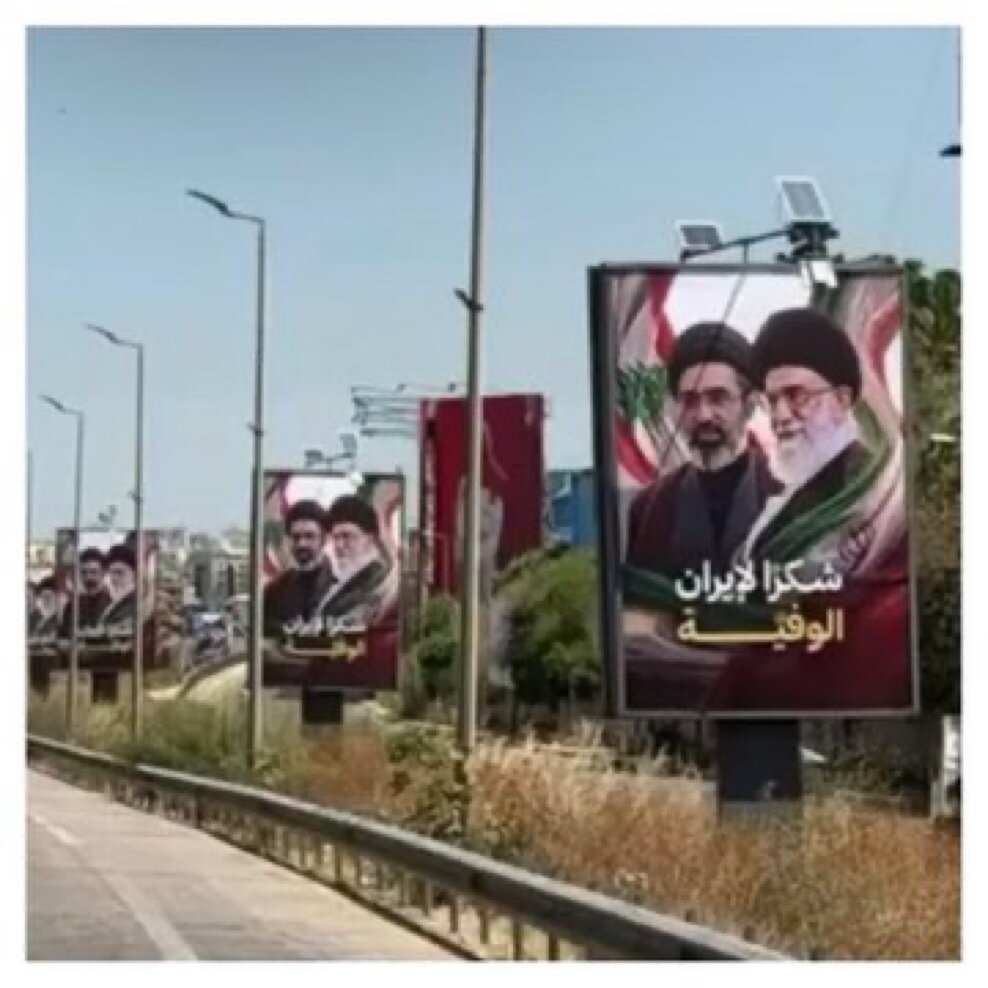
How is the “partial withdrawal” from southern Lebanon coming along? Trump just ordered it on Irans request. (I am attaching pictures of billboards in Lebanon thanking Iranians) Iranians are principled individuals and expect the MOU to be adhered to or we walk away and shut the SoH.

-
The equity returns were strong when underwriting was weak. Then the equity returns were weak when underwriting was strong. That generated 18%+ CAGR in BVPS. Now they are both strong. It will be interesting to see if returns are better than the <10% built in to the share price.
-
Whay I enjoyed is the news of Israel capturing a huge network of tunnels paid for by Iran with estimates of several 100s of hezb fighters and drone operators running short on water and food. I listened to the first 10 minutes and i never heard so much verbal diarrhea in my life. I love how your source of news is from someone who left Iran in 2003 and never visited since - 23 years ago. He says Iranians are pro Israel - just that view alone makes him a joke!
-
Originally people had the idea that money will rotate back into software and that has been reversed the last few weeks. Money just flows into AI-related names nonstop right now, probably will be a while before a rotation happens. If I were to to guess, could even rotate back to BRKB.
-
The Strait of Hormuz is being renamed the Strait of Schrödinger as it is both open and closed at the same time.
-
Internal fights for control. First 10 minutes tells the story:
-
I'm not as bullish on Fairfax's equity picks but over 40 years I agree w Viking the share price is a good indicator of the performance of the underlying earnings streams (investments, insurance). Hard to argue that, IMO.
-

Fairfax - A Deep Dive on Management and Culture
Viking replied to Viking's topic in Fairfax Financial
Article 1 in the series. I look forward to hearing what other board members think... The Importance of Shareholder-Friendly Management In Berkshire Hathaway's 1977 Annual Report, Warren Buffett outlined four criteria for selecting investments: "We want the business to be: 1. One that we can understand, 2. With favorable long-term prospects, 3. Operated by honest and competent people, and 4. Available at a very attractive price." Notice that management is one of only four requirements. Buffett later explained why: “The certainty with which management can be evaluated, both as to its ability to realize the full potential of the business and to wisely employ its cash flows; The certainty with which management can be counted on to channel the rewards from the business to the shareholders rather than to itself.” Buffett's observation gets to the heart of shareholder-friendly management. Management's role extends beyond operating the business. It must also decide how the cash generated by the business is allocated. Over time, these capital allocation decisions can have an enormous impact on shareholder returns. Management therefore has two primary responsibilities. First, it must operate the business effectively. Second, it must allocate the resulting cash flows in a way that maximizes long-term shareholder value. For investors, evaluating management is not optional. It is a critical part of the investment process. Why Investors Often Ignore Management If management is so important, why do many investors spend relatively little time evaluating it? The answer is simple: management quality is largely a qualitative factor. Most investors naturally focus on quantitative measures such as earnings, profit margins, return on equity, and valuation ratios. These metrics are objective, easy to compare, and fit neatly into spreadsheets. Management quality is different. How do you measure integrity, judgment, capital allocation skill, long-term thinking, or shareholder alignment? There is no formula that can answer these questions. Evaluating management requires observation, experience, and judgment. Yet management often has a greater impact on long-term shareholder returns than many of the financial metrics investors spend their time analyzing. Management determines how capital is allocated, whether acquisitions are made, how much debt is assumed, whether shares are repurchased, and how corporate culture is developed. In The Outsiders, William Thorndike found that the CEOs who created the most value for shareholders distinguished themselves primarily through superior capital allocation. Over time, those decisions compound and can become a primary driver of shareholder returns. For this reason, qualitative analysis should not be viewed as a substitute for financial analysis. It is a necessary complement to it. A Framework for Evaluating Shareholder-Friendly Management Shareholders need to consider many factors when evaluating management. One of the most important is whether management consistently acts in the best interests of shareholders. Do executives think and act like owners? Do they allocate capital wisely? Do they communicate openly and honestly? While no framework can eliminate judgment, it can help investors ask the right questions. One useful approach is to evaluate management using seven criteria: Ownership Alignment – Do executives think and act like owners? Compensation – Are incentives tied to long-term value creation? Per-Share Value Creation – Does management focus on value per share rather than corporate size? Capital Allocation – Is capital deployed rationally and with discipline? Communication – Are shareholders treated as partners? Long-Term Orientation – Are decisions made with a multi-year perspective? Trust and Stewardship – Do actions consistently match words? No management team will score perfectly on every criterion. The goal is to identify management teams that consistently behave like owners and treat outside shareholders as partners. Evaluating Fairfax Through the Lens of Shareholder-Friendly Management Using this framework, Fairfax scores highly. Management owns a meaningful stake in the company, compensation is shareholder-friendly, capital allocation is a core competency, and the organization is managed with a distinctly long-term orientation. Most importantly, management has invested alongside shareholders and created substantial value over four decades. Ownership Alignment: A+ This is one of Fairfax's greatest strengths. Prem Watsa owns or controls approximately 10% of Fairfax's economic interest and more than 40% of the voting power. The vast majority of his net worth remains invested in Fairfax shares. Fairfax has also built an ownership culture throughout the organization. Senior executives receive 50% of their annual bonuses in Fairfax shares that vest over five years, while employees can participate in a stock ownership plan with meaningful company matching contributions. Management's alignment with shareholders was demonstrated again in 2020 when Prem purchased approximately $149 million of Fairfax shares in the open market during a period of extreme pessimism toward the company. Compensation: A+ Fairfax stands out relative to most public companies. For decades, Prem Watsa's annual salary has been C$600,000—remarkably modest given the size of the organization. Unlike many public-company CEOs, he has not relied on large stock option grants or aggressive incentive packages. His wealth has been created primarily through ownership, not compensation. Fairfax purchases in the open market the shares awarded under its compensation programs rather than issuing new shares. As a result, shareholders bear the economic cost of compensation but avoid the ongoing dilution that often accompanies stock-based compensation plans. This approach better aligns employee ownership with shareholder interests and helps protect per-share value. While Fairfax's compensation programs are shareholder-friendly in design, they still represent a meaningful economic cost that must ultimately be justified by improved performance, retention, and value creation. Focus on Per-Share Value Creation: A Fairfax has long emphasized growth in book value per share as its primary measure of success. Management's shareholder letters, annual meeting presentations, and public commentary consistently focus on per-share value creation, demonstrating a philosophy that prioritizes increasing shareholder value rather than simply increasing the size of the company. Just as importantly, management's actions have matched its words. Since 2020, Fairfax has repurchased a significant amount of its outstanding shares when they traded at meaningful discounts to intrinsic value. Rather than pursuing acquisitions or expanding the organization for the sake of growth, management chose to increase the ownership stake of existing shareholders. Capital Allocation: A+ William Thorndike argued that capital allocation is a CEO's most important responsibility because it has the greatest impact on long-term shareholder returns. By that standard, Fairfax's record is exceptional. Since 1985, Fairfax's share price has compounded at approximately 19% annually, including dividends. The record includes mistakes and periods of underperformance, but management has demonstrated an ability to learn, adapt, and continue creating value over four decades. Communication: B+ Fairfax provides more disclosure than most companies. Shareholder letters, annual meetings, and quarterly conference calls provide investors with substantial information about the business, investment portfolio, and culture. At the same time, Fairfax has never focused on promoting its story to Wall Street or cultivating media attention. Consistent with the philosophy described in The Outsiders, management appears to believe that operating the business and allocating capital are better uses of time than managing the short-term stock price. The result is a company that communicates extensively with shareholders, but on its own terms. Long-Term Orientation: A+ Long-term thinking has been a defining characteristic of Fairfax since its founding. Many of the company's most successful investments required years of patience before their value was recognized. Founder leadership and significant insider ownership reinforce this advantage by allowing management to focus on long-term value creation rather than quarterly expectations. Trust and Shareholder Stewardship: B+ Trust is earned through actions over long periods of time. Fairfax has built a reputation for integrity, fairness, and treating shareholders as partners. However, a balanced assessment should acknowledge that management's credibility was damaged during the difficult period from 2010 to 2020. The equity hedges persisted too long, several investments disappointed, and actual results often fell short of expectations. Importantly, the issue was not integrity. Rather, it was judgment and adaptability. Since 2020, Fairfax has rebuilt much of that credibility through actions rather than words. Strong operating performance, improved investment results, substantial share repurchases, and exceptional growth in book value and the share price have helped restore investor confidence. Overall Assessment Overall Grade: A Fairfax scores highly across all seven criteria. Management is strongly aligned with shareholders, compensation practices are disciplined, capital allocation has been exceptional, and long-term thinking is embedded throughout the organization. Most importantly, management has invested alongside shareholders and created substantial value over four decades. Viewed through the lens of shareholder friendliness, Fairfax compares favourably with almost any public company. On that measure, Fairfax earns an A. -
I decided to add a new chapter to my book on Fairfax: Management and Culture. I have six articles on the go. Rather than post them in the Fairfax 2026 thread I decided to post them in a separate thread. My articles are long and positing multiple articles really gums up the 2026 thread. My plan is to post the articles in this thread over the next week (perhaps one each day). Please keep comments in this thread focussed on management/culture. Keep general comments on the Fairfax 2026 thread. Let me know if you think this is a better way for me to post a series of articles. I look forward to hearing from board members on the content of the articles - that is how we all learn and improve (our understanding of Fairfax and as investors). To get started, here is the chapter overview: ------------ Chapter 7: Management and Culture Chapter Overview Most investors focus on financial statements, valuation metrics, and investment portfolios. Yet some of the most important drivers of long-term shareholder returns cannot be found in a spreadsheet. Management quality, organizational structure, incentives, and corporate culture often determine whether a good business becomes a great one. This is especially true at Fairfax. While investors often focus on underwriting results and investment performance, much of Fairfax's long-term success can be traced to its management philosophy, organizational structure, incentive systems, and culture. Understanding how Fairfax is led, how decisions are made, and how the organization is structured is essential to understanding the company itself. This chapter examines six aspects of Fairfax's management and culture: 1. What is shareholder-friendly management? We develop a framework for evaluating management quality and use it to assess Fairfax. 2. Who is Prem Watsa? We examine Fairfax's founder, largest shareholder, and chief architect, along with the implications of family control. 3. How is Fairfax organized? We explore Fairfax's decentralized operating model and why it may be one of the company's most important competitive advantages. 4. What is Fairfax's culture? We examine employee retention, management continuity, and the cultural traits that have shaped Fairfax's success. 5. How are incentives aligned? We review Fairfax's compensation and employee ownership programs to understand how the company encourages managers and employees to think like owners. 6. Can Fairfax succeed beyond Prem Watsa? We assess succession planning, leadership development, and the depth of Fairfax's management bench. The goal of this chapter is to determine whether Fairfax has built a management culture, organizational structure, and leadership pipeline capable of sustaining its success and compounding value for shareholders for decades to come. Keep reading for article 1.
-
Within hours of Iran closing the Strait of Hormuz, the Israeli regime agreed to a ceasefire and stopped killing Lebanese woman/children. By morning, Iran gradually reopened the strait. Trump now issues hollow threats to claim credit for the opening - the timing says otherwise!
-
earnings call transcripts are free and pretty high quality now on perplexity finance and even google finance with live transcription. AI is good enough to pickup nuanced finance terms.
-
Can you please define what you mean by equity portfolio? Are you talking stocks? Are you talking CDS/equity hedges (did well), equity hedges/shorts (did poorly) and TRS(did well)? What exactly are you trying to measure?
-
Fun & Games in Iran:
-
Thank you, @Marco Van Basten, We have enchanged about Safran before. I haven't got to it so far, lately because of health issues sucking up my time and my energy [think Maslow] as of lately, but health much better now [morphine isen't exactly a good fuel to running on while investing]. I will still take look at Safran. - - - o 0 o - - - Can you provide a just short pitch for why you are interested and owning GE by now? - Thank you in advance. [ Not much help in the GE topic here on CofB&F by now, I would say, but that may just be me.]
-
You should research and buy Safran and GE. (I am long both.).
-
Dude, you stated that the company owned a portfolio of 5 year bonds. So that's what I went on. Recently in the last couple of years, Fairfax disclosed or somebody stated on this board it was buying mortgages via KW at 8-10% yields. So in my opinion, your assumption of 4.2% annual return from fixed income portfolio is untenable and cannot be supported. Over the last 40 years, investment grade bond index returned 6.16% annual compounded return. So my assumption of 6% does not look unreasonable. My view which I am clearly articulating poorly is this: a) We have no idea how well the company's equity portfolio have performed over the long term. b) Using reasonable assumptions it is possible to show that the equity portfolio has underperformed the S&P 500 over the past 40 years, and similarly it is possible to show that it has outperformed. c) The equity portfolio is very unlikely to have materially outperformed the S&P over the past 40 years.