TwoCitiesCapital
-
Posts
6,303 -
Joined
-
Last visited
-
Days Won
10
Content Type
Profiles
Forums
Events
Everything posted by TwoCitiesCapital
-
Long-Term Effect of Stablecoins Purchasing U.S. Treasuries
TwoCitiesCapital replied to Parsad's topic in General Discussion
Defending the theft of stored productivity and labor is even weirder stance to take IMHO I don't understand why "keep what you earn until YOU want to spend it" is so much more controversial than stealing 2-3% of your stored labor productivity if you don't spend it now. -
Long-Term Effect of Stablecoins Purchasing U.S. Treasuries
TwoCitiesCapital replied to Parsad's topic in General Discussion
I generally believe some things got better, some things got worse, but the the nation as a whole is NOT better off for having 2% of their aggregate productivity/value leached to the government/banks/wealthy each year There are so many differences other than just monetary policy that make that a hopeless comparison. Social safety nets massively blunt the impact of economic slowdowns preventing most form going through years of unemployment on savings that forever changes spending habits. FDIC insurance prevents domino effects on bank collapse and credit availability. Government deficit spending further blunts impacts. All three are huge in varying the degree at which economic downturns last. But we haven't yet seen the after effects of government deficit spending and intervention because the debt is a can that gets kicked down to the next generation until it can't be. Then you have a massive economic grind to either work your way out of the debt or a massive financial repression to inflate it away. We haven't yet seen what that pay back looks like while still giving credit for all the borrowed money. I favor more frequent and small set backs than a once-in-a-generation crisis happening every 10-15 years that forever impacts the financial trajectory of the country. For your thesis to hold in water, you have to tell me why the government/banks/wealthy stealing 2% of everyone's collective labor/productivity every year, and the ensuing collective efforts spent on additional jobs, risk taking on investments, adjustments of political policy, and financial products, etc all geared towards addressing inflation and helping you run on place after it are productive spends of time that yield a better/more robust economy then if those efforts were spent on anything else. Technological advancement is inherently deflationary. The only reason we don't see prices consistently flat to falling with consistent improvements as a society is because that is what is being stolen - stolen by those that are closest to the money printing process. Government, banks, wealthy elite who borrow to acquire assets, and leave everyone else who is incapable of that (or incapable of matching their scale due to lack of Capital) falling further behind. -
Long-Term Effect of Stablecoins Purchasing U.S. Treasuries
TwoCitiesCapital replied to Parsad's topic in General Discussion
There were economic and technological revolutions occurring long before we left a hard money standard. Advancements in healthcare and technology are hardly a defense of fiat. But there ARE arguments to be made how a permanent and persistent debasement of your money/savings/labor contributes to health outcomes by slowly eroding your purchasing power and incentivizing trash foods at low prices for ever decreasing portions to appease the affordability level of those who can't keep up. Of course it's not the only cause. It's all inter-related in a complex system - but I'm fairly confident hard money systems do better than persistent inflation-bases ones all things being equal. Will never understand how people can defend the US policy of stealing the value of preserved labor via inflation and call it a good thing... -
Long-Term Effect of Stablecoins Purchasing U.S. Treasuries
TwoCitiesCapital replied to Parsad's topic in General Discussion
It wasn't rejected. The powers that be ended up spending more paper backed by it than we had backing, on multiple occasions, and we're eventually forced to abandon it instead of outright defaulting on their obligations. Sound money wasn't a bad thing nor did the populace ever choose to reject it. It was always foolish leadership that abandoned it because they couldn't keep their spending confined to a budget. And pre-technology commoners didn't have the means to observe the cheating nor enforce balances budgets until it was too late. Bitcoin provides both. -
Long-Term Effect of Stablecoins Purchasing U.S. Treasuries
TwoCitiesCapital replied to Parsad's topic in General Discussion
Kingdoms and countries hoarding gold isn't what made gold a bad medium of exchange. It's precisely why it was one. -
Long-Term Effect of Stablecoins Purchasing U.S. Treasuries
TwoCitiesCapital replied to Parsad's topic in General Discussion
Secular growth in network adoption is long term catalyst. Short term catalyst is growth in global M2 money supply. I don't view El Salvador as a failure. El Salvador's banking system is a failure in that it has had decades and still isn't part of the every day life of most El Salvadorans. Bitcoin wallets/payments are a new technology and have had less than 5-years. Let's keep things in perspective. 1) Per Gresham's law, while fiat currencies are the de facto default, I'd expect people to spend those and save in Bitcoin. Why spend the currency that is appreciating and hold the currency that is depreciating? The ability to spend is there, but the demand to do so is low. Even me, who believes in the technology, is hoarding my BTC. 2) It is a requisite step to first be a store of value BEFORE you become a medium of exchange. Even the USD followed this path by bootstrapping to gold. Once enough people have value stored in Bitcoin, then there will be demand to spend that Bitcoin into the economy. We're starting to see that some with certain businesses accepting payment in Bitcoin (a la Ferrari) but is a slow process that will take the better part of a generation for mass adoption. 3) El Salvador was FORCED to give it up by the World Bank. Not because they voluntarily wanted to. And yet, it's been the World Bank that was wrong about the risks to El Salvador since the inception of the program. El Salvador has made good on it's debts while still regularly accumulating Bitcoin and now has significant unrealized gains on that position. What will they do when they no longer need the World Bank's monies and intrusive policies that are attached to it? -
A Sri Lankan conglomerate for anybody, like myself, who had never heard of it before. Involved in hotels, insurance, banking, IT services, food and beverage, and supermarkets business lines.
-
Is Europe becoming uninvestable?
TwoCitiesCapital replied to lnofeisone's topic in General Discussion
Exactly. And while theyve struggled with encryption in some cases, they found ways around it in others....like illegally hacking Google's cloud data before it hit the encryption point of the process. -
Is Europe becoming uninvestable?
TwoCitiesCapital replied to lnofeisone's topic in General Discussion
I think you meant to say 'Intelligence agencies working extra-judicially and without accountability to access EVERYTHING, without a warrant, and then to pass the nudey-bits they liked around the office while feeding other law enforcement agencies information that was illegally obtained' And no - I really don't see much of a difference. Both are massive encroachments on personal privacy without accountability and are awful policies. But only one is outright lying to its citizens about it's existence. But for some reason America is soooooo exceptional while Europe is so backwards -
Long-Term Effect of Stablecoins Purchasing U.S. Treasuries
TwoCitiesCapital replied to Parsad's topic in General Discussion
The tax base just gives the USD some non-zero value when taxes are due. It doesn't support a much higher floor than that as demonstrated by every currency that has ever failed has also has taxes denominated in it... Taxes are due in Brazilian real too - that hasn't stopped the utter and dramatic depreciation over the last decade. -
If you think that's alarming, wait until you hear about what the recent tax cuts are going to do ...
-
They've found enough buyers that the discount to "legitimate" sources has narrowed dramatically since the invasion. I don't think he has much flexibility here which is probably why he keeps pushing back deadlines and watering down cease fire goals. He doesn't have the cards for the hand he's trying to play.
-
Is Europe becoming uninvestable?
TwoCitiesCapital replied to lnofeisone's topic in General Discussion
Doesn't the NSA have the exact same attitude? -
I don't think that's just the PSPAs. I don't think you get to organize the largest IPOs i history with lawsuits that contest your ownership and contest how much is owed to the prior/existing equity holders. Some normal IPOs fail without all of that. And here you want to do the largest IPO in history with all of that hair on it? It's not the PSPAs holding things up. Those are just a demonstration the administration wasn't serious the first time around because you're right - they could've done what they wanted and this is what they did. What's holding this ALL up are the court cases. Last I checked, the Treasury is still fighting them and no settlement terms offered. They have demonstrated the ability to act swiftly - not necessarily effectively or in a well thought out manner. I dont think this is necessarily a priority for the admin, and if I'm wrong there, I still have no confidence it's approached in a thoughtful manner. You have to get the majority of the preferred holders to sign off on this. Those who are still holding likely have been holding for a decade plus. I don't think they were holding out for a discount. They MAY accept a discount to the higher coupon issues, but I doubt they accept a discount to par - especially when many are hoping for par plus dividend accruals.
-
Particularly ones who haven't performed well and aren't taking serious consideration of capital return via buyback. Would be for more interested in Fairfax Africa if they initiated a tender at these prices.
-
Long-Term Effect of Stablecoins Purchasing U.S. Treasuries
TwoCitiesCapital replied to Parsad's topic in General Discussion
IIRC - Silvergate was the only one that went under for crypto related purposes and I believe it was largely due to a combination of 1) their involvement in FTX and being named in suits and 2) the duration on their Treasury/mortgage portfolio combined with losing a huge chunk of deposits in FTX. It wasn't credit or crypto losses that killed them. The others like Silicon Valley and First Republic were entirely due to illiquidity issues due to runs resulting from loss of confidence given the paper losses on treasury and mortgage portfolios. Not saying something similar couldnt happen with banks onboarding crypto clients/crypto risks, but NONE of the bankruptcies we've seen were really related to crypto itself or it's volatility -
Long-Term Effect of Stablecoins Purchasing U.S. Treasuries
TwoCitiesCapital replied to Parsad's topic in General Discussion
The value of being good money is, unto itself, a use case and the only one I require. I'm not sure most inflation-fearing gold bugs would be happy to for gold to find its floor price when valued for industrial applications. The 'floor' to the monetary value is much higher, but less tangible. And that is a good thing - we don't want other use cases competing with it which further distort the supply/demand for money. If successful in becoming a monetary asset, the monetary premium will price it out of most other uses cases anyhow - as has happened with gold in most industrial applications. The value of jewelry is just as intangible as the 'value of money' and doesn't provide any specific floor price - it only provides another source of demand. Bitcoin has other metrics that can provide a floor price - things like the cost of production - which isn't dissimilar to other commodities and requires no other use case or demand function that is orders of magnitude lower in value than its use case as a monetary asset. The floor is only zero if you assume it doesn't accomplish its use case as money. Because as long as that narrative is alive, someone is buying it meaning some positive price along the supply and demand curve. It has survived multiple 80+% drawdowns in 15 years bottoming higher every time and setting new all time highs afterwards everytime. Is going to take something more than just a little price volatility to scare people off. $0 requires EVERYONE to lose faith in it altogether which will not happen as long as it continues to function in its purpose as the hardest currency available. I don't disagree about risks to banking sector (and perhaps these corporate treasury companies) as a result of the price volatility. But the same happened with the $ and it wasn't the fault of the USD - it was the fault of risk management practices. Banks will eventually learn the appropriate risk management practices for a hard currency. Not being short the hardest currency in the world will probably be step #1 which by definition means there will be no fractional reserving - that is massively risk reducing unto itself through the elimination of leverage. -
Long-Term Effect of Stablecoins Purchasing U.S. Treasuries
TwoCitiesCapital replied to Parsad's topic in General Discussion
It's value prop is in having all of the requirements of a hard money system while being superior to gold in most ways - including scarcity. Scarcity unto itself isn't valuable - but it is a requirement for something to be valuable in a monetary use-case. The eventual market cap of Bitcoin will likely be the same regardless of whether or not there were 21 million coins or 21 billion - what is important is that it is verifiably finite with no new issuance beyond that number (or somewhat predictable and low issuance as is the case with gold). But given that the total market cap is being spread across all units, have fewer BTC (or fewer ounces of gold) means each one is worth more to fulfill that market cap. -
Exactly. Why should they? They already own 100% without putting up any capital. Hard to get much better than 100% in terms of 'maximizing'. Exactly, and without a resolution there, I have a hard time believing that big banks can pull off the largest IPO ever when you have active lawsuits and ownership that is contested. This is the next step. I highly doubt we see it in the next few weeks. Trump haf 4-years his first time and the only amendment was rushed in the last few months of his term - not to rectify the prior wrongs but to screw over the next Democratic administration. This time around it's been more of 'we have concepts of a plan' than any actual plan so far. Yes. It's only taken 15+ years of hoping the courts would step in and 4 disappointing years from Trump's first administration with no concrete details of a plan released this time around. No reason to NOT believe it won't get magically done in the next 3 months. /Sarcasm
-
I think this Fairfax bad/Fairfax good debate isn't clear cut - nor do I believe that major changes have occurred. Largely, I believe that Fairfax's investment style just happens to be in vogue at this time. Fairfax still makes large macro calls - a la their bond portfolio and duration calls. Fairfax still invests in small cap turnarounds. Is just the booming liquidity and economy post-2021 has been more supportive of those efforts than 2015-2020. In 2015 we had a large corporate earnings recession that ravaged energy and commodity companies (though you wouldn't know it from large cap indexes). 2016 - 2019 you had a rate hiking cycle culminating in the breaking of over right funding rates. The lows of the 2018 drawdown for small caps took them back to the levels they had traded at in 2015. In 2019 we had an industrial recession which culminated in COVID hitting in 2020. Energy/commodity cost suffered during this period. Most things not denominated in USD suffered in this period. Small caps massively underperformed large caps. What's does Fairfax tend to own? Small caps, intl, and industrial names. What is working for them now? Small caps, intl, and industrial names.
-
Yes.
-
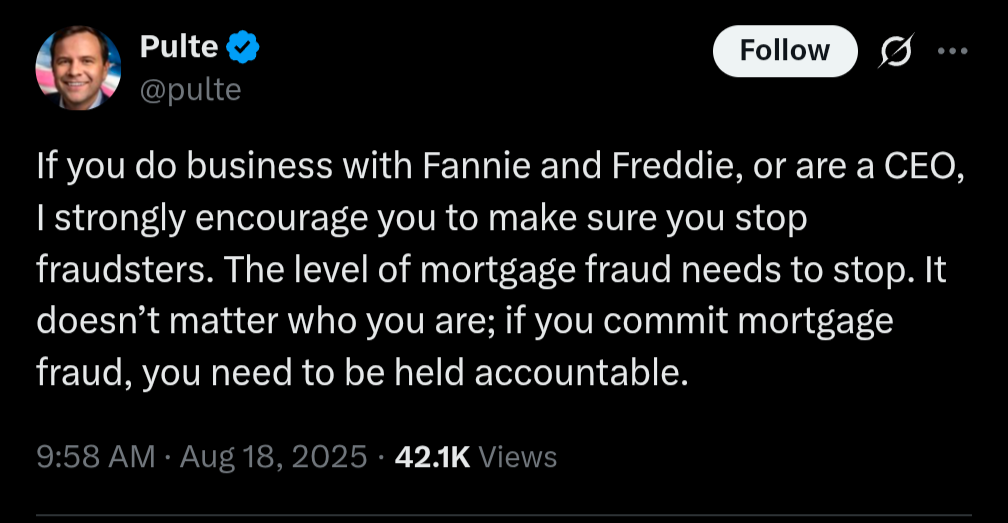
Glad we have the right people in charge to tweet about the issues that matter

-
That would still make them net short CNY. Just moves the counterparty from manufacturer to the bond-holders and extends the duration from overnight to years. I'm just trying to figure out how much they're short to know what a risk that poses over the life of the bonds.
-
Do we have any idea what the contractual revenues are, if any, that are denominated in RMB? I have a very hard time imagining RMB going higher with China still relying heavily on exports, managing the currency, and having a demographic/real estate crisis of their own, but you never really know...
-
In other words, things remains exactly as they have been for ~15 years I figured they'd find some accounting shenanigans when they mentioned doing so in a 'budget neutral' fashion - similar to Mexico paying for the wall and massive tax cuts closing the deficit - but I guess this was a bridge too far. Was surprised to see the new administration seemingly so open to accepting BTC when it has the most to 'lose' from it's adoption - should've known it was really just an embrace of shit coins so the Trump empire could enrich itself. https://www.wsj.com/finance/currencies/trump-family-crypto-1e7ab14a?gaa_at The best thing the US government could do for its citizens is to close the deficit by raising taxes, closing loopholes, ending corporate welfare, reasonable benefits reduction, and ending our constant overseas conflicts/funding of conflicts. Do that for a decade and let's re-assess where we stand. It won't happen though - why do what's right when you can use the authority/power to enrich yourself?!?