handycap5
-
Posts
148 -
Joined
-
Last visited
2 Followers


handycap5's Achievements






-
So What Exactly Is The "Short Homebuilders" Thesis At This Point
handycap5 replied to Gregmal's topic in General Discussion
PHM has generated an 8 X return over the last decade. It was a lollapalooza of a lot of things, no one by itself, the entire combination required to generate such an extraordinary return: 40% community growth (not much absorption growth) 80% increase in profit per unit (some mix up here helped by Del Webb, more product diversity than other builders) Shares down by almost half Modest 10% PE multiple expansion I would comfortably wager that the share count is never going back up, nor is the market share going to be surrendered. And the new industry is probably 10-20% below normal today. -
I'm surprised how much this framework and thinking appears to have pervaded the investing broader narrative, at least in the milieu I occupy. I recently heard Jeff Gundlach referring to the fourth turning in such a manner that it implied everyone knew what he was talking about... My question is OK, so what? What do we buy or sell today? Dalio would have us buy gold. What incremental investing decision do you think we should do?
-
So What Exactly Is The "Short Homebuilders" Thesis At This Point
handycap5 replied to Gregmal's topic in General Discussion
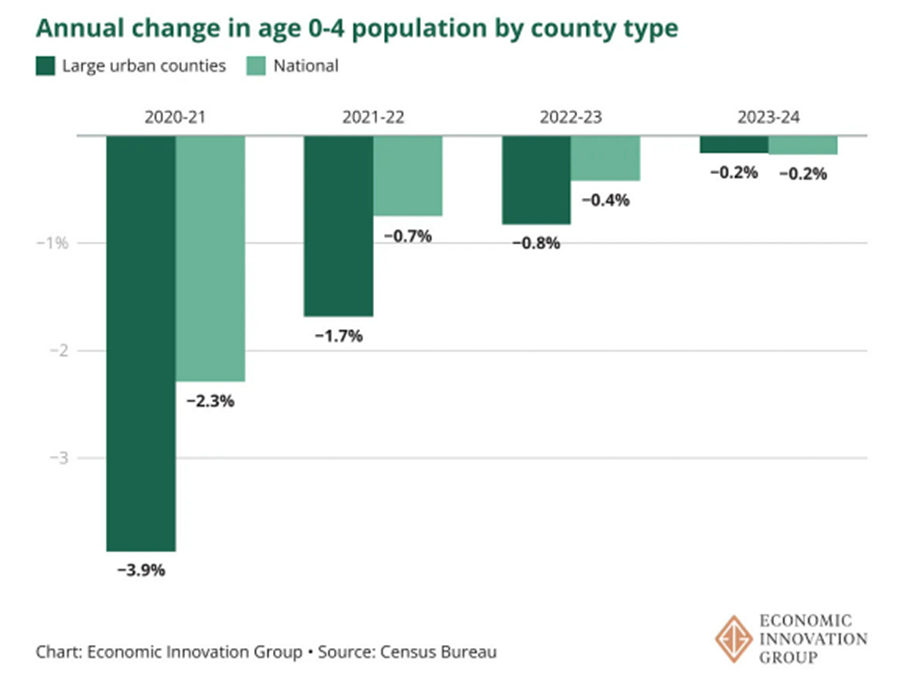
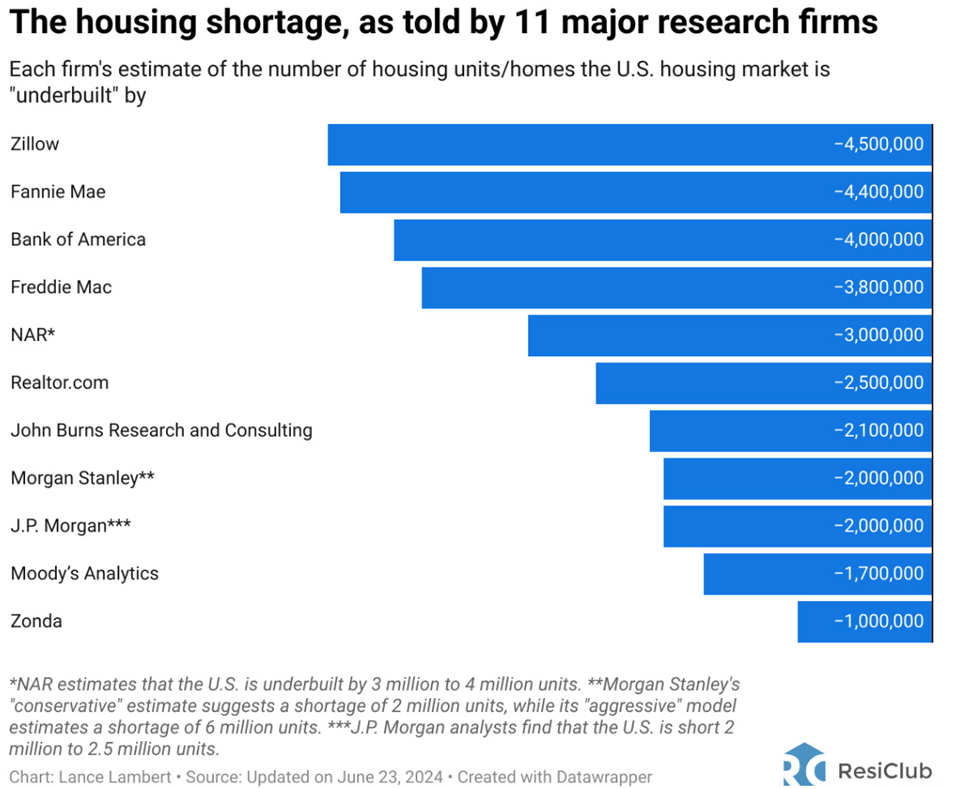
Housing is a business fundamentally driven by boxes and heads, so immigration is of course important to the long-term supply demand dynamics. But I would be careful over-emphasizing short-term immigration statistics, partially because recent immigrants are not usually a substantial portion of the home buyer pool (outside of IT jobs). Other important considerations are boomer-millennial demographic structure (i.e. boomers aren't selling but millennials need to buy) and the structural underproduction of the last decade. And I'm happy to see births (school decisions are a major consideration for first time buyers) returning to normal....
-
Will Bill Ackman win a game in his pro tennis debut?
handycap5 replied to ratiman's topic in General Discussion
-
Great podcast episode recommendation thread
handycap5 replied to Liberty's topic in General Discussion
Funny. I noticed the same comment and couldn't believe it. Smart guy clearly so funny oversight. Something similar, Steve Levitt was interviewing John Green about tuberculous and volunteered that he had never heard of Danaher before. Smart well-read guy, but I realized still doesn't have a perfect expansive view from the Ivory Tower. What are our own blind spots? -
So What Exactly Is The "Short Homebuilders" Thesis At This Point
handycap5 replied to Gregmal's topic in General Discussion
Good conversation. Thank you for keeping it analytical and quantitative. A few points I might add: 1) Sheryl on CNBC said 1.0-1.5% tariff impact in 2025. More in 2026 if stay in place. Lumber is wild card. Of all the things to think about, I don't think this will be what determines if I am happy or sad owning DHI 2-3 years from now. Sheryl brought up consumer sentiment twice in her comments. 2) estimates by others is maybe 20% of residential labor pool is undocumented. But this will skew lower for the big publics, and they will be advantaged versus their smaller competitors in tighter labor market. 3) consumer confidence is a big deal, but much more in the short-term. Sheryl I think said April was "bumpy." But if you have a kid, it is hard to live with your mother-in-law. I tried. 4) interest rates are important, particularly first-time, because it comes down to affordability. But with time, everything adjusts: demand, costs (land taking the longest), product, etc. The average 30-year from 1980-1999 was 10.4% and average annual housing completions were above 1.5 million (excluding manufactured housing), compared to ~1.3 million from 2010-2024 (with a higher population). Be careful with gross margins. Just slightly muddy because ASP is net of mortgage subsidies, which were not a thing before COVID. DHI averaged $35K a unit in 2016-2019, when they were delivering less than 50,000 units on average. I guess blue collar wages are up 35% today from pre-COVID ~2017 average (using the hourly wage rate change from Atlanta Fed of 3.3, 3.5, 3.6, 4.6, 6.0, 5.2, 3.8). A "real" op profit per unit would be $47K. I believe normal is actually higher at $55-60K given scale advantages, weaker competition (S&L crisis, GFC, and SVB et al has killed off some smaller builders) lower interest costs (they used to have net debt and this was in COGS), relative attractiveness of single-family new home (with a subsidized mortgage) post-COVID, and the fundamental underbuilding in the industry over the last two decades. I think you have a good chance of being proven right that stock prices may go lower from here. -
I have been thinking about the water disposal problem for a few days. It is hard for me to imagine that water disposal inflation is material to Permian production over the next many years, barring some dramatic change in regulation. The increase in water cut has to be a glacial change. How much incremental cost could be it be to move water to other disposal sites with all the existing pipeline infrastructure and rights-of-way? So many past challenges and bottle necks have been surmounted (does anyone remember when they used to use sand from Michigan?). I'd love to hear counter-arguments from others. This seems to me to be more about forming a basis for regulatory change as a opposed to an argument about fundamental changing economics.
-
So What Exactly Is The "Short Homebuilders" Thesis At This Point
handycap5 replied to Gregmal's topic in General Discussion
I think a "lollapalooza" is happening in the housing market, primarily due to classic supply-demand dynamics. Cherry on top - I think others underappreciate the marketing advantage that new single-family home sellers enjoy with a combination of move-in ready spec inventory and the ability to guarantee a predictable affordable 30-year monthly payment at signing through mortgage rate locks and mortgage buydowns. -
I have really found this book interesting and recommend it to others. I am "reading" it via audio book and it is easy enough to follow. The book was written before October 7th. But I think it has a lot of explanatory power for what we have seen over the last year. Frankly, I feel my time has been a lot better spent understanding the long-term historical context then the play-by-play of the moment. For instance, I had forgotten that it was Stalin via the Czechs that armed the future Israelis in 1948 when the US and the UK would not. The other big surprise for me was how much I learned about domestic American history, particularly political history. The "Israel lens" is perfect tool to tease apart a lot of long-term American political trends. I particularly found interesting how the issue of Israel was a critical domestic talisman that helped cement an awkward Republican Sunbelt coalition. Enjoy! https://www.amazon.com/Arc-Covenant-United-States-Israel/dp/0375414045 For many decades now, a supposed mystery has lurked at the heart of American foreign policy: Why has the United States supported Israel so staunchly and for so long, especially when doing so seems to come at a high cost in blood, treasure and world opinion? Attempts to solve this mystery — a puzzle that particularly confuses foreigners, isolationists and some realist foreign-policy scholars — have given rise to a lot of ugly conspiracy theories over the years, as well as a great many books. So it takes a certain chutzpah to wade back into the fray, given both how fraught the topic is and how far down the list of Washington’s priorities Israel has seemingly fallen. Yet that’s just where Walter Russell Mead — a scholar, author and Wall Street Journal columnist — goes in his new book, “The Arc of a Covenant.” Not one to shy from a challenge, Mead raises the problem in his opening pages, when he writes: “The reader of any book is entitled to ask why it had to be written at all and, if the book absolutely had to exist, why it couldn’t have been shorter. That is particularly true when it comes to books about the U.S.- Israel relationship. There are few subjects in American foreign policy that get as much attention. … Enough books on this subject have been published to fill a respectable library; do we really need another one?” The fairest way to judge a work of scholarship or art is on its own terms. So that makes the key question for this review: Does Mead’s book pass his own test? The answer is yes, and emphatically so. To explain why, let’s start with a brief summary of some of the many things “The Arc of a Covenant” does in its 600-plus pages. Beginning with the premise that recent U.S. Middle East policies have largely failed, and largely because American discussions of those policies have been “emotionally dense but intellectually thin,” Mead seeks to highlight and correct the many myths and misapprehensions that have misled the public and professionals in the past. Convinced that U.S. policymakers would do better if only they better understood the region and its place in the American psyche (the words “understand,” “misunderstand” and their various cognates appear around 150 times in the text), Mead sets the record straight by presenting a long and nuanced alternative history of U.S.-Israel relations. Image But because Israel is so deeply embedded in America’s collective consciousness — as Mead puts it, the Jewish state is “a speck on the map of the world” that nonetheless “occupies a continent in the American mind” — and because U.S. debates about Israel often serve as proxies for larger “debates over American identity, the direction of world politics and the place that the United States should aspire to occupy in world history,” the book soon strays well beyond the confines of diplomatic history. Mead contends that we can understand past decisions only by understanding the context in which they were made, so he expands his narrative far outside this one corner of international relations. The result is less a history of U.S.-Israel policy than a sweeping and masterfully told history of U.S. foreign policy in general, as seen through the lens of the U.S.-Israel relationship. This capacious approach leads Mead into myriad digressions on topics ranging from the history of European emigration; to how the Industrial Revolution affected the Ottoman, Russian and Austrian empires; to how, in the middle of the last century, the American pastor Billy Graham broke with Protestant fundamentalism to create a new and pragmatic evangelical synthesis. Given the book’s hefty size, it’s only fair to ask whether these asides feel extraneous. Few do. Mead is so fluent on such a broad range of topics — from history to religion to policy to politics — that I learned something new from each of his detours. And he’s such a good craftsman — the prose is among the best I’ve encountered in 25 years of reviewing foreign-policy books — that when he does occasionally stray beyond the strictly necessary, it’s hard to object. Does the book really need an account of President Benjamin Harrison’s struggles to quit smoking? Probably not. But reason not the need; the inclusion of such colorful details only makes the book more vivid and enriching. Despite all the information that “The Arc of a Covenant” packs in, moreover, it never loses sight of a key argument, which is an extended attack on the “rancid urban legend” known as the Israel Lobby theory. If you’re not familiar with the phrase, it’s code for the argument — most famously put forward by the scholars John Mearsheimer and Stephen Walt in their 2007 book — that America’s ongoing support for Israel makes so little strategic sense that it can only be explained by the irresistible pressure applied by the Jewish-owned media, by Jewish lobbyists, by Jewish policy wonks and by their fellow travelers on the Christian right. Of course, this theory is wrong. But the theory and its advocates — whom Mead calls “Vulcanists” for a clever reason too complicated to explain here — are still dangerous. Jew-hatred is currently surging globally, and though it’s surely not what Walt and Mearsheimer intended, Mead contends that their work has “electrified antisemites around the world” by seeming to lend “the authority of well-known academics” to this calumny. Because of the high stakes involved, Mead returns to the topic again and again throughout the book, comprehensively demolishing the libel through a sophisticated set of arguments that disprove the Vulcanists’ “Jewcentric” view of American and world affairs. He shows, among other things, the many ways (some obvious, some not) that U.S. support for Israel over the last 40 years has actually benefited America; that many pro-Israel politicians, like Donald Trump, have been loathed by the vast majority of American Jews; that Jewish-owned newspapers like this one have not always been slavishly supportive of Israeli policies; and that U.S. policy has not, in fact, always been pro-Israel: The United States didn’t start significantly arming the Jewish state until the Kennedy administration, and not until 1987 did an American president (Ronald Reagan) declare Israel a “major non-NATO ally.” Indeed, when Washington did finally start backing Jerusalem, it was because the latter had become a regional superpower without U.S. help — and America needed Israel, not the other way around. Meanwhile, even as Mead concedes that a pro-Israel lobby does exist inside the United States, he shows that it’s only one of many interest groups, and that, thanks to the structure of U.S. democracy, such lobbies succeed only when they have broad public backing. In other words, powerful lobbies depend on public opinion for their power; they don’t create that opinion. And the American public happens to be very pro-Israel — for a long list of organic reasons that have nothing to do with AIPAC, George Soros or the Sulzbergers. Ordinary Americans don’t think there’s anything strange about their country’s support for Israel; such skepticism is reserved for some coastal elites and peripheral intellectuals. Mead’s best argument against the Israel Lobby myth, though, lies in his thorough explication of the complex and sometimes surprising geopolitical, social and electoral forces that actually determine U.S. policy toward Israel. The book is at its best when showing, for example, that President Harry Truman’s grudging and limited support for Israel’s creation had little to do with Jewish pressure and everything to do with Truman’s desperate determination to keep his Democratic coalition together as he sought to shift U.S. foreign policy away from Franklin Roosevelt’s wartime pro-Soviet approach and toward confrontation with Moscow (which was still quite popular in many left-wing precincts of America). Truman, moreover, wasn’t even Israel’s primary supporter during this period: Joseph Stalin deserves far more credit for ensuring Israel came into existence and for arming it once it did. “The Arc of a Covenant” has another merit worth mentioning here: Despite its polemical power, Mead manages to keep the book’s tone high-minded and generous; when discussing his, or Israel’s, adversaries, he always strives to give everyone the benefit of the doubt. Well, almost always. No book is perfect, and “The Arc of a Covenant” is no exception. For some reason, Mead’s generosity of spirit fails him when he gets to the Obama administration, which he scornfully describes as naïve and inept — criticisms he largely spares both George W. Bush and (most mysteriously) Donald Trump, despite both presidents’ equal or greater failures. Another quibble: The book would benefit from clearer sourcing, especially when making controversial claims — such as that Trump’s Israel policy was all part of a premeditated, deliberately crafted and highly perceptive master plan. (Skim the summaries of Jared Kushner’s new book and you’ll quickly appreciate the implausibility of this claim.) Finally, at the book’s end I found myself wishing, if not for policy recommendations, then at least for predictions about where Mead thinks the U.S.-Israel relationship is headed. He’s so good at laying out the real but often-overlooked forces that shape this alliance, while puncturing the mythological ones, that I’d love to get his take on its future prospects — especially at this moment, when global politics and U.S. foreign policy are being scrambled in so many baffling ways. But I suppose that will have to wait for Mead’s next book. The good news is that, judging from the quality of this one, it’s bound to be brilliant too.
-
So What Exactly Is The "Short Homebuilders" Thesis At This Point
handycap5 replied to Gregmal's topic in General Discussion
Loans outstanding went to $92 billion compared to $102 billion last year. It is worth noting that 1) the large public builders are often near net cash, 2) generating ample cash flow, 3) increasingly use options, land banking arrangements reduce the capital tied up in the production of homes. If there is an adverse impact on the FDIC loan volume statistics the FT cited, it would disproportionately fall on the non-public and smaller builders. But the advent of land banking, etc. may reduce the need for bank financing in the entire industry. So the statistics might reflect financing mix change as opposed to something more fundamental. Do others have any insight on this? -
I recommend Walter Russell Mead's book The Arc of a Covenant on an exhaustive history of the European-American-Israeli foreign relations.
-
So What Exactly Is The "Short Homebuilders" Thesis At This Point
handycap5 replied to Gregmal's topic in General Discussion
There is a reasonably lively thread under the DHI ticker on this website that I think can often be applied to other homebuilders as well. In my experience, 2003-2006 was a truly unique occurrence in the US housing industry. I might say "it was different that time" and now its just a more normal business in a sometimes cyclic industry with favorable medium-term supply-demand dynamics, scale advantages, etc. -
I read it and liked the book. But I also think Peter's podcast style (relaxed, verbose, prone to digressions) made the book hard to follow in its totality. Has anyone found a good succinct summary of the book and the "what to do's" from it? Frankly, I would have liked the "self-help cliff notes" as an appendix.
-
Found that Bloomberg has a function called "redline" when you access an SEC filing under the function "CF." And Bamsec does a job if you click on "compare" when reviewing a filing. Both are pretty functional. Question answered. Problem solved.
-
In 2014, Todd Combs brought up the usefulness of "delta reports," which I believe are simply line-item comparisons of SEC filings. http://www.cnbc.com/id/101461797 In 2022, Todd Combs further emphasized the usefulness of these reports. https://investmentmanagementinsights.substack.com/p/graham-and-dodd-annual-breakfast So my question for the board is, what is the 1) simplest and 2) easiest way to access such comparisons of SEC filings. Is Bloomberg the best option and how does one do this? I have heard that Bamsec may also be a useful tool. I would like to avoid labor-intensive or complicated methods, such as using third-party software to compare downloaded files, such as doing a comparison in Word or using BeyondCompare from Scooter Software. Would someone who does this regularly provide advice? Thanks so much. Handy.