
Crip1
-
Posts
749 -
Joined
-
Last visited
-
Days Won
7
Content Type
Profiles
Forums
Events
Everything posted by Crip1
-
This did not look as strange to me as it did to you I thought it was intended more tongue in cheek than anything else. Years ago Prem was criticized, and I thought the criticism was valid, or not owning up to mistakes. That's one thing that Buffett does consistently, and he's done it for years. If one goes back 10 to 15 years when the future did not look quite as positive as it does now, being humble to that level may not have been a good idea to attract new shareholders. Buffett, on the other hand, has had insane levels of success so humbleness is not scare off potential shareholders. This paragraph and the overall tone of the letter seems almost like a maturation of the company. There seems to be less selling going on and more simply reading the news. All of the above in my humble opinion. -Crip
-
Fairfax - 26.5%. Fairfax India - 8% -Crip
-
Well, I have a half billion so do the rest of you have the other half billion? -Crip
-
I think two things are muting the reaction today. First, though I don't have data to support this, historically the reaction to positive earnings news has taken 2-3 trading days to materialize. No idea why this is, but it's happened on more than a few occasions. Second, the earnings report came in reasonably close to expectations with positive surprises (4 year run rate) offset by negative surprises (slowing premium growth), so much of this was already baked into the price. All above in my humble opinion. -Crip
-
Likely right
-
Not sure if it is technically "hand-wringing" but I do like the idea of using some proceeds from the TRSs to buy back stock. The difference I see between investing in TRSs and buying back one's own stock is that the TRS is technically temporary where the buyback is more permanent. Example, we get some black swan even that harms the company and, accordingly, brings the price of the stock down, we're hit with a double-whammy as not only is there harm done to the company, but the TRS investment becomes less valuable, driving down the price even more. It's leverage against the shareholders. Keynes famously said "the markets can remain irrational longer than you can remain solvent". Buying back stock is more permanent. So, while I am not in favor of getting out of the TRS position, I'd be happy trimming the position and using proceeds to juice the buyback. Also, not pounding the table on this...just seeing the attractiveness of doing so. -Crip
-
Not going to exonerate Muddy Waters, but this looks to be ambulance chasing. -Crip
-
Yeah, pretty much. And the company has not changed much in the past month, either. -Crip

-
Well, I backed up the car and added a few into the trunk this morning. -Crip
-
Concur 100%
-
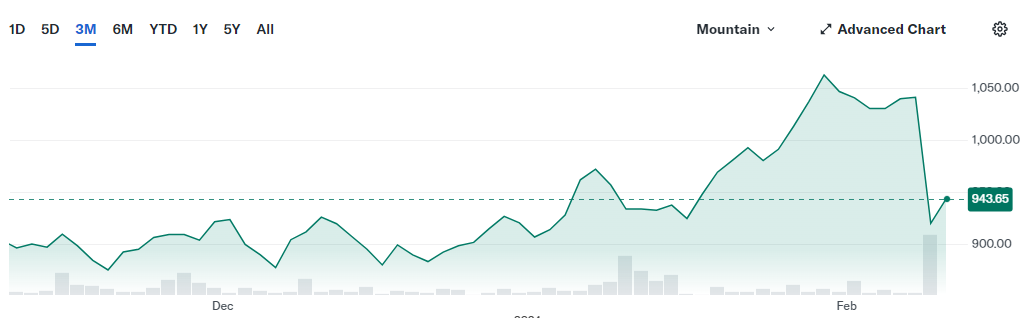
This short report can be one of three things, as I see it: 1) Smash and grab - This is clearly possible with a stock that has risen rapidly, is complicated, and is in the blackout period ahead of what should be a pretty solid earnings report. If this is the case, one has to think that a 12% decline today should have resulted in some quick money and this may go away. 2) Honest analysis - There are contrarians out there, and I can sometimes fall into that camp. They do analysis and state their opinions with no nefarious intentions besides making money. One has to acknowledge that this is a possibility. If this is the case, then one would think this will go away pretty quickly but if the report and subsequent success in driving the price down continues, others may jump on board. If so, this will last a little while. 3) Something nefarious - Like the early 2000's, this may be bigger than Carson Block or the Muddy Waters firm. Not making accusations, just acknowledging that this is a possibility. And, if true, than this could get pretty ugly. Likely not as ugly as it did 20 years ago because Fairfax is in a significantly better position now than they were then, but ugly still. -Crip
-
If Peter Eavis made an appearance, that would feel like deja vu. Although, as a long-time shareholder, it would be great to see BSilly or Cardboard back commenting. -Crip
-
@Thrifty3000 Thanks again for the time/effort to respond on this. It is something that I thought I should do but now really realize that I NEEDED to do this to better frame investment decisions. One other question...do you have any ETFs or mutual funds and, if so, how do you incorporate those into the analysis? About 70% of financial net worth is invested in individual stocks, but some money is in ETFs (for access to industries where I want to be but would prefer others with more knowledge pick out winners/losers) or Mutual Funds (401k accounts my wife and I pay into that do not offer self-directed stocks as investment options). -Crip
-
Concur in full that showing actual calculation would be the right thing to do. Reminds me of when I took on a supplier management position at my former employer. One of the contracts with a supplier called for a bonus if volume exceeded a certain threshold. The problem was that the way it was written, it could have been interpreted 3 different ways, each of which resulted in vastly different dollar amounts. Fortunately my predecessor who negotiated the contract was still with our company, and the supplier contact who negotiated on their behalf was also still with his company. The kicker...neither one remembered the intent of the bonus language. This is where I learned that whenever there is a mathematical reference in a contract, to ALWAYS give examples to illustrate the verbiage. I never saw that in any report of FFH or FFHI... -Crip
-
FFH - 26% Fairfax India - 9% MKL - 9% BRK - 5% JNJ - 5% JPM - 5% BABA - 5% CATY - 3% BYD - 3% Other Stocks - 5% AI ETFs - 7% (There is money to be made in AI, but no way I can pick winners any better than a dart-throwing monkey, so I'll give some experts the chance. Other Mutual Funds - 7% Cash - 13%
-
So, a few questions (and I truly appreciate your intellectual generosity): Is the file as simple as Company A earned x per share so my portion of the earnings is x times the share amount owned? (Column A is Company, Column B is EPS, Column C is Shares owned, Column D is Column B times Column C) If it's more complicated, what else to do capture? I assume that you do not look at dividends except to add them to share count if you reinvest...is that right? Do you adjust for one-time charges? Do you attempt to convert this to Cash-Flow by adding Depreciation/Amortization and deducting Cap Ex? Do you update this quarterly or annually? -Crip
-
In the past I have thought about doing that, but never took the time to do so. To what extent do you feel this exercise impacts your buying and selling? -Crip
-
OK, so there has been some conversation on this board about how great the next three years ahead look and how great of a job management did to position the company as it is, and so on. All of that is valid and correct. There have been concerns around what happens after these 3 years (not sure whether the “3 years” is because Viking has been projecting that time period, or because of the stated run rate by the company). Specifically, concern over what happens when this “gravy train” ends and interest rates come back down to 1% or thereabouts. The more I ponder this, I’m increasingly less concerned about three years down the road for the following reasons: After peaking in October rates have come down, but they are still notably higher compared to Covid-times. Every day that the market moves sideways, and we’re a month plus into the sideways movement, that three years gets extended into 2026. (and I’m willing to bet that we don’t see 6 rate cuts by the fed in 2024, nor do I see that happening in 2024 and 2025 combined FWIW). The assumption (fear) that rates go back down to 1% is, in my opinion, overblown. Yes, if we do go into a recession, rates will drop, but we seem to be anchored into recent memory when rates were at historical lows and expect that to happen again. That fear is overblown. Assuming treasury yields do move lower, at some point the spread between treasuries and high-grade corporates is going to widen such that the risk-reward equation moves squarely in favor of moving some monies into corporates. It’s not always wrong to take prudent steps to “reach for yield” and with the size of the investment portfolio FFH is better able to benefit from this compared to the competition. Of course, black swan events do occur, and there is no guarantee that Fairfax will avoid doing unwise things as has happened in the past, but risk-reward is squarely in “reward” at this juncture, and I think will be 2-3 years from now. -Crip
-
Wow, yeah, it has been a while. i trust that all is well with you. Yes, still holding Markel but trimmed my holdings substantially. Top 5 are: Fairfax, Fairfax India, Markel, BRK and JNJ. With the exception of Fairfax India, the other 4 were in all likelihood in my top 5 back then as well. The major change is that Fairfax is far and away my tp holding where, back then, I think it was Markel. -Crip
-
I was thinking the very same thing. Holders will look back on this as a frustrating time but, in a couple years, people will look back on this as being the good old days from a buying perspective. -Crip
-

Fairfax book value or share price will touch US $ 2000 before 2027 end.
Crip1 replied to Haryana's topic in Fairfax Financial
You sound like my trying to not anger Fantasy Football Gods. Regarding this question, however, I also voted "No" for two non-analytical reasons. First, something or some things are going to surprise us in the coming months/years. it's better the assume "Good" and get "Great" or assume "OK" and get "Good" than the inverse. I literally just finished handing in the revenue budget for my company and, as usual, said "We're expecting X but we're budgeting for .9 times X in terms of volume and margins". It's not right to low-ball, but it's better to assume conservatively. Bad surprises are hard to manage, good surprises are much easier to manage. The second reason goes back to something Buffett said years ago and still rings true. In insurance, surprises are more often bad than they are good. Everything normalized is pointing higher, and FFH is my largest position by far, but if something happens unexpected and material, it's likely not going to be good. -Crip -
In addition to the previously discussed dynamics, all of which are relevant, one should consider the anticipated Fairfax “pivot”. For years they have almost exclusively been in very safe US Treasuries because the spread between treasury and corporate rates has not been sufficient relative to the risk. At some point, presumably, that’s going to change and they’re going to, likely selectively, shift a portion of their FI investments to Corporates which will presumably generate higher yields, offsetting a declining rate environment. Somewhat separately, all of the posts over the past couple of days illustrate and validate Viking’s consistent assertions that he’s not going to project out more than 2-3 years since there are so many variables at play. He’s right. The returns over the next couple of years are not guaranteed, but the $150/Year for the next couple of years looks to be reasonable. From 2026 forward, we’re only guessing. What we do know is that they will be playing from a position of strength with a VERY large balance sheet, a solid insurance operation and a demonstrated acumen in asset allocation. As an investor, I like my chances at that point. -Crip
-
Can they? Yes. Anyone lending money on real estate can do that. However, there's a lot of cost involved with foreclosing and re-selling. Virtually no entity who lends on real estate wants to own said real estate, be it residential or commercial. I think, that the point you're making is that foreclosure does limit downside so that the investment will technically not go to zero, but that's risk limitation, not elimination.
-
I'd appreciate anyone chiming in as something is not quite adding up here. Dividend capacity at the subs has been constrained for years during the hard market as premium volume has been increasing dramatically. All good. But last quarter we saw premium volume increase about 5% YOY, much lower than in previous years and most industry folks I've seen are not seeing double-digit premium increases. At the same time, capital is increasing at a faster rate than we've seen in years due to substantially increased interest income coupled with still profitable underwriting. If these trends continue into 2024, it seems the subs would soon have excess capital that could be dividended (not sure that's really a word but, oh well) to the parent. So, assuming this all plays out, there really should not be a need for additional cash at the holding company, unless I am missing something. -Crip
-
This is fascinating. Not only was Charlie brilliant, he was able to communicate his brilliance extraordinarily well. The ability to observe multiple, multiple things, see how those multiple things inter-relate, and then draw conclusions is brilliance. We have all observed this over the past several years but I doubt any of us could have said it in a way that Charlie did. Yes, very sad news about his passing, but it's vitally important to focus less on sadness and loss, and more on how the legacy he left is available for all of us to observe and learn, and relearn, and relearn. Thanks Charlie -Crip