All Activity
- Past hour
-
Good OP. I've tracked my performance vs the S & P for 25 years. Then it dawned upon me it doesn't matter. If you need 8% returns to make your goals, go for it, and make it as safely as you can. Who cares what every one else is doing?
-
Messi - 5 ARG goals in two games - all from Messi. At 38! I have fallen in love with soccer in the last few years.
-

Fairfax - A Deep Dive on Management and Culture
RichardGibbons replied to Viking's topic in Fairfax Financial
The integrity dimension is an interesting one, because the Fibrek transaction was a bit sketchy--deliberately supporting a low bid when there was a much higher bid on the table. That was ruled by the courts to be legal. However, for me, it doesn't pass the "high integrity" test. There was also an insider trading investigation, but that was eventually dropped. It's unclear to me if the insider trading allegations were a case of "it happened, but couldn't be proven enough for charges" or "people were annoyed at completely innocent Watsa and Rivett, so decided to pursue regulatory revenge against them", or anywhere in between. As far as I know, Watsa's never done anything unethical that hurts shareholders of the various Fairfaxes. In sum, to me, that means on the spectrum of integrity, he's certainly well within the "integrity" half, but I wouldn't put him as far on that side as Buffett. (e.g. Buffett doesn't just avoid being unethical, but also tries really hard to avoid looking unethical.) -
I wonder what the statistics are on having to hit on BOTH (1) making money buying an option, and (2) betting against a bull market. Any oddsmakers here?
-
Fist time buying puts - some 2027 SOXX. And some FFH, MELI
-
Being big and strong and as powerful as you can be - its the definition of optimizing for regime survival/persistence over time. Kind of......most countries are too small and too unimportant to matter in the system.....they live under the shade of the large nations who are playing these games of relative power and security....as they eye each other up around intent, capability etc. Your view of the world is I would argue is clouded by two things....first a lifetime is a relatively short period of time....you grew up in the Unipolar moment (as I said its as close to stability and world police + peace the world has known)....and number two we all live in America (i know you lived or spent some time in Israel)......but the US is the regional hegemon....it has achieved (through not insignificant violence and relative power moves i might add) the Nirvana of security....it is the regional hegemon in the Western Hemisphere nobody can challenge it in anyway.....which is why nobody loses a wink of sleep in the US at the night worried about our neighbours.....we are simply too powerful for them to consider challenging us in anyway. The dream for Israel would be to wake up in the Middle East in this situation......taking Iran of the chess board would be a BIG step in this regard. China dreams of the same thing in East Asia.....and we have policy of ensuring that never occurs..Why?......the logic goes that a power who achieves regional hegemony in their part of the world is then free to "roam".....what does roam look like....say like the United States roams (with 800 military bases in 80 countries) across the globe getting involved in all manner of local security competitions....sometimes doing good (WWII/Marshall plan) but broadly causing chaos via unintended consequences. The US's main security challenge over the next hundred years is ensuring China is contained within Asia that it could never consider "roaming" into the Western Hemisphere. . I think thats right....but only when applied to lower middle powers and lower powers...the other Gulf states for example (the Omans etc.) live like this but even they manage alliances with etc with regional powers (its why the smaller Gulf States will hedge tail risk by playing ball with Iran even after being bombed by them). The cool kids these days have a name for naitons like this....they are called NPCs....It stands for Non-Player Character (the background characters in video games that you can't control, like shopkeepers or random townspeople who just repeat the same lines of dialogue). The world is indeed full of NPC countries...but even they need to manage relative power via sensible alliances with MPCs!
-
Regime survival and maximizing relative power are two entirely different concepts and if you remove any degree of selfish motive from the mix, neither is particularly important (if at all) to Iran's future. No one is threatening the existence of most countries and most countries are not a threat to anyone else. Ironically, those who make direct threats are the least successful in terms of quality of life of their people and pretty much every other way most would define success; coincidence? But that is looking at the issue rationally, the way most of the World would view it because most of the World simply wants to co-exist in peace. Those who don't for any reason are not acting rationally the way most of the World would define it.
- Today
-
I defined it already but not clearly enough maybe. Rationality at the State level as regards security- is about engaging in activities that optimize basically two things.....regime survival/persistence overtime and connected to that maximizing your relative power in that State system or league of nations (remember in international system when you call 911 nobody answers, its a self-help system and so like my mother told me "God helps those, who help themselves" and as a State then you should be at every opportunity maximizing your strength and leverage with whatever resources you have at your fingerprints because fundamentally you are on your own and its a big bad world out there).....thats it....thats how i define rationality at the State level. The 'Free World' is fantasy, its held together with sticky tape and hot air from polticans mouths - the system is inherently anarchic....we spent much of our lives in the Unipolar moment with the US as close as it comes to being the Global Hegemon.......this period is the closest the international system ever comes to having a world police force & court system where when you call 911 somebody in the UN or DC picks up the phone (but I mean ask Rwanda about dialing 911 even then). That Unipolar moment is fast disappearing and we are returning to multi-polarity.....the great aberration in history will be this 1945 to ~2017 period.
-
Smoke won't come out of my head, LOL but we are discussing one country that values human life and one whose leadership does not. Therefore, any talk of whether the country that doesn't value human life is acting rationally is only as sensible as how you define "rational" - as per my earlier post. Do THEY believe they are acting rational within the perverse universe of their ideology? Of course they do - that I think was Trump's point. But that definition of "rational" is wholly inconsistent with participation in today's Free World. Looking at the issue any other way only lends itself to continued conflict and turmoil, which is precisely what we are trying to stop.
-
100%......and the blue sky scenario for Israel (and I hope it happens) is that Iranian regime actually becomes the carcuture that is sold by Bibi in D.C......which is to say that they actually start acting IRRATIONALLY and do something that rises to the level that would spur nations with the capability to destroy them (i.e the US) to make the investment to remove them......the mass use of chemical weapons for example or a massive terrorist attack on US soil. If Iran was a 'death cult' these would have happened already and Islamic Regime would have been removed. I'm certain one of the hopes coming out of Epic Fury in Tel Aviv - was that by killing the rational layer of Iranian leadership an irrational layer would emerge to replace them that would do something so stupid that it would generate the popular support required in the US to greenlight the boots on the ground regime change war that is needed here.
-
Hence why nuclear weapons are fundamentally a defensive weapon, the ultimate deterrent. I know smoke will come out of your head - but if Iran got a nuke, it wouldn't actually use it unless an existential threat forced it to use it to survive. THIS would suit Iran down to the ground. What you've described is essentially the 'ring of fire' proxy strategy Iran has had in place for Israel for a couple of decades now.....Israel resources are endlessly consumed in low level friction extinguishing threats on its borders...the result is those resources aren't available to expand its relative military power in the region beyond its immediate neighbour i.e. the ring of fire is about containing Israel's aspirations toward regional hegemony which would diminish Iran's regional relative power. The US has a containment strategy for China - its South Korea, Tawain, Japan etc. etc. Iran has a containment strategy for Israel (& by extension the US in the region) - that containment strategy is Hamas, Hezbollah, the Houthis and previously Syria. This whole exchange was about whether Iran is a rational actor versus the caricature of them as somehow irrational suicidal death cult - and of course this whole back and forth was triggered by President Trump saying out loud that they are rational the argument I've made now with alot of detail is they are brutally rational and that rationality has been brutality effective when seen through the lens of regime survival....which is not be confused with whether they are moral or admirable (they aren't).
-
I agree. I think Israel can put up a good fight but it lacks the necessary strenght to do anything in Iran and it will 100% become a pariah state. Israel's best capability here is to do what Iran does and that is engage in assymetric warfare.
-
The same can be said of any country with nuclear capability. You are ignoring the third option (though I don't necessarily agree that Israel could not go it alone in Iran without using nuclear weapons). It could continue laying waste to anyone who threatens and attacks its borders as it has done throughout its entire existence. Not optimal, but it has worked thus far even though the costs have been substantial. Unless you don't believe that Iran today is essentially defenseless, I don't understand the point of your argument.
-
This is fantasyland alternative universe stuff. Having the capacity or capability to create a nuclear/chemical wasteland should not be confused with the viable strategic option to do so......every option you described above would result in Israel, on the day after, becoming a global pariah State. It would be a version of State suicide for Israel itself to engage in any of the above options, therefore they aren't actually options at all. I mean think about it - It would be breaking the nuclear taboo, the chemical weapons taboo or your last option (Iran oil destruction/starvation) would plunge the world into a global depression by destroying Iran's oil infrastructure (which as Epic Fury has shown is the functional equivalent of saying your going to destroy the entirety of the Gulf's energy infrastructure guaranteeing a global depression). Stripped of apocalyptic fantasy, Israel's actual strategic options for overthrowing the regime in Iran boil down to a conventional conflict......and that is a conflict they structurally lack the capability to win on their own.
-
I think you can even take realized gains on the bond portfolio, which is not part of the 5% return from the fixed income portfolio that Fairfax has quoted. From p.66 in the 2025 AR: (8) The effective interest rate is the rate that discounts estimated future cash payments or receipts through the expected life of the fixed income investment to its gross carrying amount at initial recognition. The effective interest rate does not reflect changes in market interest rates that affect the fair value of the fixed income investment over time.
-
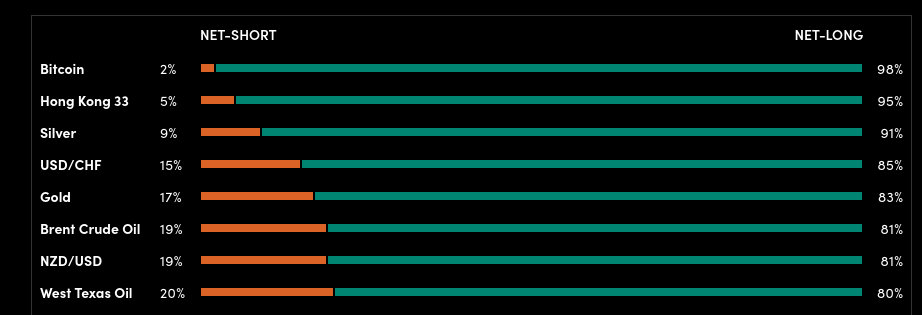
I have no idea what this means but the Oanda traders have been a good contrary indicator. Unfortunately it doesn't have historical data but right now the wrong-way retail traders are majorly long oil. https://www.oanda.com/bvi-en/lab-education/tools/sentiment/

-
He's a very persuasive guy, and HHH is now my #4 position, after Fairfax, Fairfax India and Interactive Brokers. I don't know if it's a very good plug for Joe-like companies, though. When he mentions the HHH housing business that he intends to build his Berkshire-like company on, it is in comparison with the 'crappy textile company' that Berkshire Hathway is based on. In other words, a cheap, market-hated company whose decline can be managed while building something valuable on top. I don't think Ackman is really saying that HHH is a crappy company but it does have good assets that can be used for building something else. I'm not sure JOE can say the same thing, unless an Ackman-wannabe takes it over and uses its cash flow to buy things with higher returns.
-
Sold 1/2 of my RBB position
-
Another dog that likely came to life which we will never know about is APR energy. But honestly these are for me in the I can't predict and lucky if I'm at the right place right time bucket.
-
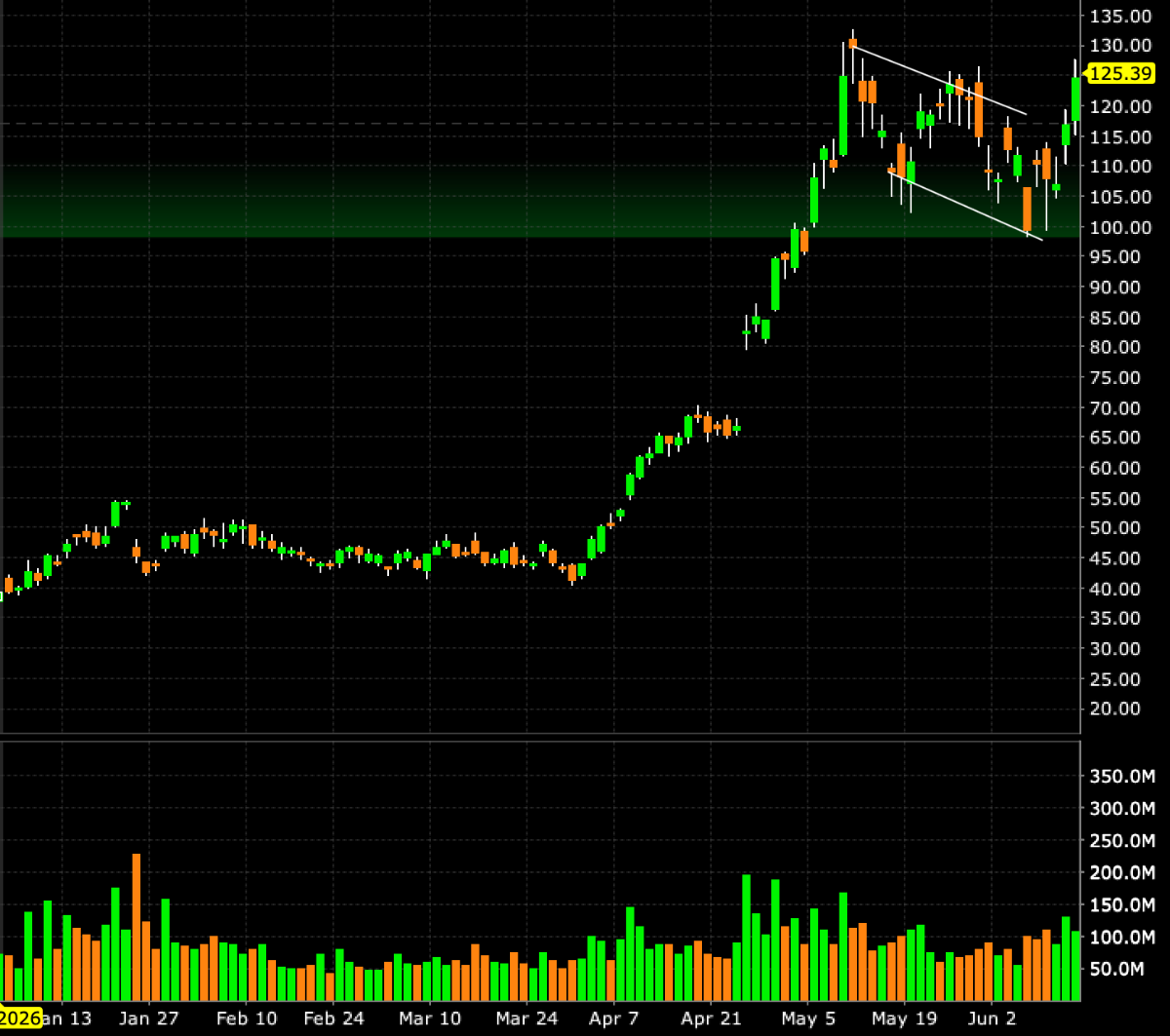
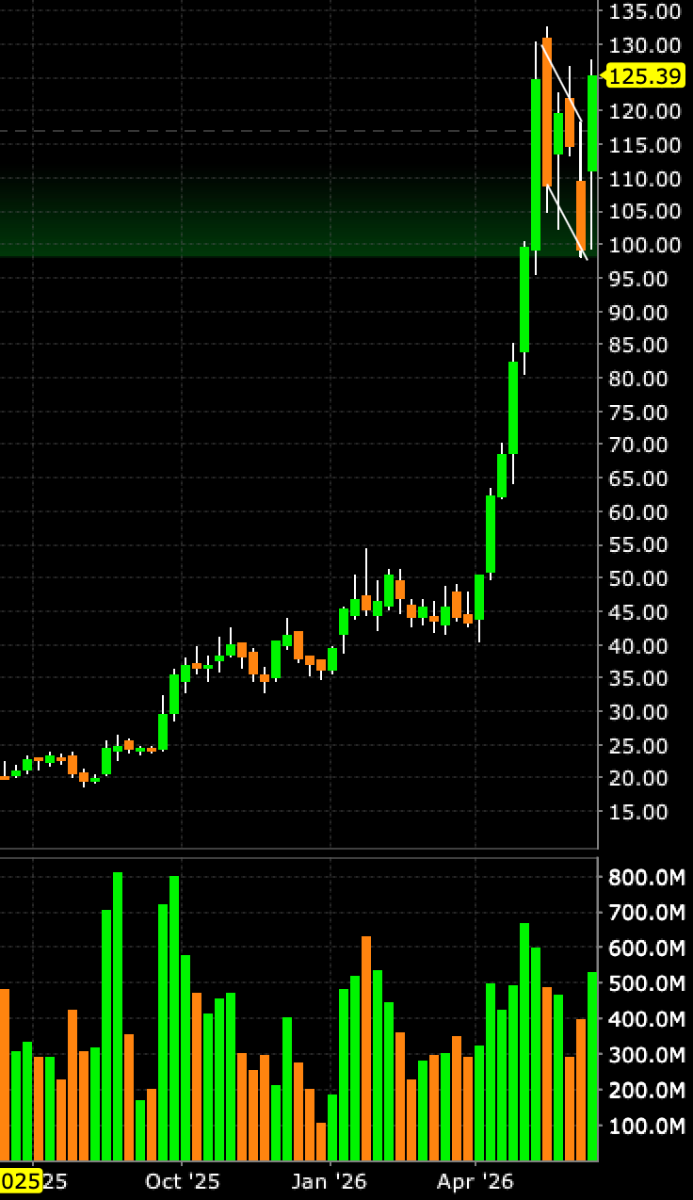
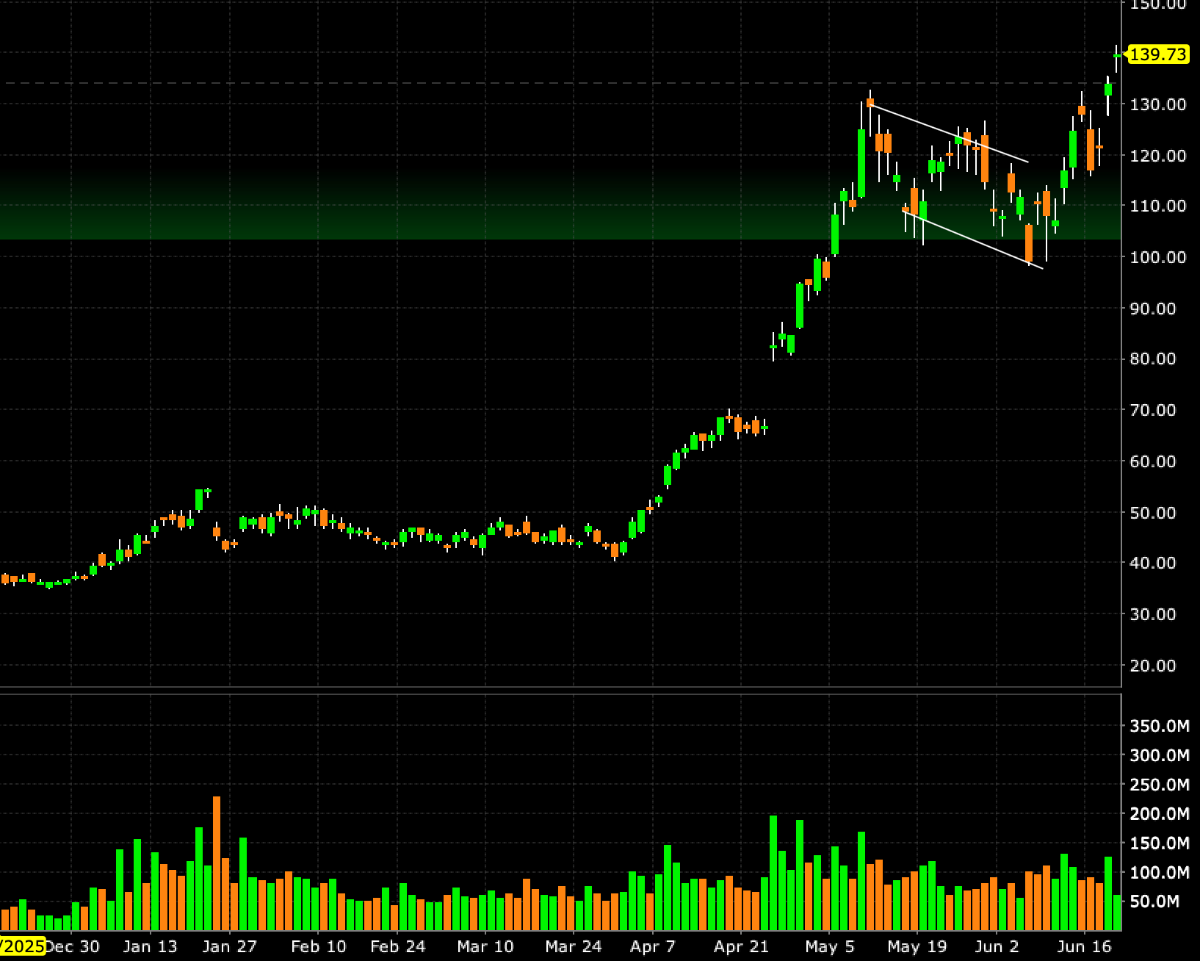
Update - still textbook perfect bull flag
-

Fairfax - A Deep Dive on Management and Culture
Viking replied to Viking's topic in Fairfax Financial
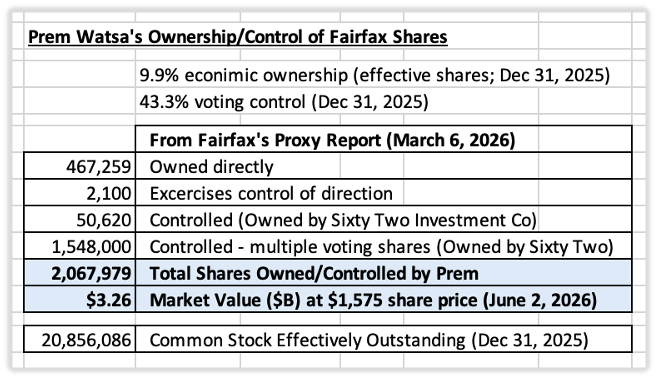
Article 2 in the series. Prem Watsa and Family Control Founder-led companies have historically been among the best long-term investments. When ownership, control, and management are concentrated in the hands of a capable founder, decisions are often made with a longer time horizon and a greater focus on value creation. Fairfax Financial is one such company. Prem Watsa founded Fairfax in 1985 and has led the company for nearly four decades. During that time, Fairfax has evolved from a small Canadian insurer into a global insurance, investment, and operating company with interests spanning dozens of countries and industries. For investors, understanding Prem's role is important because he remains Fairfax's largest individual shareholder, Chief Executive Officer, Chairman, and controlling voting shareholder. Fairfax's culture, capital allocation philosophy, and long-term orientation all reflect his influence. This article examines Prem's leadership record, ownership position, and family control structure—and what those factors mean for shareholders. Founder, Leader and Capital Allocator Prem Watsa founded Fairfax in 1985 and has led the company continuously ever since. Over that period, Fairfax's share price has compounded at approximately 19% annually, including dividends. This places Fairfax among the best long-term performing public companies in Canada and North America. But what makes Prem noteworthy is not simply what he achieved—it is how he achieved it. Warren Buffett has often said that he looks for three qualities in business leaders: Intelligence Initiative Integrity Of the three, Buffett considers integrity the most important because it forms the foundation of trust. Prem has demonstrated all three qualities throughout Fairfax's history. His intelligence is reflected in Fairfax's long-term record of capital allocation and value creation. His initiative is evident in the growth of Fairfax from a small Canadian insurer into a global organization. Most importantly, he has built a reputation for integrity that has earned the trust of shareholders, employees, customers, business partners, and communities. Two qualities have been especially important to Fairfax's success: temperament and an ability to attract talented people. Buffett has long argued that temperament is more important than intellect in investing. Throughout Fairfax's history, many of the company's most successful decisions required patience, conviction, and emotional discipline during periods of uncertainty. Throughout Fairfax's history, many of the company's most successful investments were made during periods of uncertainty and market stress. These decisions required patience, conviction, and emotional discipline. Prem has also demonstrated an uncommon ability to identify, recruit, develop, and retain talented managers. Fairfax's decentralized structure depends on capable leaders operating with significant autonomy. The depth and continuity of Fairfax's management team may ultimately prove to be one of Prem's most important accomplishments. As a result, Fairfax's success extends well beyond shareholder returns. Employees have built rewarding careers, customers have benefited from stable insurance partners, communities have received significant philanthropic support, and long-term shareholders have participated in one of the strongest compounding stories in modern Canadian business. Buffett on the importance of temperament – 1985 interview with Adam Smith: Adam Smith: What do you consider the most important quality for an investment manager? Warren Buffett: It's the temperament. You don't need tons of IQ in this business. I mean you have to have enough of IQ to get from here to downtown Omaha but you do not have to be able to play three-dimensional chess or being the top player in a bridge league. You need a stable personality and temperament that neither derives great pleasure from being with the crowd or against the crowd because this is not a business where you take polls; it's a business where you think. Ben Graham would say that you're not right or wrong because a thousand people agree with you and you're not right or wrong because a thousand people disagree with you. You're right because your facts and your reasoning are right. – Warren Buffett - Adam Smith’s Money World Interview 1985 Ownership, Compensation, and Alignment One of the most attractive features of Fairfax's governance structure is the alignment between management and shareholders. Prem's compensation package is unusually modest for a company of Fairfax's size and complexity. His annual salary is approximately C$600,000 and he receives no stock options or stock-based compensation. The more important consideration, however, is ownership. As of December 31, 2025, Prem owned or controlled approximately 2.1 million Fairfax shares, representing: 9.9% economic ownership 43.3% voting control At Fairfax's share price in mid-2026, that stake was worth more than $3 billion. As a result, the overwhelming majority of Prem's wealth remains tied to Fairfax's long-term success. Shareholders benefit from knowing that gains and losses are experienced alongside management. This alignment was demonstrated during the market turmoil of 2020. At a time when investor sentiment toward Fairfax was overwhelmingly negative, Prem personally purchased approximately US$150 million of Fairfax shares in the open market. He described Fairfax as trading at the largest discount to intrinsic value he had seen in the company's history. "At our AGM and on our first quarter earnings release call, I said that our shares are 'ridiculously cheap'. That statement reflected my recognition that in the 35 years since Fairfax began, I have never seen Fairfax shares sell at a bigger discount to their intrinsic value than they have recently. I have now backed up my strong words by purchasing close to US$150 million of Fairfax shares in the market over the last few days, as I believe that this will be an excellent long term investment." — Fairfax News Release, June 15, 2020 Actions often reveal more than words. Large insider purchases by already-wealthy founders are relatively uncommon and are generally viewed as one of the strongest indicators of management alignment. Family Control Fairfax is effectively a family-controlled company. While Prem owns ~10% of Fairfax's economic interest, his multiple-voting shares provide ~43% voting control. This gives the Watsa family substantial influence over Fairfax's strategic direction. For some investors, family control raises concerns. For others, it represents an important competitive advantage. The reality is that family-controlled structures can produce either excellent or poor outcomes depending on the quality of the controlling shareholder. When governance is strong, family control often promotes: Deep commitment to the business Long-term decision making Consistent capital allocation Preservation of corporate culture Stability during difficult periods Strong relationships with customers and employees Strong community focus and social purpose These characteristics can be especially valuable in insurance and investing, where the consequences of important decisions may take years to fully emerge. Fairfax's forty-year record suggests that family control has been a significant positive for shareholders. The structure has allowed management to think in decades rather than quarters, preserve Fairfax's culture, and maintain a consistent capital allocation philosophy through changing market environments. At the same time, investors should remain aware of the risks that accompany any founder-controlled organization. Potential concerns include succession planning, management entrenchment, and the possibility that future leaders may not possess the founder's abilities. No governance structure is perfect. Every structure involves trade-offs. What This Means for Shareholders Ownership structure matters because it influences incentives, decision making, and corporate culture. Fairfax remains a founder-led company with substantial insider ownership, significant voting control, and a leadership team whose financial interests are closely aligned with those of long-term shareholders. Prem's four-decade record of value creation, modest compensation, significant ownership position, and long-term orientation have all contributed to Fairfax's success. The historical evidence suggests that Fairfax's founder-led, family-controlled model has served shareholders exceptionally well. Fairfax's exceptional long-term performance, strong culture, and disciplined capital allocation are all closely tied to the leadership Prem has provided since 1985. The key question for investors is no longer whether this structure has worked under Prem Watsa. The historical record clearly answers that question. The more important question is whether Fairfax can preserve the culture, discipline, and capital allocation framework that Prem built once the next generation assumes greater responsibility. That question is examined later in this chapter when we turn to succession planning. Learn More About Prem Watsa Prem was inducted into the Canadian Business Hall of Fame in 2024. The six-minute biography prepared for his induction provides an excellent overview of his life, values, and the development of Fairfax. It is well worth watching for investors seeking a deeper understanding of the person who built Fairfax. To watch the 6-minute biography of Prem on YouTube, click the link below: - https://www.youtube.com/watch?v=SisxUC232t8
-
CME, ICE and TMXXF Thanks Lance
-
@changegonnacome, of course Israel by itself can wipe out Iran. Israel has nukes, and presumably chemical and biological weapons. Hell, Israel can just destroy Iran's oil industry and Iranian population starves to death.
-
I find the discipline of tracking long term performance AND writing an annual investment letter to myself extremely valuable. That annual discipline is even more important now that I can afford to be complacent with my portfolio.
-
I don't monitor CAGR or total return. But i once heard the phrase "money is a fickle mistress, if you don't pay attention to her she'll leave you." While the exact % return or CAGR isn't overly important to me. I dont feel like i could ever stop "paying attention" to where my money is at and what is it doing.