Cigarbutt
-
Posts
3,473 -
Joined
-
Last visited
-
Days Won
1
Content Type
Profiles
Forums
Events
Everything posted by Cigarbutt
-
Added for analytical purposes and sterilized of political content, to the extent possible. In terms of evidence for surgical masks, Investor20 is mostly right and to be mostly right means potential dramatic and detrimental outcomes, especially at the margin. So what to do? Much of what is done in the medical field is related to ‘common sense’, tradition and even dogma. At least, there is a certain amount of internal will to re-evaluate various aspects. This discussion about surgical masks and their efficacy is relevant to the whole coronavirus episode. There are built-in expectations now and in most places that people going about operating rooms should always wear a mask but little evidence supports that. Outside of people closely involved with the ‘case’, there is actually reasonable evidence that wearing a mask does not reduce the rate of surgical site infections. Even for people closely involved, in minimally invasive and short procedures like cataracts or vasectomy, it very likely does not make a material difference for all relevant outcomes (the patient and the healthcare people). However, at least because of common sense and some evidence and because of the precautionary principle, masks of various sorts are used for more extensive procedures, especially when critical body cavities are opened (brain, chest, abdomen etc) and especially if implants are left inside. In these cases, the burden of proof is lowered as wearing a mask is a relatively simple measure, cost is reasonable, masks also protect healthcare personnel (infections can go both ways) and complications from a deep-seated infection in those cases can have catastrophic consequences. Investor20 will be happy to learn that it’s standard procedure to have sophisticated ventilation systems even with laminar air flow, filters and differential pressures in operating rooms but the evidence remains uncertain as to whether these specifications make a difference for infections. About 20 years ago, I was asked to participate in a group whose responsibility was to produce an updated guideline for the use of antibiotics at the onset of various procedures in order to reduce infections. The use of antibiotics has clearly been shown to reduce infection risks in key categories. There were (and still are) many contentious and controversial issues. Although this was only a guide and individual decisions had to be tailored to specific conditions, this was a clear case where recommendations from ‘experts’ was potentially constructive as inappropriate use of antibiotics could contribute to unwanted side effects, allergic reactions, selection of resistant bugs and systemic build-up of resistance globally (and unnecessary costs). When deciding where to draw the line, the idea is to constructively argue based on facts and to adjust to cover grey areas because of the precautionary principle in selected cases. When such systematic approach is consistently applied, outcomes tend to improve in a cost effective way and people wearing masks don't typically feel that their personal freedom is threatened. Tonight, the household is going to skate (indoor rink). The reservation procedure is an extra step, the procedure to get on and leave the ice is slightly more complicated and it’s prescribed to wear masks during the activity. I guess that some of that is excessive but I can easily live with that.
-
That's interesting and tricky to answer so here's Li Lu's answer: "I’m not ideologically opposed to anything. I am against any ideology." :) It seems Mr. Munger meant to stay away from 'extreme' or 'intense' ideology. True and a reasonable answer. I meant it more as an exploration of my/our own blind spots as value investors. That is usually unnerving and unwelcome but more productive in realtime than mocking scandanavian rowers with hindsight. There have been many articles and postings about how value investors have suffered because they stayed to close to their "ideology". I wonder if there is any truth in that? And i wonder if having a punchcard (few decisions over a relatively long period for truly good ideas) "ideology" helps to adjust to blind spots. i'm not sure. At least it may help to resist the temptation to go after what's been recently popular?
-
That's interesting and tricky to answer so here's Li Lu's answer: "I’m not ideologically opposed to anything. I am against any ideology." :) It seems Mr. Munger meant to stay away from 'extreme' or 'intense' ideology.
-
^Glad that you appreciate John. The biologic impact of the virus on my 'circle' has been limited even if my area remains in the "red zone". The restrictions impact has been more of a nagging nuisance. i hope everyone and everything is fine around you. Here's a recent link about the potential significance of your mink situation: https://www.nature.com/articles/d41586-020-03218-z The potential concern for the vaccine is related to the spike proteins (S-proteins) found on the surface of the virus. and the mink mutations involve the spike proteins so there is theoretical concern about vaccine efficacy (the recent preliminary data from Pfizer and Moderna concern vaccines which target the S-protein area). Do you realize how amazing those "messenger RNA" vaccines are and how rapidly research evolved over the last few months? It's basically a Manhattan Project with a goal to make a product that will prevent self assured destruction by the host. The ironic part is that mRNA vaccines work by deception. ----- Going forward, the stuff i post here will focus on the investment side of things. This may change over time and don't hesitate if you have any questions.
-
This will likely be my last post about the pure Coronavirus topic (out of respect for others focused on pure investments and because leading indicators suggest that CV is becoming less relevant going forward). Reported numbers look bad and trends are still negative: And some areas are more affected by others: But, after moving from urban to rural and back to urban, this third sub-wave likely represents the third and final significant act of the overall expected wave covering the US continent. Canada is still behind the curves on the way to vaccines and the US is clearly reaching territory of 'functional' herd immunity. ----- @StubbleJumper, if you read this, Some states are still reporting amazingly high positive rates (as of yesterday, SD 58.8%, KA 58.7%, IA 52.6%) which suggests that using tests may make sense at the individual level but using tests at the population level with such high %s has essentially no meaning for pre-emptive action except to realize that contingency measures have to be put in place in hospitals. North Dakota has focused efforts on more tests (15.7% positive rate yesterday) and now 'leaders' are suggesting that positive workers stay on the job. In response to this suggestion, the nurses association politely responded. It seems that they're ready to forget sunk costs of previous failed cost-effective prevention but they added (sort of): Even if 'we' are late in the game sir, can you not consider more sensible population measures? This AM, at this part of the juncture, the person in charge announced a statewide mask mandate and various restrictions on economic activity. When comparing the costs and benefits of various actions, it's interesting to compare with Delaware. Yesterday, Delaware's positive rate was 6.3% and they have lower test per population rates. North Dakota, in this race of deaths per capita, has already surpassed Delaware and will be a clear winner on that front with, likely, even higher economic costs from wrong policies and untimely applied policies: https://www.cdc.gov/mmwr/volumes/69/wr/mm6945e1.htm So, i expect North Dakota to turn the corner too. @Investor20, if you read this, For hospitalization rates, it has become unnecessary to update previous posts. i assume that, within a few weeks, the CDC and their well paid number crunchers will report positive trends in recent hospitalizations when, in fact, real activity on the ground will reveal that trends are down. Also, many pundits expect that this third wave to grow much worse because of various variables: colder temperature, decreased sunlight exposure etc but the virus does not know that. ----- In terms of concluding investment remarks for the virus, i thought it was impossible to use virus numbers to forecast market movements (although market swings were relatively significant on the way down and up), but valuation levels for some names became reasonable during a window period. Because of concerns about the host (economic), i did not go all-in and even abstained from some profitable trades (examples: i did not buy Travelers or Zimmer Holdings even if price target ranges were met) so positive returns related to viral events remain relatively modest. However, i was surprised by the extent to which the virus revealed the institutional weaknesses to deal with challenges (economic or otherwise). Economic co-morbidities are nothing new but the present underlying picture is quite unusual and this too shall pass. Good luck to all.
-
Contest: Which Fairfax Private Companies Are Going Public?
Cigarbutt replied to Parsad's topic in Fairfax Financial
^Vault is quite small but potentially promising. It's a niche reciprocal insurance entity formed in 1997 that is in a start-up mode. At end of 2018, it had earned premiums of 2.3m and capital surplus of 47.9m, funded by surplus notes (Allied World participating, majority 80% control). It looks like it was aiming to expand in the US. This is inferred indirectly but Mr. Carmilani perhaps wanted a challenge to build from scratch. Talent leaving can be concerning but there may be valid personal reasons. -
First, thank you. i hate restrictions (commercial, children home for school, arrows painted on floors in grocery aisles etc {also, some colleagues indicate that their billings have been less by at least 50% for a few months}) and, from an evolutionary standpoint, this virus will help to improve the profile of population pyramids. i also tend to agree with the Ezekiel Emanuel's Life after 75 article that muscleman indirectly refers to in the post above. But i really enjoy our civilized world and wonder about cost effective measures. About 1- Most of what i was trying to describe is that if you're in the middle of a disaster, you have to deal with the disaster and the imminent consequences but that shouldn't totally preclude from learning from the past for your future and the future of those who can learn from your difficulties. You can use a 4-quadrant matrix to compare how countries (developed or not) have been dealing with Covid-19 and there are patterns. Some have been able to combine relatively low economic costs and relatively less poor health outcomes and some have been able to combine high economic costs and poor health outcomes. i agree that sustainability is important, but countries have tended to remain in the same quadrant all along, at least so far but trajectories can change. The MidWest states, relatively speaking, are not doing well from that perspective: About 2- What i perceive to be fatalism on your part may be realism but what i'm suggesting is not turning a frog into a prince but more like stirring the boat in the right direction. It looks like Sweden improved their momentum and some developed countries have consistently adapted to minimize costs and maximize health outcomes, allowing to reach herd immunity (helped with vaccines) in an overall better shape. Israel was going in a very ominous direction but difficult measures were imposed and a new direction has been defined: Isn't that what good governance is all about? Going forward, the idea is to mitigate poor trends and i argue that places like North Dakota are keeping the same vision and strategy that brought them there in the first place and things could have been different. And things could be different going forward. i would offer the opinion that leadership counts. --- In the grand scheme of things the Covid-19 issue is no such big deal but it has been a global phenomenon that was unexpected and 'new' in nature. Somebody recently said that they had to design and execute simultaneously which is kind of challenging, especially when your job is to aggregate data, make decisions and suffer consequences of those decisions. In the last post, muscleman refers to the policy of global vaccine distribution vs America First. i couldn't help remembering the design of the Marshall Plan after WWII. After WWI, the US came back to a splendid isolation and that, with other factors, contributed to the eventual course of human events. The Marshall Plan was not popular. It required leadership, communication and some pedagogy. The Plan was mostly made of grants and was a true significant liability in the fiscal budget then. Still, it could be argued that it was one of the most convincing positive NPV project from purely an American point of view. i would say similar principles apply to the Covid episode. Collaboration at the group level can have a net positive impact and late is not too late. But i respect the fact that may have a better handle on human nature (2021 edition) and i may suffer from utopian considerations, at least at this point of the cycle Note: The images above were borrowed from the Edge and Odds site.
-
Weren't they just suggesting that asymptomatic covid carriers could continue to work in a hospital's covid hot-zone? The patients in the hot-zone all have covid anyway, so does it really matter if some of the staff also have covid? I guess there's the viral-load argument that the staff could contribute to the viral load in the air, but that seems to me like a pretty marginal effect. Now, if they were suggesting that a covid-positive doctor work in a hospital's cold-zone, there might be some serious ethical and legal considerations.... SJ Short answer: you are technically and theoretically correct. Longer answer: First, there are practical considerations. For people going to work in hospitals, where do they change, eat, go around, use bathrooms? Do you create a separate infrastructure? In my area, it was shown that significant spreading events occurred in nursing homes from people (healthcare workers) sharing the physical space where they ate and, despite theoretical considerations of 'protection', there were several super-spreader events from healthcare workers (Covid+) who continued to work in several centers (due to human resources shortage situation). Do you think safety measures are well observed when there are worker shortage situations? Second, from a conceptual point of view, sticking to the surge scenarios' perspective, it's accepted (CDC and all) that contingency plans need to be in place, just in case, and the next level is to have Covid+ workers treating Covid- patients, and the next level is to have workers without protective equipment etc. i simply wonder if underlying assumptions should not be questioned when going in this direction. In Canada and other areas of 'socialized' medicine, compromises have to be reached all the time when dealing with supply-demand mismatches and this is obviously a significant problem but it's surprising (and perhaps humbling) to see such contingency plans in places that are relatively new to the concept. i understand that you have a fatalistic approach to the whole thing but i'm perplexed at the extent of the reach for herd immunity when effective vaccine options are on the way.
-
There are interesting developments in several states including Utah etc. The trends in numbers in the states that were 'spared' earlier are eye-opening. The herd mentality in many of those states was to take it on the chin and they are. Interestingly, Nebraska is showing poor trends and i hope Mr. Buffett is taking precautions as it seems that he said that he elected to live in the Midwest in order to be protected form what was going on in Wall Street. i listened to a short presentation yesterday by critical care people. Just like in many other places, they confirm continued spread in urban centers and widespread spread in rural and even remote areas. This virus which cannot survive on its own is nonetheless methodical, especially if allowed to. The ICU people mentioned that despite being overwhelmed early on, they are able to report mortality numbers similar (not worse) to that of the aggregate curve over time. They also mentioned, like elsewhere, that the mortality rate improvements seem to have reached a plateau. It looks like the early improvement in death rates was essentially caused by moving away from unproven cures, going back to established practice for respiratory distress and better triage criteria for severity definition. Basically, people survived more because less was done. The most flabbergasting aspect of your post is the 'recommendation' for Covid-19 'asymptomatic frontline workers to maintain presence on the frontlines. i guess it does make sense under very special circumstances even if those circumstances were self-induced but this is terribly unusual and counterintuitive. What if you are the worker, isn't there a duty (by law, rule or basic ethics) to disclose to people taken care of that you carry the disease? What if you are the typical patient going to the hospital, how do you feel concerning the fact that people taking care of you may carry the disease? i never thought i would carry this type of discussion in North America. https://www.msn.com/en-ca/news/us/dr-juan-fitz-a-hero-of-emergency-medicine-dies-of-covid-19-in-texas/ar-BB1aUsqs?ocid=msedgntp Why do we need heroes?
-
There are anecdotal reports in various areas suggesting that capacity is being tested. Here are some aspects to feed the thought process: -The proportion of Covid patients in hospitals (non-ICU to ICU) is typically 3:1 which suggests that ICU capacity would be hit first. -The dynamics are different for the typical Canadian vs US hospitals as CDN hospitals tend to run close to, at or even above capacity. In the US, there is typically significant excess capacity. -There are regional variations. Stats at the state or province level will give you a general idea but may not reflect relatively unusual activity in some sub-regions. -Hospital capacity is a dynamic concept as activity level may be modulated vs circumstances and case load can be transferred to some degree. -A key aspect is how high the number of cases will go during this third part of the wave (see below). Today's positive rate in the US is 11.6% (!) with a clearly rising trend. This part of the spread affects younger cohorts, treatment outcomes have improved and the spread is more widespread and diffuse (more states, urban and rural) but, from reliable sources, US hospitalization levels have reached 57k, which is getting close to the two previous peaks. There is a suggestion that data may not circulate efficiently: https://www.npr.org/sections/health-shots/2020/10/30/929239481/internal-documents-reveal-covid-19-hospitalization-data-the-government-keeps-hid It's hard to connect the virus evolution with economic or stock market movements, especially short term but i've come to see this episode through the lens used for the Tylenol recall that JNJ had in the 80s. JNJ used an unusually transparent process and had organized a relatively aggressive and costly recall. One key aspect of the potential threat to the brand was the event itself. Another one, which, in the end had more impact, was the way JNJ handled the crisis. Over time, JNJ's brand came out stronger. i agree with SJ that this is some kind of race, but perhaps not one that should be won.
-
^There's no need to confirm or infirm as it's not really necessary or relevant but the concept of impending fracture can be applied to other areas, including financial ones. With impending fractures, one can look at one picture or a series of imaging studies (very much like financial reports), use criteria (mostly objective but not all) to identify risk factors for things to come (very much like financial and operational margin-of-safety measures) and even apply (with a prospective perspective) various templates to make it through somehow (very much like capital restructuring options etc). This has been quite a useful concept for some investments made over the years in candidates entering (or about to enter) financial distress and even for those entering (or about to enter) major but reversible hardship. For this thread, Covid is only a crack and there is a crack in everything but that's how the light gets in. (L. Cohen)
-
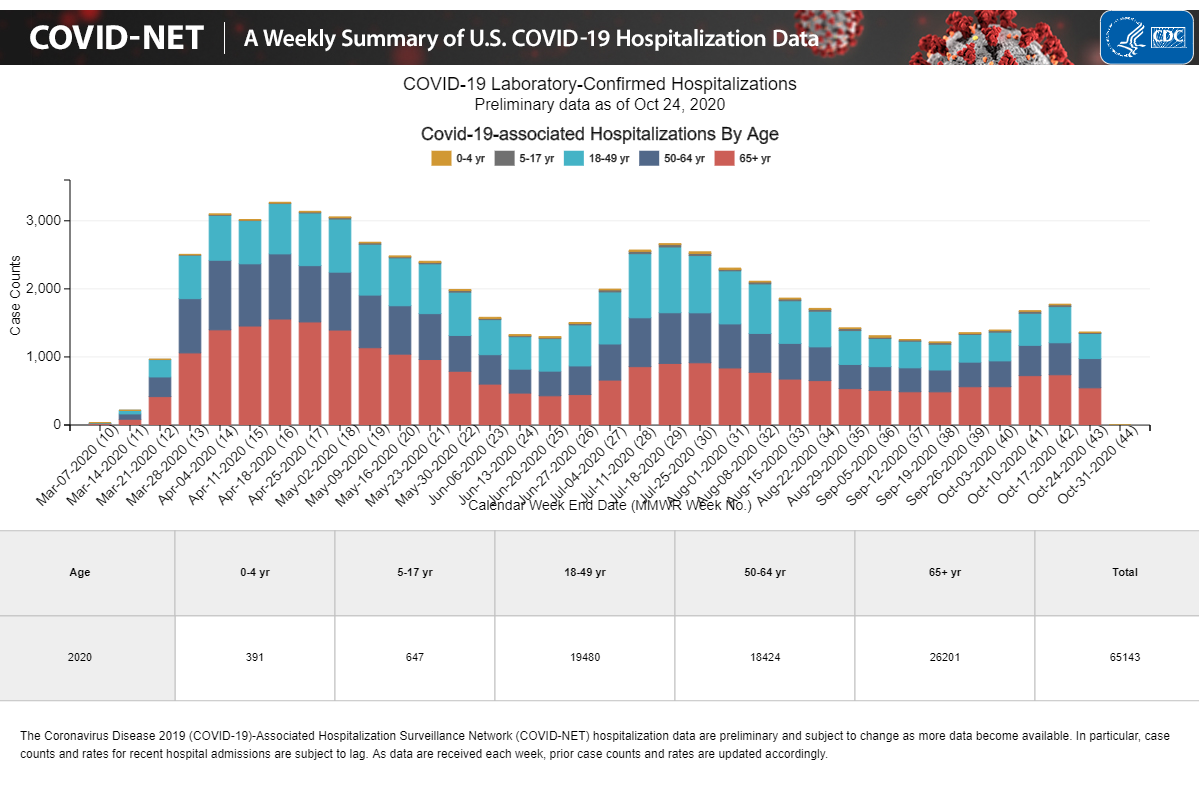
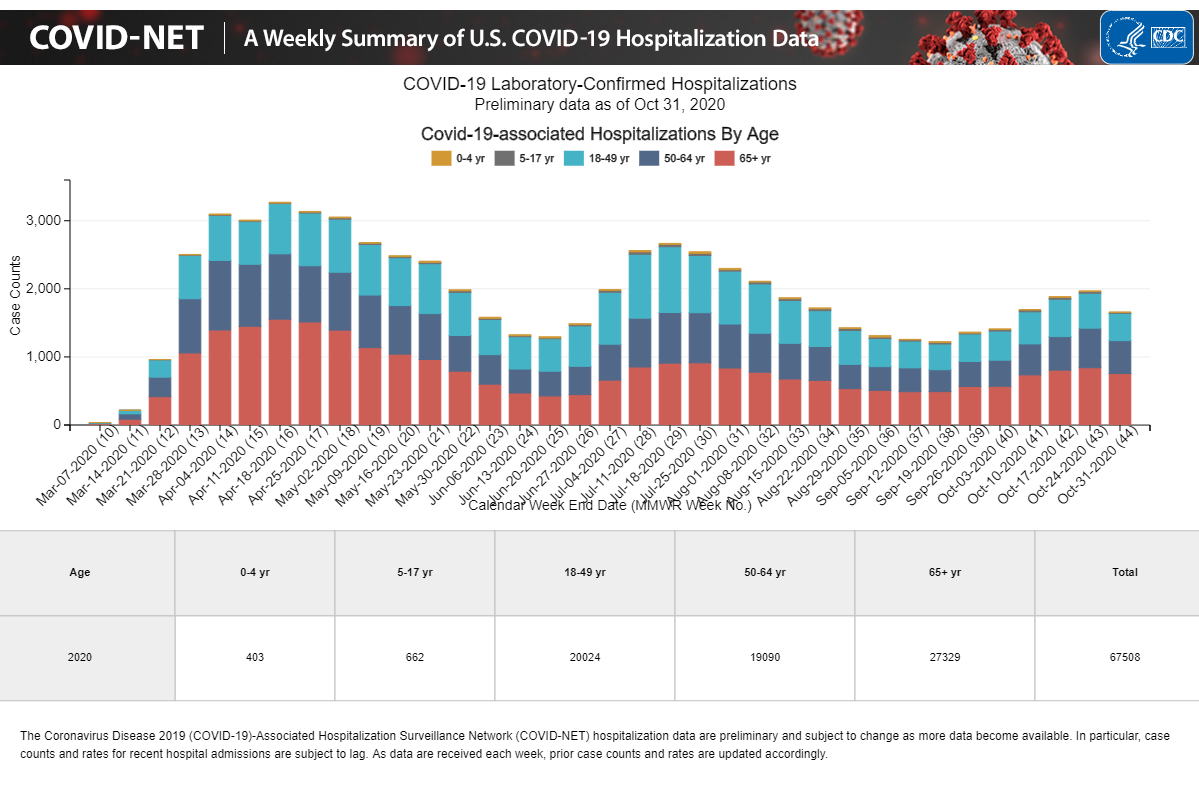
"Behaviors" have been different (whatever the origin of the changes) between 2020 and before but it appears that the virulence (level of sickness, hospitalizations and deaths) is much less for Covid-19 versus the previous flu editions, at least for the group aged 40 and below. Things get tricky above 50 and the difference is still unclear for those aged 40 to 50. In my area, the metropolitan children's hospital has been exposed to the population 18 and below in the context of a massive community spread (similar to NY, Lombardy etc). The pediatricians there have done an excellent job at collecting and sharing data (they were also pro-actively involved to shape policy and to get young students back to school, in person) and are clearly demonstrating that Covid is much less of a health threat than the typical flu, overall, for the pediatric population. The fact that the virulence of this virus increases exponentially with age has made policy design and application a challenge as it imposes some kind of shared inter-temporal transfer of value. The NY and Florida comparison is instructive but i'd wait a few weeks or even months before calling the final 'winner'. FL has entered a trend, the severity of which will be reported in the future. The next 6 weeks (if adjusted history is any guide) will likely show worse relative performance (virus numbers). In a way, between the two, the NY 'strategy' looks more similar to China than FL, with the caveat that NY was late by a few weeks, a fatal mistake given the exponential nature of the disease and the density and other demographic factors that NY had. ----- Some of the previous posts (virus vs market, process vs outcome) made me think about something (borrowed from Russo et al, modified) Process versus Outcome Outcome -----) Good Bad Process to make decision Good Deserved success (A) Bad Break (B) Bad Dumb Luck © Poetic Justice (D) It's an interesting tool (in addition to long term evaluation of relative or expected performance overall) and can be used for all decisions (investments, professional, personal and even conclusions about various aspects of the virus). i've found C to be dangerous for excessive confidence and B to be an exercise of humility. i learned the most with D. For the virus (this thread), some of my conclusions ended up in B, C and D. An interesting aspect for D is that, with more detailed data, my confidence increased in correlation to being wrong. i have to learn from that. ----- @investor 20 If you read this, look at the two attachments. It's updated data from the CDC for the last two weeks that shows that they keep delaying the rising peak in hospitalizations versus what other sources (Johns Hopkins, Covid-tracking etc) have been showing for some time. The CDC data has clear limitations but is helpful for the age group comparisons.

-
The following has been edited to minimize or even eliminate the ‘political’ component and focuses on the policy aspect and potential investment implications. --- The 2008 “liquidity” operations were simply part of a trial-and-error framework and underline the uncertainty related to the Fed’s market operations and their outcomes. --- Looking back in history, the ‘consolidated’ Fed has often offered constructive resistance to debt profligacy. It became standard practice for the Fed, during the Great Depression, to make large scale open-market operations involving government debt securities, deviating from the long held real-bills doctrine. Since that time, the controversy around the emphasis about the need to prevent excesses versus the need to deal with the consequences has continued. Around WWII, the Fed was submitted to a strait jacket but the 1951 Accord (allowing the central bank to conduct monetary policy without Treasury approval for the first time since 1934) reveals that it was possible to have an independent Fed and to “lean against the wind” in order to contain debt expansion and inflationary forces. Chairman McChesney Martin did, to some degree, accommodate the Treasury during the simultaneous Vietnam War and Great Society program but the Fed did offer resistance, delayed the rise of inflationary forces and, before entering the 70s, the Chairman tried to take the ‘liquidity’ punchbowl away and underlined the importance of an independent Fed. In the 80s, federal debt increased significantly but, compared to GDP, remained at a relatively constant level and a strong case can be made that Chairman Volcker’s policies contributed to limit debt expansion through higher interest rates than what was required by the ‘game of chicken’ played by the people holding the Treasury purse. The Fed and the Treasury should work together for common objectives but they have competing and sometimes conflicting objectives. The Fed, as an institution, was founded on the concept of independence and to maintain price stability (purchasing power). The founders (ie Paul Warburg and others) clearly feared the potential consequence of debt monetization that could be achieved somehow and were fully aware that, historically, there was an easy path leading to debasement in the absence of appropriate constraints. Monetary financing is still a two-step process but perception is important when considering moral hazard and when considering that trust cannot be reduced to a simple accounting equation. Unrestrained open market purchases of government securities can become a blurred concept and eventually an equivalent to direct lending. For this money experiment to work, one has to believe that the Fed has maintained sufficient independence and that the policies are right, under present circumstances. i don’t. This feels like a relatively lonely posture now but global markets have now (again) a record amount of government securities trading with a negative yield and 10-yr German bunds are trading near record lows at -0.62%. It just seems that global markets have become addicted to debt. Historically, central banks have shown their usefulness in providing liquidity during acute periods of stress, which is similar to the key support required during the rehab period. An argument could be built that the Fed should put more emphasis on upstream prevention but that’s complicated. These days, the central banks are accomplishing neither of their primary missions, they have become critical intermediates in the supply of the very product that is causing the problem which is presently denied. i would add the mirror image that the unintended redistribution effect has produced on who's deeper in debt and who has excess savings along the income quintiles distribution. And I submit that it may help explain some of the fractures that are seen developing. My line of work has involved repairing fractures. Most fractures cannot be prevented and need to be dealt with responsibly but there are some fractures that are preventable and those, by far, are best fixed before the break appears.
-
An argument is like a (mental) fight and learning is often proportional to the intensity. The comments are a personal (in my direction) reminder that, when engaging with you, the "opponent" from whom i'm learning is clearly superior in many respects. Arguing is great and i don't know many people who are interested by the raw data released by the Federal Reserve. :) ----- Your last post helps to put things in perspective. From a pure accounting point of view it's hard to argue that receiving money is a bad thing. So, in relation to the spirit of this thread, the important underlying questions are: 1-how the liability is funded and 2-how the asset is invested. Let's say Berkshire Hathaway tomorrow receives 150B from the Treasury. The outcome, in large part, depends on how the new capital will be invested. i have a feeling (we may again disagree here) that Mr. Buffett would keep the funds in cash or equivalents (he may increase the investment in Barrick Gold) . Regulations may also hinder how the funds would be redeployed and may, for the more extreme asset cap example, prompt Mr. Buffett to simply return the money, something that Wells Fargo cannot do. The big issue i continue to have about quantitative easing is that it's simply an asset swap between assets that have similar yields and is being done in an environment requiring banks to hold more capital and to be more liquid. Keeping interest rates low has not (IMO) resulted in productive investments into the real economy (see velocity of money trends, whatever that means) and low rates have facilitated government borrowing (see G-7 countries' debt levels vs GDP in a previous reply). Is this cyclical or something else is the question. For my part, i see the asset cap as a relative positive for Wells Fargo as now may not be a good time to grow and later may offer a better environment for growth. Of course, i could be wrong. It looks like the next few months will be interesting, will offer food for thought and further opportunities to learn. i would offer the opinion that the 27T number may look completely irrelevant.
-
^This is outside of my comfort zone but last March 30, i was able to listen to a 10 minute presentation (given by an excellent virologist who spent 3 to 5 minutes on this aspect) and just looked at my notes. Coronaviruses achieve genetic diversity through either 1-genetic recombination with other CVs or 2-focal mutations ("genetic drift"). Once a stable form exists, it can transmit and can "jump" species using its 'new' genetic configuration. Viruses are very old evolutionary friends and the simple line of defense is to put a safe distance between animals (especially certain kinds) and humans or to eliminate the group at risk once a known source is identified. BTW SARS was eventually eradicated but MERS is still endemic in Saudi Arabia and parts of Middle East. For MERS, camels were potential intermediate hosts and they were not culled. Apparently, an animal vaccine was used. The virologist had given several references (pre and peri-Covid) including the following which has nice and instructive pictures (figures 2 and 3): https://www.nature.com/articles/s41579-018-0118-9. As far as the Denmark and Netherlands mink problem, answers are still unknown but it looks like many bright minds are working on that part (the genetic part). CVs are known to mutate relatively slowly. In the grand scheme of things, virus "jumping" form a species to humans is a very rare event and reverse spillover (to a new intermediate host and back to humans) is likely to be even more unlikely or significant. However, a very unusual aspect of Covid-19 is that it has massively spread and has an unusual genetic 'opportunity' to evolve. Also, a specific mutation does not mean that an already proven-to-work vaccine (or naturally acquired immunity) would become ineffective. It may be impossible to identify the ultimate and proximate cause and basic measures to put a safe distance between certain potential intermediate hosts and humans are probably the way to go. An alternative is to pretend it does not exist..
-
Also, from a previous post: "The banking sector was getting the asset side of its balance sheet massively converted to deposits at the Fed earning zero." ---) Interesting and helpful as always and this is a reply, not to attack you, but to attack the foundations upon which you stand. :) The data from the H.8 release, as mentioned, is for large domestically chartered commercial banks in the US. There is a reference below for the specific data recently released. For all banks, seasonally adjusted, the picture is similar and you get your magic 3T number: Sept2019 March2020 June 2020 Sept2020 Oct212020 Total Assets (B) 17524 18919 20200 20171 20228 Cash Assets (B) 1635 2177 3058 2932 3027 %CA/TA 9.3 11.5 15.1 14.5 15.0 TA, over the period, increased by 2704B, more than the increase of CA (1392B). So, i come to a similar conclusion. If you follow the % of cash assets over total assets in US banks since 2009, two things stand out: 1) the total assets apart from cash assets have grown quite consistently (as a function of economic activity and government borrowing) and 2) cash assets % have varied (swap operation with bonds) as a function of quantitative easing, some tightening and then MORE easing. When the government credits bank accounts, they are creating new assets in the private banking system and, through quantitative easing, this newly 'created' money ends up as excess reserves so that both cash assets AND total assets held by banks increase by the same amount. For example, let's say for fun that i'm able to enter the Eccles Building and reach the Ultimate Computer and transfer all the money (assume 1782B and October 21 numbers)) from the Treasury General Account into bank accounts of private individuals (distribution by helicopter would also work to some degree for the example but it would take longer and would be more 'messy'). TA become 22010B and cash assets become 4809B. CA over TA becomes 21.9%. This would make the return on assets number go lower but where is the 'massive conversion' or the 'real problem'? https://www.federalreserve.gov/releases/h8/current/default.htm See footnote 18 for the standard definition of cash assets PS i'm spending time on large (black-box) banks these days but will eventually try to understand Meta Financial, at some point.
-
^Follow-up note The order of the day: mischaracterized levels of uncertainty and conventional acceptance that massive monetary and fiscal support will continue. During Q3, the Treasury borrowed 454B and slightly increased the Treasury cash balance at the Fed by 60B (to 1782B). For Q4, they expect to borrow 617B (599B less than announced last August) and expect a closing balance down to 800B. As always, this remains to be seen and will depend on where the wind blows. The numbers will help to explain if the main goal of the Treasury is to use the Fed General Account as a checking\deposit account or to soak up reserves in order to help banks (banking system). https://home.treasury.gov/news/press-releases/sm1172 In a separate release, the Treasury described that they plan to issue longer-dated tenors. The Fed is likely to continue and perhaps increase its asset purchase programs and it’s expected that excess reserves deposited at the Fed will grow or, at least, be maintained at present levels. Opinion: it’s likely that the correlation that has recently happened between growing excess reserves and growing Treasury cash balance at the Fed will break down. -Additional note about a potential misconception #1 In this thread (and at least another), it’s been submitted that the Treasury is the primary ‘creator’ of money. This is playing with words to a certain degree but is not valid on a fundamental level. When the Treasury credits a private account with money, it also (pretty much simultaneously for practical purposes) records a matching liability which means that the net result is a positive equity event for the private market in exchange for a matching negative equity event on the public ledger. The money ‘created’ is fundamentally a temporary form of asset swap between market participants and is fundamentally based on the idea that the debt held by somebody will be paid back eventually by somebody else. Even if most of this debt money can be rolled over, it is an asset that is matched by a liability. How the link between the two can be stretched is the question. It’s like an elastic band. The energy required to stretch is not constant and it can snap back. The Fed, by acquiring the debt issued by the Treasury and by keeping interest lower than otherwise, have ‘helped’ to decrease the tension in the elastic band but the iron laws of balance do eventually apply. IMO, the ‘real’ money creation is from the banks, through the fractional reserve system. Credit growth is bound to get jammed in higher-debt-levels environments and more debt does not seem to be constructive for the ‘real’ economy. -Additional note about a potential misconception #2 It’s been mentioned that excess reserves have been detrimental to banks implying also that they had to hold higher amounts (proportion) of low yielding ‘cash’. I think the higher proportion of cash holdings is a fact but the higher cash holdings have not happened at the expense of other (potentially) higher yielding assets; it simply represents the money that the government has ‘injected’ in the private system as a result of record debt issuance. Following the data from 2019 to 2020 so far: H.8 releases; assets and liabilities of large domestically chartered commercial banks in US, seasonally adjusted; similar patterns exist when including small and foreign banks with a slight difference for larger banks for which the increase in cash assets as a percentage of increase in total assets was slightly higher. Sept2019 March2020 June 2020 Sept2020 Oct212020 Total Assets (B) 10059 10862 11717 11691 11728 Cash Assets (B) 755 1005 1729 1582 1675 %CA/TA 7.5 9.3 14.8 13.5 14.3 TA, over the period, increased by 1669B, more than the increase of CA (920B). So the total assets have increased at the banks’ level and the increase in cash assets has not happened at the expense of other assets although it’s becoming clear that holding a higher proportion of cash assets and a higher proportion of government debt with ultra-low yields (+\- asset swap operations of the Fed) will tend to lower the return on capital measure for banks. So, there does not appear to be a role for reserves soaking in order to help the Fed or the banks. -Final note By issuing a record amount of debt, the Treasury has run ahead of its needs and has increased its cash balance at the Fed. Doing the latter is a temporary equivalent opposite of what the Fed is doing with its quantitative easing program. The Fed virtually prints cash (liability) in exchange for bonds (asset). When the Treasury parks cash at the Fed, it becomes a cash deposit with, from the Fed’s accounting point of view, the deposit as a liability and cash as an asset. It is ironic to see this apparent conflict as the notions of collaboration and independence are being redefined. But again, IMO, the increase in the cash balance is temporary and will be related to cyclical trends contrary to rising debt levels which are more secular. Disclosure: After having spent some time on this, i must admit that my level of confusion has only increased about today's markets.
-
It would be easy to dismiss SD but there is so much to learn. Those in charge (holding responsibility) in South Dakota recently reported that their assessment of the situation (rising cases and rising hospitalizations) was a result of more testing in some areas of the state (!) and due to people now reaching hospitalization stage for other conditions because of delayed care as a result of Covid restrictions (!). They can also boast a CFR going from 1.4% to 1.0% as a proof of excellent governance and care.. South Dakota has the highest hospital-bed-per-capita numbers in the US (twice more than MA and four times my area). They also have one of the worst records (absolute numbers per population and trends) for influenza deaths. In this context, so far in 2020 for Covid, South Dakota, as it is reaching its peak, has twice the average annual flu death toll and has reached a rate of flu-death-per-year equivalent every 10 days for the next 6 weeks or so. In terms of hospital capacity, at this point about 15% of their acute care beds and 30% of their intensive care beds are occupied by Covid cases. The impact on 'productivity' at those levels (isolation, extra-steps, protocols) has got to be very significant. An under appreciated aspect is that the group in SD most at risk for a nervous breakdown are those working as contact and tracers: https://www.argusleader.com/story/news/2020/08/24/covid-19-cases-rise-experts-question-effectiveness-contact-tracing/3430097001/ Follow-up: It's simply a continuation of previous trends. Positivity rates in SD are now at around 50% (!) and i estimate that 20% of regular hospital beds and 40% of ICU beds are occupied by Covid cases. If you look at their news flow, covid does not appear to be a big deal although there is an article about Sanford Health (the most important owner and managers of SD hospitals and the owner of the sub that designed the Covid-Risk--Calculator that you shared before). They are slowing down on elective procedures. Interestingly, the Sanford Health sub that designed the risk tool is also advising health authorities on how to deal with Covid. Their strategy is not aimed at prevention of spread; it's how to predict and deal with surges ending up in hospitals.. The main news in South Dakota are related to juvenile arrests, a woman dying after shooting herself on a casino dance floor and 'health' tips on how to properly empty your bowels every morning. https://siouxcityjournal.com/news/state-and-regional/south-dakota/
-
With reference to 42.3% long term capital gains tax (plus any state taxes)? Please provide a link. I would like to read. Thanks https://fas.org/sgp/crs/misc/R45229.pdf If the goal is to reduce the impact of taxation on long term capital gains, it may be more efficient to simply lower the tax rates on those gains.
-
Berkshire vs Brookfield vs Fairfax
Cigarbutt replied to CanadianMunger's topic in General Discussion
Mr. Damodaran had this graph recently when discussing if one should adapt to value investing or if one should let value investing adjust to one's portfolio. If the choice is between investing in BRK or the S&P500 index, excess or 'alpha' return expectations should be dampened although there may still be periodic opportunities (now?) for potential relative outperformance. -
Thanks. I'm guessing the last number is the estimate for your IFR? It's not clear what the percentages indicate (and it's not clear how they come up with such precise numbers). The simple way to build a model here is to use CFRs, adjusted for region and adjusted for risk factors defined per CFR from different sources: CDC etc. i assume the percentages apply if and once you're Covid+. (?) It may be more conceptually sound to go through a simple exercise (which will correlate with common sense) and use a risk stratification. Alberta has put up a 3-level risk (low-intermediate-high) system: https://www.alberta.ca/lookup/COVID-19-personal-risk-severity-assessment.aspx An interesting aspect is that the Alberta site does not require a US zip code and, at least for me, adding dementia to the risk factors does not significantly change the risk level. The Sanford Health group also has a nutrition coach subsidiary. https://www.profileplan.com/
-
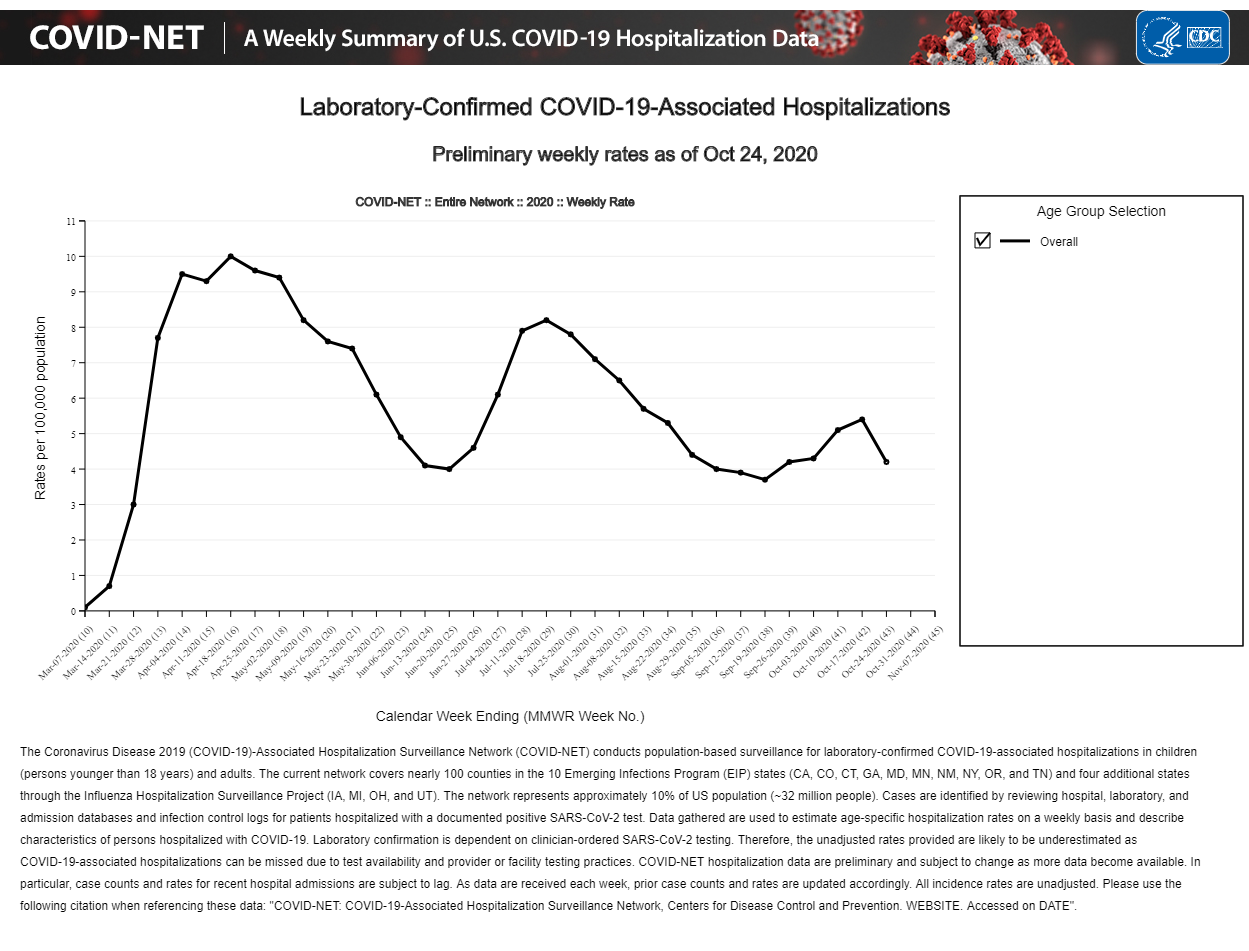
^They say a picture is worth a thousand words. What about two pictures? -The first picture is the CDC hospital data as of July 18th 2020, with the information they knew then. -The second picture is also from the CDC and is simply a reflection of the weekly updates they do regularly and the graph shows how the data has been updated over time with updated data as of July 18th 2020 markedly different from initially reported (and matching reality better) and with recent data (as of October 24th 2020) which may not reflecting what will be shown in a few weeks for the same period. Why don't you commit to show an update of this in 4 to 6 weeks?
-
No, no...i just mean to say that they use a different method and i offer the opinion that the Covid-tracking method is more reliable and timely. For the CDC, they use a COVID-NET framework which is based on sampling. https://www.cdc.gov/coronavirus/2019-ncov/covid-data/covid-net/purpose-methods.html It's like if you analyze a company and obtain a summary from an analyst who had access to a sample of a few pages of a few of their 10-Ks. You may get a fair idea about the company. The Covid-tracking people suggested early on that the data was imprecise and not timely. They have tried to put in place a way to obtain directly the data from all states and to aggregate the data sytematically. And they've noted obstacles. https://covidtracking.com/blog/whats-going-on-with-covid-19-hospitalization-data Many others have tried to do the same and have come up with similar results but the Covid-tracking team seems to be the group that gained the widest recognition. It's like if you analyze a company and obtain a summary from an analyst who went deeper and in more details. It's not enough but it's a good starting point. "Come on man" i wonder if you watch too much of a certain kind of entertainment: This is not an endorsement or opportunity to mock; it's simply an attempt at humor given the very poor opportunity set.
-
@Investor20 You have mentioned this aspect (declining hospitalization rates) before (replies 7792 and 7939) and have made it a central tenet of conclusions. You may want to re-visit reply 7943 which described the limitations of CDC data for this aspect. Just like for the percent positive rate trends, the CDC data is often not reflecting the real-time developments due to less comprehensive scope and lag. Whatever leaning you may have for decisions, you have to agree (i assume here) that precise and timely information is critical for cost-effective decision making. Covid-tracking has much better methodology and, so far, has been more reliable in delineating trends (in real time). The CDC data often ends up (after corrections and updates) showing trends that Covid-tracking showed weeks before. You seem to suggest that US and CDN hospitalization rates are coming down or at least not correlated to rising cases. This is correct in the sense that younger cohorts are now accounting for a larger share of cases and hospitalization rates are not tightly correlated. But hospitalization rates are going up and this will likely get worse for some time because of the lag effect. This is not fake news. In Canada, similar trends are playing out, see page 12 of the document (as of Oct. 24th): https://health-infobase.canada.ca/src/data/covidLive/Epidemiological-summary-of-COVID-19-cases-in-Canada-Canada.ca.pdf Yesterday, hospitalizations were at 1179. Just to confirm on a local level (my area has taken the approach that we will breeze through this), after a few phone calls, it became clear that hospital cases are going up. But the virus will eventually go away; that's an incontrovertible fact, almost.
-
---The attenuating theory is possible but does not fit with present data for the following reasons: -coronaviruses are not recognized for unusually high mutation rates -genomic follow-up studies have not consistently shown changes in correlation with significant changes in contagiousness or virulence -the Italian studies published around June that suggested this phenomenon were of poor quality and confounded improved levels of care and seasonality with virus attenuation (present trends also discredit those theories) -the extent of survival rates and time frame (just a few weeks) simply don't fit with an attenuating virus: From the NY Langone team study ---The self-inoculation theory is possible but very unlikely and, even if 'right', unlikely to be significant. The reasons are numerous and include coherence, disease transmission mechanisms etc. ----- @Investor20 Thank you for the ideas that can be (IMO) characterized as unconventional. i feel that the communication between us is sometimes deficient and i take full responsibility for it. The ideas that you suggest make me consider alternative theories. When reading your posts, i'm reminded of what happened with the inoculation controversy that happened in Boston in the early 1720s when a group (mostly led by religious characters) were pushing for self-inoculation of the smallpox virus in order to decrease individual and population harm. This group was resisted by various scientific and established dogma groups. There were even unconstructive personal attacks and of course, the tribal crowd got involved, making matters even more complicated. Still, in that specific case, the group pushing for self-inoculation was right and even if there were risks with their approach which included unnecessary deaths, they had the most solid experimental thought process and were eventually proven right. Even decades later when Mr. Jenner 'invented' vaccines (from a cow related disease, cow=vacca--)vaccine), the initial reactions from the establishment were negative and even derisive. Contrarians are not always wrong. :) Edit: for spelling mistakes