Milu
-
Posts
903 -
Joined
-
Last visited
Content Type
Profiles
Forums
Events
Everything posted by Milu
-
Poor Dave is likely one of those type A personalities who got straight A's in school and was always more intelligent than the rest, and comes up with tons of smart sounding strategies and thesis, but alas that silly mr market never seems to co-operate.
-
I like it and it aligns with a lot of my thinking and posting about things not being as bubbly as many market participants seem to think. With the exception of covid drawdown (about 1-2 months) and 2022 tech bear market, I've been hearing every year since around 2013 that valuations are stretched and we are in a new bubble. All I see is a market perhaps on the slightly overvalued side of things but a fair bit away from anything that could be described as a bubble. I'm not rushing in to buy these days, but not doing any selling either.
-

Owning home and asset allocation/portfolio management
Milu replied to Milu's topic in General Discussion
Yes the tax free aspect for both capital gains and imputed rent are a big advantage to owning primary residence, at least in Ireland where we don't have many tax free investment options outside of a pension. Main costs are mortgage interest and maintenance cost. -
Owning home and asset allocation/portfolio management
Milu replied to Milu's topic in General Discussion
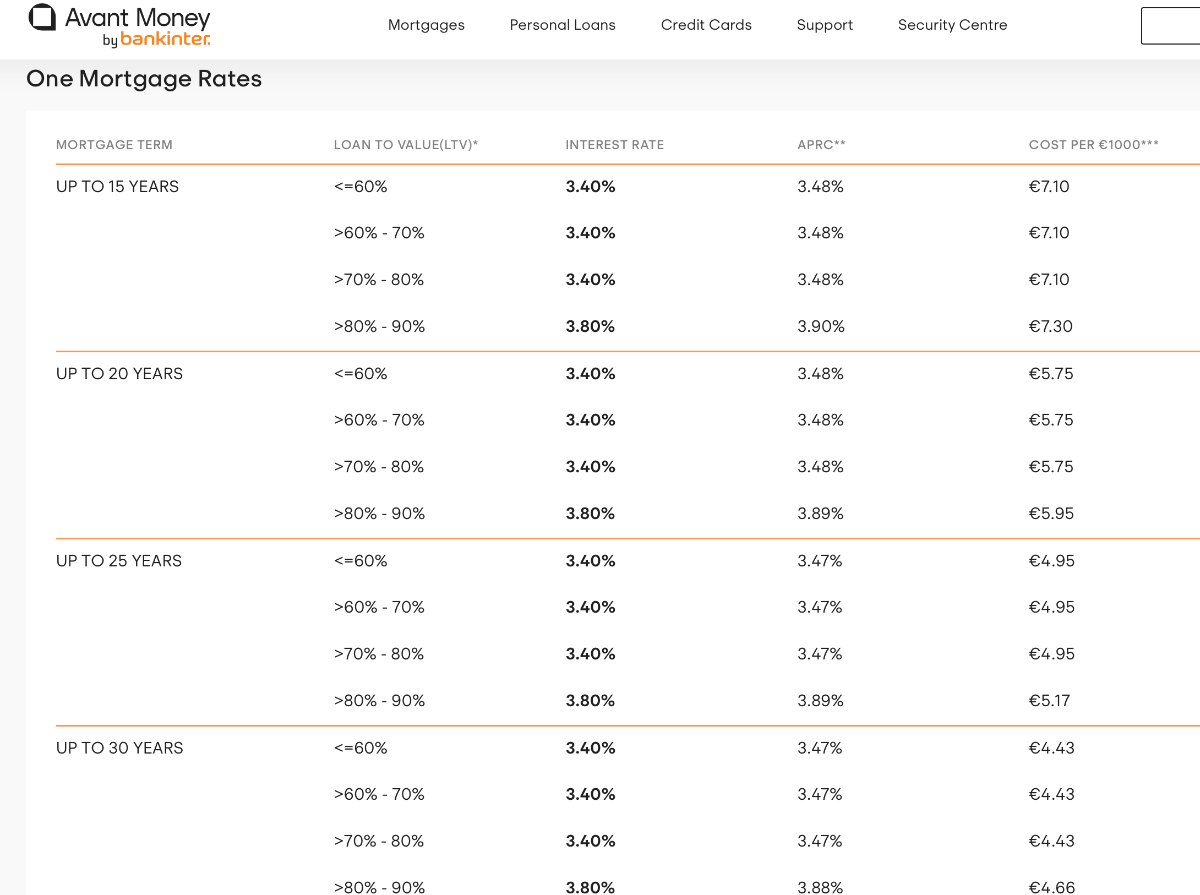
I'm Irish, and that is the current rate on long term 25-30 year fixed mortgages.
-
Owning home and asset allocation/portfolio management
Milu replied to Milu's topic in General Discussion
Yup many ways to skin a cat. I'm taking the opposite approach, I built up a sizeable investment portfolio due to successful investing in my 20's and 30s. This large portfolio has given me the freedom from stress or financial worries. Now in my early 40's i am taking out long term (28 year, 3.4%) fixed rate debt that can't be margin called and am using that along with some cash savings to purchase a hard asset (house). I can comfortably afford the monthly mortgage repayments but have no intention of overpaying in order to pay off the mortgage any sooner. Any extra cash will continue to go into investments earning double digit returns vs the 3.4% return I would lock in by overpaying the mortgage. -
Owning home and asset allocation/portfolio management
Milu replied to Milu's topic in General Discussion
Yes, it an interesting thing to think about, for example let’s assume a person has a $1m portfolio invested 80% stocks (8 stocks 10% each), 10% gold, 10% tbills. Person then sells gold and tbills and uses the 200k as down payment on house, takes out mortgage of 800k. If the person ignores the house asset or home equity, they now have a 800k investment portfolio with 8 stocks, position sized at 12.5% each. The financial situation and asset weightings could either be - Total assets (house value + investment portfolio) - Net worth (home equity + investment portfolio) - Liquid assets (investment portfolio) I run quite a concentrated portfolio with positions typically sized in the 5-10% range but if I factor in the home asset value or home equity as it continues the grow, the relative size of my 5-10% position would shrink somewhat. Just some of things I’ve been thinking about as I’ve never owned real estate before or taken out mortgage debt. -
I'm curious for all the home owners here, do you factor your current house price or home equity into your investment portfolio decisions? Does it impact your position sizing and do you factor it into any returns calculations you are doing. I've always rented and only now aged 42 decided to pull the trigger on a house, having kids and planning for schools changed my perspective on things as I was always a rent and invest type of guy before that. I'll probably just keep things totally separate as a house is not exactly a liquid asset. Just curious what other on the board do?
-
I think it's very difficult if not impossible to call a bubble until after it pops. For example is Bitcoin in a bubble, how would you judge, if it drops 50% next year and then goes up 300% the following year is the person who said bubble correct? What if someone calls a bubble in the Nasdaq today at 22,000, and then the index goes up to 30,000 before dropping 33% to 20,000. Is that a correct bubble call. It's all very subjective really. I would say the the Dot com crash and the Japanese 1980's crash are clear enough but the rest it's all a bit wishy washy.
-
Can you give some examples of public companies where there is a lot of froth. I hear a lot of people focus on mag 7 stocks as being in a bubble. Most of them are in the 30-40 PE multiple level, on the expensive side sure but expensive shouldn't necessarily equate to bubble. During the dot com bubble, most of the largest publically traded firms Cisco Oracle, Microsoft were anywhere from 60-400 PE multiple. People say AI is a bubble but most of the AI companies are private. There are lots of areas of the market that are not in a bubble and are possibly quite depressed, retail clothing firms (Lululemon, Crox) for example. I suppose my question for you is when was the last time you felt that the market was fairly priced, and what actions did you take during that time?
-
Yes very true. It's an interesting one, when I was in my 20's I used to care a lot about macro and pay attention to certain indicators like the shiller PE and marketcap-to-gdp. Then I mostly realised this was pointless and the people who keep focusing on it, John Hussman for example have underperformed for decades. These days I just buy and hold good stocks for the long term and not get too worried about whether the market gets a little hot or not. I'm comfortable with volatility so mostly happy to just ride things up and down with the belief that the long term will work out ok. I've always kept a bit of cash on the sidelines to help my psychology during the downturns but mathematically it probably made more sense for me to just be fully invested. Maybe market will double from here, maybe it will drop 50%, maybe it will triple and then plummet. Nobody knows or should care too much in my opinion.
-
Ya all this talk about a bubble is making me feel a bit more confident that we aren't in a bubble. The time to worry for me is when people stop talking about a bubble and start proclaiming we are in a new era where the normal rules of economics don't apply.
-
Krugman, what a genius!
-
Yes but he's been holding large cash balances for at least the last 5 years already, possibly longer, add another 2-3 years to that and you are looking at close to a decade waiting for the fat pitch in a continually depreciating currency.
-
The people I respect and pay attention to on this forum or in life generally are the ones who are intellectually honest, they can criticise a person when they do things wrong, but then are able to praise the person when they do things right. Trump does plenty of things I don't agree with, launching a meme coin, bullying the Canadians, to name a couple, but he has also done a lot of good for the world. Today is a day he has done a lot of good, and even his harshest media critics like CNN, NY Times etc are quite universal in their praise for the achievements.
-
Big respect to Trump for what he has pulled off. Hopefully even his biggest detractors can see the significance in this and give credit where due.
-
Yes I have wondered a bit recently how Buffett must feel having so much of his assets in rapidly debasing fiat currency. I do wonder if this stash is even keeping up with inflation in real terms after taxes on the interest. I guess he sees it as the least bad option seeing that he’s unlikely to invest in gold, and stock prices are quite stretched.
-
You along with all other public investors have had the chance over that last decade or two to buy Netflix, Amazon, Tesla, nvidia, palantir, and many other similar stocks that became hundred baggers. The issue is that these stocks rarely ever traded at valuations multiples that ‘made sense’ to traditional value investors so they never took action. If open ai or anthropic went public now when they are losing billions of cash, or 5 years ago when they didn’t even have a product, people wouldn’t have invested either and would likely have scoffed at the ‘idiots’ paying 1000 times revenue for a start up. It’s like my friend who whenever we go to a bar convinces himself that any attractive girl that looks at him definitely wants him but since he’s married he can’t do anything.
-
Yes I’ve also found the ads quite annoying to deal with, particularly when browsing from my phone.
-
Hasn't there always been real problems in every country all the time, I wouldn't say that today's problems are any better or worse than they were 20, 30, 50 years ago. And I also I think your term 'Digital God' is a bit of a loaded term and not representative of what most people are focused on. For the majority of the hyperscalers they are building out compute to further improve the quality of their recommendation engines for what videos to serve in your youtube feed, newsfeed etc, what products to sell (in the case of Amazon). Many of these CEOs (Zuckerberg, Altman etc) are still quite young so are not in the giving back to society phase of their career yet so I also don't see a fair comparison. The big philantopists like Rockerfeller, Buffett were in their 70's when they established foundations or signed giving pledge. Gates started giving back in his 40's which is likelier on the early side but again it's not a competition. Society would be a lot better if each of us focused on our own giving back, whether small or big, and care less about criticising what other choose to do with their capital.
-
I never really understood this argument. Essentially if something bad is happening in the world then nobody is allowed to be interested in focusing their energy on something else. Comment always ends up being “why is Jeff bezos focusing on going to space when he could be saving the rainforest in Brazil”, “why is Zuckerberg focusing on the metaverse when people are dying from fentanyl”. People have diverse interests, ambitions, and care about different causes. If somebody wants to focus on saving dolphins and somebody else wants to focus on drug epidemics then it’s up to each person to follow what drives them. Who are we to judge.
-
Guy Spier Op-Ed: "The Golden Age of Value Investing Is Over"
Milu replied to charlieruane's topic in General Discussion
I think he is right with a lot of this and have felt this way for at least 5 years. Even before LLMs came out the level of number crunching going on of fundamental data (profits, cash flows, margins etc) was so thorough that no edge was going to be available to a human trawling through that same information. Factor based funds likely would eliminate any edge with net nets, low pe stocks etc. The only edge these days is either the time arbitrage that guy mentions or focusing on qualitative factors such as the vision and execution ability of the CEO and the culture of innovation. Basically buy good innovative companies who can pivot well in this fast changing world, and when you buy them hold them for decades through the ups and downs. -
How does one end up with those small positions of 0.04% or 0.07%? You obviously know how to run a concentrated portfolio and are comfortable doing so based on the sizing of your largest positions so I don't see why you would hold all these meaningless sub 1% positions. Not trying to criticise, just curious to understand the rationale.
-
Meta 19% Bitcoin 18% Tesla 14% Alphabet 12% Nintendo 6% Amazon 5.5% LVMH 5.5% Lululemon 4% Dominos 3% Ethereum 3% Cash 11%
-
Curse me Kilts!! What is the hell is point of any of it anyway?
Milu replied to Jaygo's topic in General Discussion
I think this is one of the mental accounting issues that many people struggle with. Return is return whether it’s from capital appreciation or dividend income. Many investors seem delighted when a company pays out some large special dividend, but look confused when you explain you can just create your own ‘special dividend’ by selling some stock and realising capital gain, typically more tax efficient too as income tax is typically higher rate. -
I don't have an investment in it but I could imagine a world where Circle (CRCL) becomes a $200B market cap company. Haven't done enough research on the firm yet though.