LongHaul
-
Posts
840 -
Joined
-
Last visited
Content Type
Profiles
Forums
Events
Everything posted by LongHaul
-
Off Topic - What was your used car buying experience like?
LongHaul replied to LongHaul's topic in General Discussion
It is really interesting because Carmax might charge $1k to $2k MORE per car than other dealerships. They are clearly above market and yet do really well. There is some value there with: 1. No haggle pricing (good and bad) 2. More honest culture 3. 5 day money back guarantee 4. Some type of limited warranty after sale included. https://thegarage.jalopnik.com/dont-get-sucked-into-the-carmax-marketing-machine-1718230498 Why do you think Carmax does so well and what do want out of a used car dealer as a consumer? -
What was your used car buying experience like? Doing research into the industry which has a sleazy reputation.
-
The thing about the car lending is that when it likely pops it will have interesting car market ramifications. It is a self reinforcing cycle now. In reverse lenders stop lending, go bankrupt, and generally restrict credit to buy cars. That significantly restricts the ~54% of used car buyers that finance their used car purchases. Then used prices go down, hurting lenders even more, with more people underwater and additional losses. Spreads will likely go up and terms down. More repos and supply could push prices down even more.
-
Classic car bubble has already popped. They are non-productive assets. http://www.businessinsider.com/the-classic-car-market-is-a-perfect-example-of-how-bubbles-collapse-2017-5
-
The question asks what might be exposed in a crash not what might precipitate a fall. Therefore, I think auto loans are an appropriate topic for this thread. Plus, if I am right there are loans that are much more egregious than most people expect and the effect will be worse than expected for those invested or employed with the bad actors, if these risks are not disclosed and priced appropriately. Also, there will likely be many different types of frauds of various sizes exposed just like in previous crashes. Oddball, I think your assumptions regarding subprime auto lending are very reasonable. However there is lending that has been unreasonable. Therefore you are making rational assumptions about actors who are behaving irrationally, which might underestimate the problem. I would think of something closer to loan of $30k backed up by a $15K Dodge Neon. So though the size of the problem might be small relative to the economy, the lending standards are insane. By the way, how you might ask to you get an above market value auto loan? Well you simply end up upside down in your previous car or cars, and then find a lender to roll that debt in to your loan to purchase your next car. So this is not really an asset backed loan, it is really backed by the borrowers earnings, which might disappear in a recession or crash. At the other extreme I have also observed a different type of crazy auto lending. Here are some stories from personal conversations I had with people. I recently spent time with owners of cars worth more well in excess of $100k (some of whom were young people who seemed to have no discernible real assets or source of income). What was shocking to me is that every one of these cars I inquired about was financed to the gills. People were very happy to talk to me about how smart it was to buy them with as much debt as possible. The logic was that prices were only going to go up on the cars, and they would not want to have their money tied up in a car when they could make so much more money in the stock market. Though they did not say so, this seems to assume that stock prices also only go up. I was further shocked that the loan rates many of these people were getting were close to prime mortgage rates. I also talked to people who planned to buy classic or exotic cars. They all planned on buying with debt. I also met collectors who owned multiple Ferraris, Lamborghinis, Porsches, Aston Martins, etc. What was shocking to me is that these collectors were financing their collections at near 100% LTV. I kept asking these enthusiasts if they had any concerns about this, and they said that they aren't making any more of these cars and prices only go up. Does that sound familiar? I literally couldn't convince any owners of these rare, exotic, or classic cars that prices could go down. Obviously if there aren't enough Dodge Neon's to bring down the system, then there aren't enough classic 911's to bring down the system either. However, to anyone who invested in these loans above asset value, or in bubble priced collectors cars, is likely to be very unhappy someday down the line. You may need a car to get work, but you don't need a $100k car to get to work, and you certainly don't need a collection of cars. When the crash comes, a lot of these people won't have jobs anyway. Plus if we see this type of truly insane lending going on, what else is there in the sector that we aren't seeing? Great post Read the Foot Notes. I think autolending sounds extremely stupid. Same old pattern of the credit cycle where lenders beat themselves up to make idiotic loans. I heard that autolenders are making loans at more than the car is worth now. A local competitor was passing on these loans (for regular cars) as they didn't make sense. The auto lending will blow up bad - not sure when though and everyone connected with the boom will get hurt. Defaults are already rising - and this is into a good economy. https://www.bloomberg.com/news/articles/2017-07-17/new-u-s-subprime-boom-same-old-sins-auto-defaults-are-soaring And those collector cars can go way down. Sounds like a dumb bubble to me. Expensive cars to maintain also. Interesting that no one would listen to you. What were their responses when you said the prices could go down? In my experience when people get drunk in making easy profits it just over rides everything else and they don't listen at all. Very emotional creatures we are.
-
Great article. Thanks for posting. Sometime when I am making a big decision or evaluating something I find it helpful to view it from the perspective of my deathbed. It puts things in the proper perspective.
-
If you worked at an investment fund, how often did your bosses read the 10-K's?
-
Hurricane Losses and Forward Looking Insurance Premiums
LongHaul replied to TwoCitiesCapital's topic in General Discussion
Great article. Thanks for posting. -
These are great questions. I probably have more questions than answers right now. That Propublica article was the best article I saw. https://projects.propublica.org/houston-cypress/ Note the publication date of Dec 2016. First a little history - Houston (like many cities was founded near a river (Buffalo Bayou). This was probably for low cost transport, water, etc. In modern times that is probably a bad place to have valuable real estate but that is history. Also Houston is flat like a pancake. Clay soils (don't absorb water as well. Plus very pro development and growing a lot. I don't know what the cause of the floods is besides lots of rain :), and I am not a storm water engineer. Whom I now really appreciate BTW. 1. Was this forseeable/preventable. There have been bad floods historically and 2 in the last few years prior to this. What I am realizing is that Houston is largely made up of a floodplain. I don't know if that is 3% of the land or 30% and it depends on how severe you want to make the assumptions. I think that is just part of the geography - flat, clay soil, near gulf. No question that parts of this were preventable. Building homes very close to streams that flood massively is asking for it. And the people buying those homes were taking a risk. Human tend to be overconfident and downplay catastrophic risk. Look at all the people living in NYC and DC who have nuclear risk. Development - I am starting to come around that development of urban and residential areas causes more runoff. I think this was a cause. I am not really sure if infrastructure - levees, drainage, etc could have prevented much - but I would guess they could. I read in the article that Fort Bend County has stricter flood development than Harris County and I think Fort Bend County ended up much better off (still not sure of this though). This would point to engineering solutions. (walking the big levees around here is interesting). Climate change also may have an impact but this is still a question mark for me. The problem nuts on the left have an ideology and an agenda and the nuts on the right also do. 2. "What is your personal take on the political consequenses [planning of countermeasures for similar situations for the future etc.] of this situation right now?" In my opinion Houston is probably the most capitalistic city in the US. No zoning in the city (which I think is great BTW) and is very Republican metro area and state. I think this follows much of human history - after a disaster they enact measures to fix the mess to minimize its chance. Happened in the 30's here after major flooding. Houston is also very pragmatic - so I think solutions will be implemented and new development will require more flood control. But we will see. 3. I don't know the percent that have flood insurance. Comprehensive on your auto policy generally covers flood insurance for cars BTW and the majority of people elect this. This was likely underpriced in Houston BTW.
-
I am also interested in others experiences down in Houston or other takeaways people have.
-
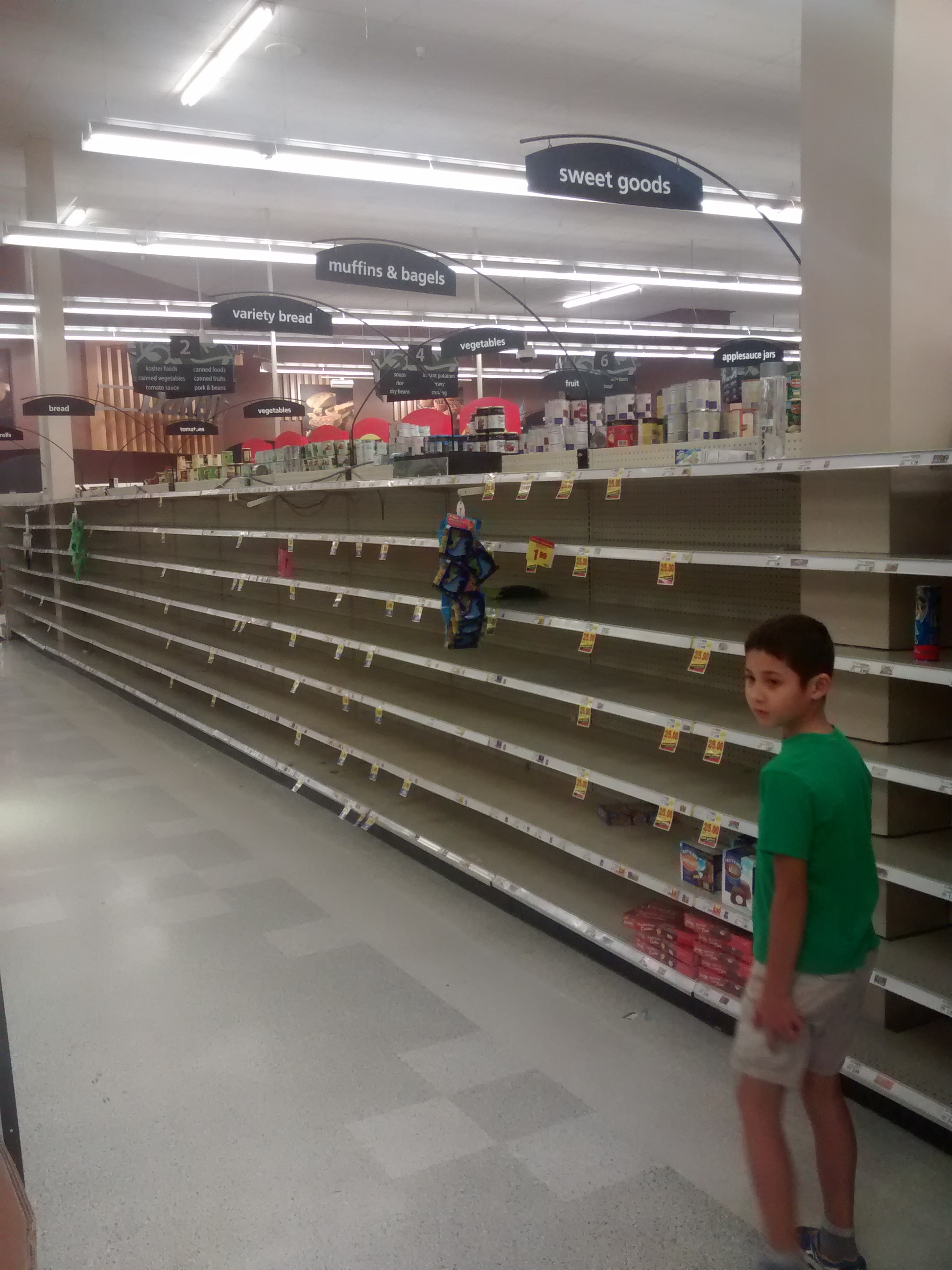
Hurricane Harvey personal experience I live in the Southwest part of Houston metro area. 8/26/17 - Friday - The rains started and kept coming and coming through Tuesday 8/29/17. Total rainfall in the area over 5 days was ~40 inches while 50 inches is the typically ANNUAL rainfall. The lake in the back of the house rose up ~2 feet at the max and we still had another ~ 4 ft to go before it would enter our house. Not likely with the pumps and overflow (at ~2.5 feet below the house) which would go into the street. We never got flooded out as the creek nearby never overflowed too much. Other creeks flooded out hundreds or even thousands of feet. The drains releasing water were opened into the Brazos. We never lost power, internet or water. I guess we hit the flood lottery. Supermarkets and gas stations. Many gas stations were out of gas before the rain even came. Too much demand. You have to be early. Water was out in many places also. Supermarkets near me are currently out of bread, milk, eggs and water. They have not gotten deliveries in days because they can’t come in. Best to stock up. See supermarket bread shelf picture. There are at least 7 supermarkets around me within a short drove (probably too much capacity). This shelf is almost always full with bread so is pretty remarkable to see. A lot of the other shelves are missing much food too. Flood learning lessons. Over 10 inches of water in a short amount of time is a ton. 40 inches is much worse. If I lived in a place with even a low possibility of flooding I would just leave. There is almost no upside in staying. You get the cars out of there loaded up with stuff and you can leave at a time of your choosing rather than have to be evacuated or boat out. Evacuation may not be possible if the roads are flooded as many roads are now. Over 350 locations of flooded roads are not passable. I am also glad I have the canoe just in case. I will never live near a floodway. The worst flooding is near rivers, creeks, bayous etc. They overflow and flood the nearby land. The worse the flood the more land that gets flooded. Rich and poor areas alike have been flooded. Nature does not discriminate. Levees. These always made me nervous. 2 things have to go well for your house to not flood: 1. The water of the river has to remain lower than the levee 2. The levee has to not break. Those events are correlated. There can be tremendous pressure on the levees. The other cost that is hard to transfer to people's brains (as was mine) unless they see it - is the stress, time, hassle and cost of the flood. It is immense. Human memories are short and overconfident so what ends up happening is people don’t fully value the safer land. My advice to anyone who is looking to buy a home: 1st thing to check is for catastrophe risk that can be avoided. Flood is one that you can avoid. Just stay away from the floodplains or you will likely learn a lesson that is not fun. The really great thing though is that people down here were really wonderful. People have been pitching in with volunteering, donations, rescues, homes and anything else that needs be. That is very real It really moved me when I was volunteering and a lot of people quickly came to help those who needed it. The volunteers were of all races, etc. And the victims were also of all races (including Asians and Indians). Many wealthier areas got hit bad - River Oaks, Sienna Plantation, Friendswood. It like the opposite of how Katrina seems to have went. Anyway if you are reading this you should think about your situation with catrostophe risk. Flood, earthquake, hurricane, etc. The time to prepare for these is way before they happen and get your personal infrastructure and backups set. And if you are in your nice dry house with electricity and running water and plenty of food - count your blessings. Thousands and thousands down here don't have them.

-
Is the US stock market at bubble levels? Poll
LongHaul replied to LongHaul's topic in General Discussion
I think the S&P 500 (along with other US indexes) is in a huge bubble. I would define a bubble as prices for assets that are far above intrinsic value. The S&P 500 is trading ~25x normalized ltm eps (reported not fantasy #'s). I think it is worth far less than that. Perhaps 14x if I am being generous. The only time in the last 100 or so years that the DJIA or S&P have traded higher was ~ 1929 and the early 2000 time period. Both ended badly. There are always various rationalizations when prices go to the moon but the biggest reason is crowd psychology and people going nuts. -
Is the US stock market at bubble levels?
-
Buy T-bills instead of having cash in brokerage account
LongHaul replied to LongHaul's topic in General Discussion
I generally go out about 1 year for easy of admin. With IB the commission is about 2 bps or less if I need to sell. The cash just gets deposited in the account upon maturity. -
Great Post and a good reminder that Amazon doesn't do everything well.
-
Amazon and Rock Auto and the internet will only get more competitive vs the stores. Amazons faster shipping and probable lower prices will only threaten the AZO's of the world more and more. RockAuto is great also. 1. The auto parts stores are some of the highest ROIC retailers I can think of. I question the sustainabilty. EBIT margins are super high and A/P are very high. 2. It has turned into an oligopolistic business where a few remaining players are hosing consumers on parts they need often right away. 3. There are really 2 sections of their business - competitive stuff and other. Competitive stuff are cleaners, oil, etc that Walmart, etc sells. These have lower margins. Then the hard parts is probably lower turn and super high gross margins. 60%+ would be be unusual. That is ripe to come way down. Frankly - I think the CEOs of these stores are idiots who have jacked up prices and are just opening up the door to get killed long term. Hard to predict when though.
-
Freedom of thought and expression are important. I think the topic is interesting and worthy of discussion. The genders are wired differently. One thing I have observed, and I have no stats, is that I think men tend to be much more obsessive about things than women. % of obsessive men I know is much greater than women I know. I see this in little kids too. Generally women tend to be a lot less interested in business and finance. So if women (or anyone for that matter) are less interested in a topic, then they will be surpassed by those who are super interested in it.
-
Car Buying Negotiation Strategy and Observation about Residual Value
LongHaul replied to BG2008's topic in General Discussion
That is hilarious! Nothing like an auction to drive a deal. -
Car Buying Negotiation Strategy and Observation about Residual Value
LongHaul replied to BG2008's topic in General Discussion
Here is how I would do it if you know exactly what car you want: Do not go to the dealer. Email or call a bunch of them for the total out the door price (total price including all taxes and fees). There can be hidden fees etc that you don't realize until later if you don't get this price (doc fees, etc.) You will likely deal with the internet manager who can give you better prices. Then you can try negotiating off the lowest of those prices. -
I would highly recommend buying Tbills for a short term cash equivalent instead of the low interest rate your broker is paying you. IB is currently ~41 bps for example. 3 Month Tbills yield ~1% currently. https://www.treasury.gov/resource-center/data-chart-center/interest-rates/Pages/TextView.aspx?data=yield IB currently has ~$44 billion in customer cash currently that they are earning a spread on which is pretty amazing from a customer lost opportunity.
-
Shocking state of law schools, when will ABA act?
LongHaul replied to DTEJD1997's topic in General Discussion
Welcome to the world we live in. People want your money and will deceive you for it in all walks of life. That in itself is a huge education. That includes colleges, CEO's, salesman of all sorts, dentists, doctors, automotive aftermarket and the list goes on. And there are many, many ways to be deceived through hope and greed, being naive, overconfident, etc, etc. I was looking at a used pickup truck the other day so I go up to look at it ~ 1hr away. The seller listed it with some mechanical flaws so he appeared upfront about the flaws. Then I get there and there is rust on the inside of cab on bolts and a lot of dirt under the truck bed. I specifically asked him if the truck was in a flood and he says no (and records were clean on car). I told him it looked like the truck had been flooded and was going to pass. He was a lying sack of sh*t trying to sell a very problematic vehicle to make a little extra income. I got an education out of the whole thing. -
Thread for hated, scorned and despised stocks or sectors No need to do any analysis or even like them but I thought a thread for out of favor stocks or sectors might highlight opportunities for contrarians. Some current hated names. Macy's and retail Hertz
-
+1 Super interesting. Thanks.
-
I have little experience observing great salesman (selling a product or service) who are highly productive and was wondering what traits they exhibited. Any help appreciated.
-
I thought Mr. Seides argument was generally nonsense. More about denial than facing reality. He could of picked US funds and maybe he did. It is very difficult to pick managers who will outperform in the next 10 years. The S&P WAS at a very high multiple on 1/1/2008 and it is high now. http://www.multpl.com/shiller-pe/ Buffett bets when the odds are way in his favor and in this case there were 3 major drags on the hedge fund/FOF side. 1. Ripoff fees of the hedge funds themselves. 2% and 20% is a joke 2. Ripoff fees of the funds of funds. 3. Shorting - a negative drag for 99% of funds. Add all those up and even if someone is a great long investor the fees are likely eliminate the outperformance. A lot of people in finance are like a sleazy used car salesman but at least with a used car salesman you get a car. Let the tomatoes fly