MarioP
-
Posts
142 -
Joined
-
Last visited
Content Type
Profiles
Forums
Events
Everything posted by MarioP
-
If Peller has a great plan to develop real estate but miss the capital then I begin to see a similarity in some of the last acquisitions. Find a good leader with a great project searching for capital which FFH can provide. Strathcona, Sleep with is expansion in US, Poseidon seems to have that common caracteristic.
-
2025 Annual Report - Greg Abel's first annual letter
MarioP replied to backtothebeach's topic in Berkshire Hathaway
I hope he will use at least 20M to buy BRK shares -
2025 Annual Report - Greg Abel's first annual letter
MarioP replied to backtothebeach's topic in Berkshire Hathaway
My take on this letter is that it aim to reassure the old guard that there is no radical change in the management philosophy and that it is business as usual. one thing that i anticipated that is lacking is more in dept discussion about the change in the energy market and how big is the opportunity for futur capital usage there. He only talk about the criteria that has to be met for it to happening. -
Excellent post Hamburg. And what is so good about it is that you can use it to other companies. You have very little things to change to post it for Constellation software. It is technologie but low tech and has thousand of cash stream. I just bought my first CSU share last week as it was finally at a price low enough for me.
-
The problem with the sub is also to hire top young talent. If you are a whiz kid in insurance would you prefer to work for Progressive and hope to be CEO one day or work in a conglomerat where you have very little chance for the top job? And I talk about one of the glamour subs. Hirering top talent in Benjamin Moore or Pampered it’s impossible. So when that’ s why lots of subs have problem when the founder retire
-
I never said that. I think that there will be an impact but less important than some think. The ETF has to own it on dec 22 and I told that they will not buy a lot on that day and post a Grok text explaining why. I totally adhere to the line on thinking of @SafetyinNumbers about the longterm impact of beeing in an index. And I still try to figure out what will happen to the market as index investing grow at 2% clip per year. Index investing doesn’t care about value. And I believe that will bring a disaster some day.
-
https://www.spglobal.com/spdji/en/methodology/article/sp-us-indices-methodology/ here you have every thing you need to have a good idea of who is next in line. every body here known FFH was next for TSX
-
Yes but they probably bought it months ago gradually. If you work at an AP you don’t work on FFH today. You begin to buy the next inclusion possible in 3 months
-
Lots of people think that index funds buy on the open market. Not for a major move like Fairfax inclusion. Exchange of stocks for units of index funds (ETFs) Yes, there is indeed a very common (and perfectly legal) practice called in-kind creation/redemption or exchange of securities for ETF shares. It is actually the main mechanism that allows large ETFs (SPY, VOO, QQQ, CAC 40 ETFs, etc.) to buy or sell hundreds of millions or billions of dollars/euros worth of stocks without causing massive price swings during index rebalances (such as additions to the S&P 500 or CAC 40). How it works in practice 1. Authorized Participants (APs) These are major banks or brokers (Goldman Sachs, JPMorgan, Société Générale, Flow Traders, Jane Street, etc.). 2. Creation Basket Every day, the ETF issuer (BlackRock, Amundi, Vanguard, State Street, etc.) publishes the exact list of stocks (and quantities) that correspond to a fixed number of ETF units (e.g., 50,000 shares of a CAC 40 ETF). 3. In-kind exchange • When the ETF needs to buy heavily a stock (e.g., Euronext added to the CAC 40 or Apollo added to the S&P 500), the AP: → Buys the stocks on the market (or takes them from its inventory), → Delivers this complete basket of stocks to the ETF, → In return, receives brand-new ETF units (creation units). • The opposite happens when a stock is removed from the index: the AP delivers ETF units and receives the basket containing the stock to be sold. 4. Major advantages • No cash transactions on the secondary market → very little price impact. • Almost no taxable capital gains for the ETF (especially in the US – huge tax advantage). • Allows absorption of colossal volumes on rebalance day without driving prices crazy. Real-world example: Euronext added to the CAC 40 (September 22, 2025) • CAC 40 ETFs had to buy ~€1.2 billion worth of Euronext shares. • A large portion of that volume did not go through the regular order book. • APs (Société Générale, BNP, Kepler, etc.) delivered Euronext shares (gradually accumulated beforehand) in exchange for millions of newly created ETF units. • Result: the demand shock on the effective day was heavily dampened. This answer were produce by Grok when I tried to understand how index funds trade
-
My son in law own a business in Canada. Two years ago he opened a subsidary in Boston. He told me that the only thing missing was insurance coverage. I recommended hum that he check with Three from Berkshire. Couple of days later he told me that Three has the best service, coverage and price of all the compagnies he contacted.
-
With MAGA there will be a lot of opportunity that will need capital to build the new production infrastructures. So what about en engineering firm? And when I began to ask myself which one Kiewit immediatly came to my mind.
-
I bought my first B share at the IPO (1996) going against Warren recommandation. Never regrets it. I wanted to buy an A share before that but it was worth more than my entire portfolio and growing faster. For the first time since that purchase novembre 2025 saw another stock as the biggest % of my porfolio. Between some selling and FFH growth this one is now my biggest position
-
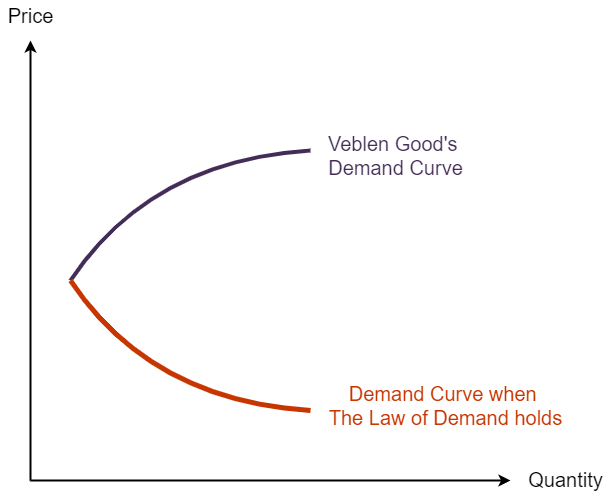
The growth of indexing introduces a rare phenomena in the market. As the price of a stock in the index grows faster than the index it will increase it weight in the index based on market cap. So indexer will buy more if the price go up. So will the momentum investor. The demand will go up if the price raise. In economics the branch that study this is the elasticity of price. https://en.m.wikipedia.org/wiki/Price_elasticity_of_demand And in the theory it’s mentioned as a rare phenomena that for some good demand can go up as price go up. https://en.m.wikipedia.org/wiki/Giffen_good or à Veblen good https://en.m.wikipedia.org/wiki/Veblen_good My last economy course was in 1981 so I need to study this a bit but perhaps we will find some theorical basis to study the growing impact of indexing on the stock market. RIP Charlie Munger. Thanks for the lattice work thinking model.

-
Same thing here. I can imagine him asking Greg, Todd and Ted : what you don’t like about the portfolio? I’il put it in a state that will make you comfortable for the succession
-
Terrefic podcast. And don’t skip it because you know Fairfax. There is lots of interesting things, specialy your view of how the market work now that it is dominated by quants and indexers. And I must confess something : I’m one of those value guy who never bought Fairfax India because I didn’t want to pay the fees . I will have a serious look at it now that I know that they are waived until at least 21.
-
I was already a shareholder of Apple when Steve Jobs died. No doubt that Apple changed under Cook. And it wasn't for the worst. Now Berkshire will change under Abel and it doesn't mean it will be bad. We will see but there is nothing guaranty. At this point I am not confident enough to keep BRK at 20% of my portfolio like it is since 1995. I will probably put it down at 10%. There is a good chance that in the first 2 or 3 years of is tenure Able will be able to pick some low hanging fruits to boost operational earnings.
-
One of the problem might be attracting top talent at the subs. If I was a rising star in insurance where would I prefer to work? The sub in a conglomerate or Progressive? If my goal is to be CEO I would prefer a S&P500 insurance over Berkshire. So as the all star managers retires we perhaps have a succession problem as top talent choose to work elsewhere than a conglomerate where mandatory retirement age is 105.
-
Thank you for that. I particularely appreciate the Brian Bradstreet explaination on how they come to buy the CDS before the financial collapse of 2008
-
Thanks for the numbers Nwoodman. I was calculating that to complete my previous post. It means the buybacks stopped around 1,5x P/B
-
No buyback in june. It means no buyback over 400$ per B share. Combine this with all the equity sells and you get a Buffett very bearish
-
Ok the base argument to do a break up is that Berkshire is too big to beat the S&P500…But which is the biggest capitalisation, BRK or S&P500 ?
-
You should talk about it to Fairfax employees at the AM. Perhaps they can have a reedition. Just tell them that they have at least three takers
-
Thanks for the Munger quote We’re very lucky to have a 92-year-old in such good shape as Warren and we’re very lucky to have a chief executive like Greg. Greg is very remarkable. So for Charlie Greg is already the CEO in the day to day
-
He said that a year where operational earnings are up 20%…Bring me more boring performance like that
-
From 1989 letter to shareholders o Below we list our common stock holdings having a value of over $100 million. A small portion of these investments belongs to subsidiaries of which Berkshire owns less than 100%. 12/31/89 Shares Company Cost Market ------ ------- ---------- ---------- (000s omitted) 3,000,000 Capital Cities/ABC, Inc. ................ $ 517,500 $1,692,375 23,350,000 The Coca-Cola Co. ....................... 1,023,920 1,803,787 2,400,000 Federal Home Loan Mortgage Corp. ........ 71,729 161,100 6,850,000 GEICO Corp. ............................. 45,713 1,044,625 1,727,765 The Washington Post Company ............. 9,731 486,366 None of the top 20 largest cap. And 30 years later Geico is probably the best bet for future gain