VersaillesinNY
-
Posts
343 -
Joined
-
Last visited
Content Type
Profiles
Forums
Events
Everything posted by VersaillesinNY
-
Thanks for the links. Stan Druckenmiller is always interesting. I feel that Kelly Evans could have better prepared the questions. She even thought that Druckenmiller supported the Donald during the Presidential campaign while in fact Stan had publicly supported John Kasich on cnbc.
-

University of Berkshire Hathaway - Daniel Pecaut
VersaillesinNY replied to ValueMaven's topic in Books
John Constable: Thanks for your past contributions to the board, I enjoyed your stories. Board members: This story is from the October 30, 1989 issue of Fortune. "Mr. Preservation of Capital This teddy bear of an investor is living his boyhood dream. As a boy in Glencoe, Illinois, John Constable, 33, took Warren Buffett as his hero. ”It amazed me that by simply thinking and being careful you could make money in stocks,” he says. Constable followed his dream to Harvard, where he took night-school extension courses and worked all-day as a block trader for the university’s endowment fund to pay tuition. He went on to apprentice at some of the most successful value-oriented investment shops, including three years at Ruane Cunniff & Co., managers of the redoubtable Sequoia Fund. Constable went out on his own in August 1988. He has $28 million under management. As befits a value player in a pricey market, Constable is cautious. He owns a few stocks involved in publicly announced deals where he can make, say, 10% in 90 days if the deal goes through. But he prefers to buy ”wonderful companies” like Nestlé for the longer haul. He owns 160,000 shares, bought at an average cost of $24. Why? ”It was one of the world’s superb food companies selling at 9.5 times earnings,” he says. Nestle traded recently at $25 a share. In large part because Constable has kept 30% of the money entrusted to him in T-bills, his limited partners are only 16% richer than a year ago. That’s not quite up to his 20%-a-year target, but he’s prepared to wait patiently for the day when prices come down and he can accumulate an entire portfolio of Nestles. His clients aren’t restless. ”First and foremost, my investors want preservation of their capital,” he says. "http://fortune.com/2012/11/21/are-these-the-new-warren-buffetts/ http://www.cornerofberkshireandfairfax.ca/forum/general-discussion/are-these-the-new-warren-buffetts/10/ -
A Q&A with renowned investor Lou Simpson https://insight.kellogg.northwestern.edu/article/investment-great-lou-simpson-explains-portfolio-strategy
-
"Happy eclipse, folks. It is ill-advised that you stare directly into the sun with your naked eyes during today’s cosmological event — just ask these dudes who tried it the last time around — unless you’d like to risk permanent vision damage. That is … it is ill-advised unless you’re Donald Trump, who apparently doesn’t need special eclipse glasses.[...]" http://nymag.com/selectall/2017/08/trump-stared-into-sun-without-glasses-during-eclipse.html?utm_source=fb&utm_medium=s3&utm_campaign=sharebutton-t

-
Sequoia Fund Investor Day Transcript
VersaillesinNY replied to redskin's topic in General Discussion
2017 Second Quarter Shareholder Letter http://www.sequoiafund.com/Sequoia-Q2-17-letter.pdf May 19th, 2017 - Investor Day Transcript http://www.sequoiafund.com/Reports/Transcript17.pdf -
Congratulations Keith for launching your new fund, it's no surprise to me given your talent.
-
Very good rebuttal on Picketty and socialism
VersaillesinNY replied to yadayada's topic in General Discussion
Yes, Your Parents’ Status Does Influence Your Earning Power https://www.bloomberg.com/news/articles/2017-06-28/yes-your-parents-status-does-influence-your-earning-power -
How a 36-year-old Wall Street prodigy saved Burger King http://www.businessinsider.com/how-wall-street-prodigy-daniel-schwartz-saved-burger-king-2017-6
-
Brexit-- Implications for Markets and Stocks
VersaillesinNY replied to netnet's topic in General Discussion
Standing Up for Europe / Op-Ed by George Soros https://www.project-syndicate.org/commentary/momentum-turning-in-favor-of-europe-by-george-soros-2017-06 -
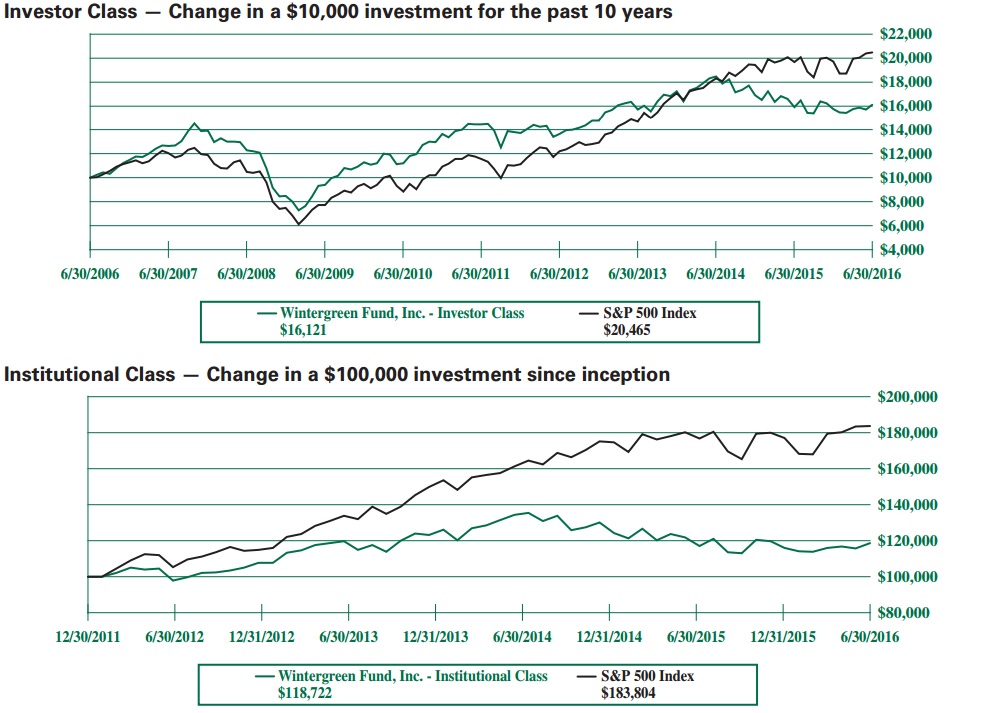
AUM continue to sink by (20%) in just 6 months. The fund underperformed the index in 2016. The portfolio smells Tobacco (36.7% exposure). http://www.wintergreenfund.com/reports/ar/ wintergreen_fund_annual_report_20161231.pdf
-
Sequoia Fund Investor Day Transcript
VersaillesinNY replied to redskin's topic in General Discussion
2016 Annual Report http://www.sequoiafund.com/Reports/Annual/Ann16.pdf Ann16.pdf -
Buffett/Berkshire - general news
VersaillesinNY replied to fareastwarriors's topic in Berkshire Hathaway
Mr Buffet looks a bit chubbier than his previous appearances. May good health stays with him for another decade and beyond! IMO Buffett gained some weight because he is disappointed with the Presidential election result, and that’s an understatement. Some of Warren and Susie Buffett’s gifts to society have gone to areas opposed by Trump’s program: - public schools - supporting independent journalism - access to safe abortion - refugee support service - promoting democracy internationally - LGBTQ rights - migrant worker rights - nuclear disarmament -
Becoming Warren Buffett - HBO Documentary 1/30/2017
VersaillesinNY replied to valuebull's topic in Berkshire Hathaway
Full video: https://www.youtube.com/watch?v=70nGRBvqFNw -
Buffett/Berkshire - general news
VersaillesinNY replied to fareastwarriors's topic in Berkshire Hathaway
Bill Gates and Warren Buffet at Columbia University - 27th Jan 2017 https://www.youtube.com/watch?v=8K9QvPGHug0 -
It looks like an interesting book to read: https://www.gatesnotes.com/Books/The-Myth-of-the-Strong-Leader Most casual observers of history probably don’t have a great deal of familiarity with the story of Adolfo Suárez. But to read Archie Brown’s fascinating book, The Myth of the Strong Leader, is to see an illustration that leaders like Suárez, who served as prime minister of Spain from 1976 to 1981, possess leadership styles and capacities that are incredibly effective, and depressingly rare. After General Francisco Franco’s death in 1975, tensions were high. The country had just emerged from nearly four decades of authoritarianism, and faced a number of possible futures—many of them bloody. Suárez, who had come from the right-wing Franco regime, could have tried to rule through intimidation and exclusion. Instead, he made it a priority to bring the left-wing leaders of the Communist and Socialist parties into the fold. Through negotiation, persuasion, and some very adroit coalition-building, he convinced those around him of the importance of democracy and pluralism, staving off a military coup and eventually creating the constitutional monarchy that exists today. At one point, Suárez convinced the parliament that was appointed under Franco—at that time, the “old elite”—to abolish itself to make way for elected parties. For scholars of leadership, it’s hard to imagine a better illustration of skill than that. The story of Suárez is one of a series of case studies that animate Brown’s book and make it an important and unusual read. Whereas most books about political leadership are chronologies, mapping the rise and fall of leaders over time, this one is more of a taxonomy. Brown takes a deep look at the traits and tendencies leaders exhibit, and the categories they fall into, as a way of understanding the egos, motivations, and behaviors responsible for so much progress, and so much suffering, in the world. Throughout, he presents a new way to think about today’s challenges—and the people we entrust with solving them. Brown’s core argument is exactly what his title suggests: despite a worldwide fixation on strength as a positive quality, strong leaders—those who concentrate power and decision-making in their own hands—are not necessarily good leaders. On the contrary, Brown argues that the leaders who make the biggest difference in office, and change millions of lives for the better, are the ones who collaborate, delegate, and negotiate—the ones who recognize that no one person can or should have all the answers. To make his case, Brown sorts successful leaders into two categories. “Redefining” leaders radically change the political landscape, not by “[seeking] centre ground” but by “[moving] the centre in their direction.” Brown puts Franklin Delano Roosevelt and Lyndon Baines Johnson in this category, because several of their signature achievements—FDR’s New Deal, and LBJ’s War on Poverty and dedication to civil rights—have had a major and lasting impact on American society. We tend to think of these men as strong leaders, and in many ways we’re right. But Brown shows a different side of the story: because of the checks and balances of the American political system, neither FDR nor LBJ had the ability to govern by fiat. Their strength lay in their power to persuade—to convince their colleagues in government, and the American people, to understand and support their point of view. “Transformational” leaders, Brown argues, go a step further, by fundamentally transforming the political or economic system itself. If you’re dismayed at how rare it is for an American president to reshape our political or economic system, as many voters today seem to be, consider that the last transformational American leader, in Brown’s analysis, was Abraham Lincoln. Transformational leaders are the ones, like Suárez, who leave their country a completely different place than they found it. In this category, Brown lists Charles de Gaulle, Mikhail Gorbachev, Deng Xiaoping, and Nelson Mandela. We don’t need to look far to find evidence of the overwhelming tendency to equate strong leadership with good leadership. As Brown puts it, think about the last time you heard someone say, “What we need is a weak leader.” Brown does a wonderful job of showing how the same qualities that seem so appealing in strong leaders can lead, in the mildest cases, to bad decisions—and, in the most extreme cases, to death and suffering on a massive scale. These qualities can be boiled down to a belief, on the part of the leader, that he or she—and usually he—is the only one who knows what the country needs, and the only one who can deliver it. The danger of this kind of thinking is obvious when you consider some of the examples Brown features: Hitler, Stalin, Mussolini, and Mao. Though their stories are notorious, it’s well worth reading Brown’s insightful analysis of each man’s rise and reign. But some of the most fascinating profiles in the book are of leaders on the other end of the spectrum—the ones you probably didn’t dwell on in history class. These leaders didn’t insist on their own infallibility or claim exclusive power over policy decisions. And yet they pulled off incredible feats of leadership simply by working with others and seeking advice when they needed it. Though The Myth of the Strong Leader is about political leadership, you come away from Brown’s analysis with a deeper understanding of leadership in general. Through my work in the business world and at the foundation, I’ve seen firsthand how ineffective and even dangerous it can be when leaders make decisions alone—and how much good we can do when we work together. Good leaders will challenge themselves, bring in fresh thinking and expert advice, and not only invite but seriously consider opposing viewpoints. In our foundation’s work in the global health space, we see issue after issue that can’t be addressed by a single leader, no matter how strong. Take the example of polio eradication. For decades, polio ravaged India—and the conventional thinking was that the country was simply too big, its rural communities too remote, and its poverty too widespread for the virus to be stopped. But in 2012, the government of India, working closely with the global health community, beat the odds. A massive vaccination campaign mobilized 2 million volunteers, community leaders, and frontline health workers who improvised and innovated, refusing to leave a single child behind. UNICEF helped coordinate. WHO helped track the virus and vaccine supplies. My colleagues at the foundation, working with the Rotary International and the CDC, lent additional support and expertise. In the end, the effort took the kind of leadership Suárez and others exhibited so clearly: collaboration, humility, and a willingness to listen. Whether we’re avid political scientists or not, we can learn a lot from Brown’s analysis of leadership.
-
Buffett/Berkshire - general news
VersaillesinNY replied to fareastwarriors's topic in Berkshire Hathaway
Warren Buffett’s Meeting with University of Maryland MBA/MS Students – November 18, 2016 https://blogs.rhsmith.umd.edu/davidkass/ -
CNBC 30 min interview with Bruce Berkowitz - Sept 23, 2016 Key investor Bruce Berkowitz explains why he backs Trump right now... http://www.cnbc.com/2016/09/23/2016-election-investor-bruce-berkowitz-explains-why-he-backs-trump-right-now.html
-
Here goes the 2015 year-end letter, enjoy while it's available: http://www.fullertreacymoney.com/system/data/files/PDFs/2016/February/17th/Baupost%202015%20Year%20End%20Letter.pdf
-
Getting some distraction by reading David Winter's semi-annual. http://www.wintergreenfund.com/reports/sar/ AUM continue to sink by (15%) in just 6 months and the fund is getting toasted on its 10 years anniversary; there is nothing to celebrate for his shareholders. The fund has 34% of its assets invested in tobacco and cigarettes... and tobacco companies kill their best customers. I understand that David Winters doesn't advocate smoking but he might advocate drinking in order to forget about these results. Gudang Garam International InterSport World Cup 2010 Commercial Ads - "It's not about winning or losing" https://youtu.be/QlqHxSkYBPg?t=24s Buffett might be observing the results through the telescope. wintergreen_fund_semi_annual_report_20160630.pdf
-
Garth Turner - Real Estate in Canada
VersaillesinNY replied to Liberty's topic in General Discussion
http://www.bloomberg.com/news/articles/2016-09-01/if-it-s-stability-you-want-then-rent-don-t-buy https://www.ecb.europa.eu/pub/economic-research/resbull/2016/html/rb160831.en.html -
Sequoia Fund Investor Day Transcript
VersaillesinNY replied to redskin's topic in General Discussion
Here you go: http://www.sequoiafund.com/Reports/Transcript16.pdf Transcript16.pdf -
Interesting views from Howard Marks on the Presidential election: Aug. 22 -- Howard Marks, co-founder of Oaktree Capital Group, discusses support of Donald Trump by billionaire investors and Trump's approach to debt and the nation's balance sheet. http://finance.yahoo.com/video/marks-trumps-scary-idea-u-124644859.html
-
Holy moley, that's is a clear statement from Republican national security experts. A Letter From G.O.P. National Security Officials Opposing Donald Trump Dozens of the nation’s most senior Republican national security officials, many of them former top aides or cabinet members for President George W. Bush, have signed a letter saying they will not vote for Mr. Trump, the Republican nominee. http://www.nytimes.com/interactive/2016/08/08/us/politics/national-security-letter-trump.html?_r=0
-
Buffett to Trump: Have You No Sense of Decency, Sir? http://www.bloomberg.com/politics/articles/2016-08-01/clinton-looks-for-buffett-s-help-to-burnish-economic-credentials Buffett on investing in... Hillary (Full 26 min) Donald Trump was a stock market disaster http://www.marketwatch.com/story/donald-trump-was-a-stock-market-disaster-2015-07-22
-
stahleyp: The meeting was exclusively about Sequoia and they didn't cover Acacia's returns & holdings. Munger_Disciple: I apologize but RCG's team specifically requested not to post meeting notes on the blogosphere. Sequoia's transcript should be published in the upcoming weeks.