nafregnum
-
Posts
300 -
Joined
-
Last visited
Content Type
Profiles
Forums
Events
Everything posted by nafregnum
-
I'm really liking this book. All about things that just don't change about human nature, and lots of anecdotes that investors will enjoy (about stocks, markets, economies, etc) Each chapter is about 11 minutes long (he says "You're welcome" for that, and I do appreciate it) I'm just 2/5 through it so far. It starts off with a new anecdote about Warren Buffett, and there are some good Charlie Munger quotes in here too. The opening story about Buffett: And, a quote I really enjoyed, by another investor Jim Grant: Morgan Housel wrote another book here in the forum, "The Psychology of Money", which I haven't read yet. Anybody else reading this one?
-
The Audible Plus catalog has Charlie's biography, "Damn Right!" so anyone can listen to it for free if you've got an Audible account at the Premium Plus level. I think I'm going to re-read my copy of Poor Charlie's too, this time with my almost-grown-up kids. They've been asking me about getting started with investing, and Charlie's generosity at mentoring others is making me feel ashamed that I haven't shared more about the topic, especially with them.
-
Buffett told CNBC’s Becky Quick in 2018. “Charlie has given me the ultimate gift that a person can give to somebody else. He’s made me a better person than I would have otherwise been. ... He’s given me a lot of good advice over time. ... I’ve lived a better life because of Charlie.” I've been trying to come up with some way to say how I feel about Charlie. Warren expressed it right there.
-
Page 56 in Poor Charlie's Almanack: "Faced with the choice between changing one's mind and proving there is no need to do so, almost everyone gets busy on the proof.» -John Kenneth Galbraith Charlie has developed an unusual additional attribute a willingness, even an eagerness, to identify and acknowledge his own mistakes and learn from them. As he once said, "If Berkshire has made a modest progress, a good deal of it is because Warren and I are very good at destroying our own best-loved ideas. Any year that you don't destroy one of your best-loved ideas is probably a wasted year." Charlie likes the analogy of looking at one's ideas and approaches as "tools." "When a better tool (idea or approach) comes along, what could be better than to swap it for your old, less useful tool? Warren and I routinely do this, but most people, as Galbraith says, forever cling to their old, less useful tools."
-
“This has been attributed co-Samuel Johnson. He said, in substance, that if an academic maintains in place an ignorance that can be easily removed with a little work, the conduct of the academic amounts to treachery. 'that was his word, "treachery." You can see why I love this stuff. He saves you have a duty if you're an academic to be as little of a klutz as you can possibly be, and, therefore, you have gotta keep grinding out of your system as much removable ignorance as you can remove.” ― Peter D. Kaufman, Poor Charlie's Almanack: The Wit and Wisdom of Charles T. Munger, Expanded Third Edition
-
https://beatyourgenes.org/2023/08/10/313-dr-lisle-nate-why-are-people-snobby-why-doesnt-my-spouse-want-to-improve-their-health-can-you-sleep-train-an-infant-single-by-choice-but-lonely/ Beat Your Genes podcast is about Evolutionary Psychology. I remember listening to this earlier this month, where Dr. Lisle answered a question about sleep training. Might have to skip past the first question if you're not interested in that one. In a nutshell: You won't screw up a kid by sleep training.
-
[ funny thought ] AI-driven customer service solutions? The first generations of these will likely make for some very funny customer stories. Imagine an AI chat bot giving customers incorrect answers, or arguing with customers like Sydney, and tell someone they are a bad customer and it was a good chat bot. I'm sure they'd have worked all those types of bugs out, but I can imagine some comedy gold will remain to be discovered. [ investing thought ] To my mind, it seems like the smart companies in these sectors could just as easily adapt to the new GTP landscape and pivot to the future where an LLM is baked into all kinds of software/services/apps.
-
Reminds me of the last 3 of the 6 phases of big projects: https://en.wikipedia.org/wiki/Six_phases_of_a_big_project Unbounded enthusiasm, Total disillusionment, Panic, hysteria and overtime, Frantic search for the guilty, Punishment of the innocent, and Reward for the uninvolved. If this excerpt is too long for copyright, feel free to delete it. Last year I read "The War on The West" by Douglas Murray. These paragraphs from a chapter on reparations seemed like clear thinking to me: """ In 1969, the Holocaust survivor and celebrated postwar Nazi hunter Simon Wiesenthal published a work called The Sunflower: On the Possibilities and Limits of Forgiveness. It is an account of something that Wiesenthal says happened to him at the Lemberg concentration camp. In 1943, Wiesenthal was one of a group of forced laborers and one day is plucked from the line and taken to the bedside of a Nazi soldier who is dying. The man, called Karl S in the book, turns out to have joined the Hitler Youth and from there moved up the Nazi ranks all the way to the SS. During this time, he participated in one particular atrocity. He confesses to the Jewish man at his bedside that his unit had at one stage in the war destroyed a house in which there were around three hundred Jews. The SS unit had set the house on fire, and as the Jews inside tried to escape from the burning building, by leaping from the windows, Karl S and his comrades shot and killed them all. This is described in considerable detail, and if this was all The Sunflower was then it would simply be yet one more tale of the countless number of tales of Nazi atrocities carried out against Jews during World War II. But Wiesenthal’s book is not about that. It is about what happens next. Because it is clear that Karl has asked for a Jew to be brought to his bedside because he wants to confess to this crime in particular and to a Jew in particular, because he wants to get this particular atrocity off his chest before his imminent death. It is something in the way of a deathbed confession. And it is what happens next that makes Wiesenthal’s book so memorable. For after the SS soldier has finished his tale, and the reader perhaps expects some type of reconciliation, Wiesenthal gets up and leaves the room without saying a word. Later, Wiesenthal meditates on whether he did the right thing, and the second half of the book is given over to a symposium involving a range of thinkers and religious leaders who contributed their thoughts on the events that Wiesenthal has described. It is noticeable, incidentally, that many of the Christians who contributed to this symposium believed that Wiesenthal should have offered some kind of forgiveness to the soldier. But the broader consensus that emerges from the contributors is that Wiesenthal did the right thing. And if there is a reason that this comes down to, it is this: that Wiesenthal, although he was a Jew, like the soldier’s victims, had neither the right nor the ability to forgive the soldier for what he had done. In order for true forgiveness to occur, the parties involved must be not only the one who has done the wrong but the one to whom the wrong has been done. Wiesenthal may have been a Jew, like the victims, but he does not have the right to forgive on behalf of his fellow Jews who were gunned down by the soldier as they jumped from a burning building. Wiesenthal is not these men, women, and children. He is not even a close relative of these men, women, and children. These victims may never have wanted to forgive their killers. Perhaps they would have hated their killers forever and not wanted them to die in peace. The SS soldier had participated in such a terrible end for them, so what right did Wiesenthal have to say on behalf of all of these people that the SS soldier is forgiven? Why should the SS soldier die with even a part of his conscience cleared? After taking no care about the consciences of so many other human beings. Within this is a very powerful and important point almost totally lost in the debate about forgiveness in the modern world. In recent years, the prime ministers of countries including Australia, Canada, the United States, and Britain have all issued apologies for historic wrongs. Sometimes, as when the direct victims of these wrongs are still alive, this can ameliorate suffering and provide a form of closure for the victims. But when we are talking about apologies for things done centuries ago, we enter a different ethical territory. In such cases, neither the people claiming to be victims nor the people assuming the mantle of perpetrators are any such thing. When it comes to apologies for the slave trade or for colonialism, we are talking about political leaders and others making apologies for things that happened before they themselves were born. And apologizing to people who have not suffered these wrongs themselves, though some may be able to point to some disadvantage they can claim to have suffered as a result of these historic actions. Any apology begins to consist of people who may or may not be descended from people who may have done some historic wrong apologizing to people who may or may not be descended from people who had some wrong done to them. In the realm of reparations, this becomes messier still. For at this stage, the divide in the West is by no means clearly between victims and perpetrators. Whereas the governments in almost every non-Western country are strikingly ethnically homogenous (consider the political leadership in India, China, or South Africa), governments in every Western country are now made up of people of a wide variety of ethnic backgrounds. No Western cabinet would be able to work out the victim-oppressor divide even at the table around which they sit. Nor would any political party. Just consider the difficulty merely of working out what Elizabeth Warren may or may not be owed. The issue of reparations now comes down not to descendants of one group paying money to descendants of another group. Rather, it comes down to people who look like the people to whom a wrong was done in history receiving money from people who look like the people who may have done the wrong. It is hard to imagine anything more likely to rip apart a society than attempting a wealth transfer based on this principle. Perhaps that is why the difficult questions on this are ignored by everybody who has argued for reparations to occur. For instance, were any such scheme to operate in America, the country would have to carefully determine which racial groups in the country have been most harmed by American history. It may determine to limit the scope of its attentions solely to the issue of people who are the descendants of slaves. Though there is no reason why it should limit itself to that. But if it did, then the prelude to reparations would have to be the development of a societal, genetic database. It could be that this would only be necessary to create for the black population of the United States. It would then have to determine how to apportion the funds available. Anyone who thinks voter ID laws or vaccines are intrusive should prepare for the questions that will follow this process. For instance, after the genetic database is created, it will have to be decided whether or not the only recipients should be those who are 100 percent descended from slaves—if any such people can be identified. Should these people alone be given a full stipend? Should someone who is only descended from slaves on their mother’s side receive 50 percent of the same sum? Will the restitution process try to operate the “one-drop rule,” and if so, how will it ensure that nobody is taking advantage of the financial spigots that would result? And, of course, all of this would be predicated on the idea that a vast wealth transfer from one racial group to another racial group in America in the 2020s will bring racial harmony and will not cause any igniting or resurgence of racial ill feeling. Can anyone be sure that this is the most likely result? Only around 14 percent of the US population is black. As of 2019 more than half of that population (59 percent) were millennials or younger (that is, under the age of thirty-eight).9 During their lifetime, it has been illegal to treat people differently because of their skin color. Jim Crow laws were decades in the past before this group was born. The official prohibition on the further importing of slaves into the United States had been signed two centuries before this group was born. To begin to apply reparations to this community would require a clear differentiation between black Americans who are descendants of Africans brought forcibly to the United States and black Americans whose ancestors voluntarily came to the United States in the centuries after slavery was abolished. And what about the people doing the paying? There will be many people who have come to America’s shores since slavery ended—most of America’s Jewish, Asian, and Indian populations, for instance—who may make an objection at this point. Why should those whose ancestors played no part in a wrong be made to forfeit a part of their tax dollars in paying for something that happened generations before their family came to America? Should people whose ancestors died in the Civil War fighting for the North get any special dispensation? Should those whose ancestors fought for the South pay disproportionately more? There are very obvious reasons why people might call for reparations: for political convenience or in genuinely seeking to right a historic wrong. But there is an equally obvious reason why they can almost never be drawn into giving any details of what the process might look like. That is because it is an organizational and ethical nightmare. We also know that no matter how much is done to address the issue it will never be enough. We know this not least because Britain’s attempt to make up for the slave trade is over two centuries in the past and the issue of further reparations being made is still raised. Indeed, the subject is discussed as though critics either do not know or know and do not care how many resources Britain poured into abolishing slavery in the 1800s. The British taxpayer paid a hefty price for the abolition of the slave trade for almost half a century. And it has been proven that British taxpayers spent almost as much suppressing the slave trade for forty-seven years as the country profited from it in the half century before slavery was abolished. Meaning that the costs to the taxpayer of abolition in the nineteenth century were almost certainly greater than the benefits that came in the eighteenth century. The British government of the day spent 40 percent of the entire national budget to buy freedom for the people who had been enslaved. At the time, the only way that the British government could get the consensus needed to abolish the trade was to compensate those companies that had lost income because of the trade. This sum was so large that it was not finally paid off until 2015. And while some campaigners have used this to show how recent the trade in human beings was, it rather better exemplifies the unprecedented lengths the government was willing to go to in order to end this vile trade. Two of the scholars who have done some of the complex math required here have estimated that the cost of abolition to British society was just under 2 percent of national income. And that was the case for sixty years (from 1808 to 1867). Factoring in the principal costs and the secondary costs (for instance, the higher prices for goods that the British had to pay throughout this period), Britain’s suppression of the Atlantic slave trade, it has been claimed, constituted “the most expensive example” of international moral action “recorded in modern history.”10 Several things could be learned from this. But one thing worth noting is that such actions appear in the current era to be almost entirely unknown. What is more, they appear to buy Britain—and the wider West—absolutely no time off in the purgatory of the present. The British may have actually overpaid in compensation for their involvement in the slave trade, but it appears to count as nothing; demands for reparations internationally and domestically still continue. Is there any end to this? Are there even any means to an end to this? The British precedent suggests not. If America were to find a way to pay reparations today, why would the same demands not re-arise two centuries later, as they have done in relation to Britain? If the great reparations machine were to pour out money, why should it be a once-in-a-lifetime opportunity? It is not a problem that is unique to the British or American examples. Whenever a country such as Greece gets into financial trouble, politicians there can always be found who are willing to say that Germany must pay Greece for its occupation of the country during World War II. Indeed, Prime Minister Alexis Tsipras made precisely this demand again in 2015. There are not many ways to see how this would stop. Other than Greece never getting into financial difficulties ever again. The same applies to the payment of reparations for empire or slavery. It will always be the case that there will be African politicians who will claim that the problems of their country are not to do with any mismanagement of their own, but because of colonialism. The late Robert Mugabe was a fine example of this genre. The only way for such demands to stop would be for every former colony to be thriving and well run for the rest of time with governments that are always and everywhere strangers to corruption. Likewise, in the American context, what would it look like for reparations to have been paid off? Even writers, such as Coates, who have argued for reparations have joked about the likely consequences of doling out large sums of money to black Americans. Dave Chapelle did a skit on this, showing black people spending their reparations payments on fancy cars, rims, clothes, and more. It would be a good time to buy shares in Nike. But the serious fact is that it could only be deemed that reparations had worked if black Americans either performed equally to or actually outperformed all other racial groups. And not just in the aftermath of payments but for every year in the foreseeable future. If black Americans underperformed, then it could always be argued that reparations had not so far adequately occurred because inequalities still existed. In order for demands for reparations to go away, any and all wealth disparities would have to disappear not just once but forever. Until then, it is hard to see how the demands for financial compensation will be able to stop. In the meantime, it is impossible not to note how fantastically one-sided, ill-informed, and hostile this debate has become. No world forum ever concentrates seriously on any form of reparations that does not involve the West. And there is an obvious reason why there are no calls for reparations to Africans abducted into the slave trade that went East. Which is that the Arabs deliberately killed off the millions of Africans they bought. But there is little explanation as to why it is that today it is only Western former colonial powers or former slave-owning countries that are expected to pay any sort of compensation for sins of two centuries ago. Modern Turkey is not expected to pay money for the activities of the Ottoman Empire. An empire that, incidentally, ran on for twice as long as the empires of Europe did. After all these years, it is still only the sins of the West that the world—including much of the West—wish to linger over. It is as though when looking at the many, multivariant problems that exist in the world, a single patina of answers has been provided that is meant to explain every problem and provide every answer. """ Excerpt From The War on the West Douglas Murray
-
Moral philosophy transplanted from Disney thread
nafregnum replied to nafregnum's topic in General Discussion
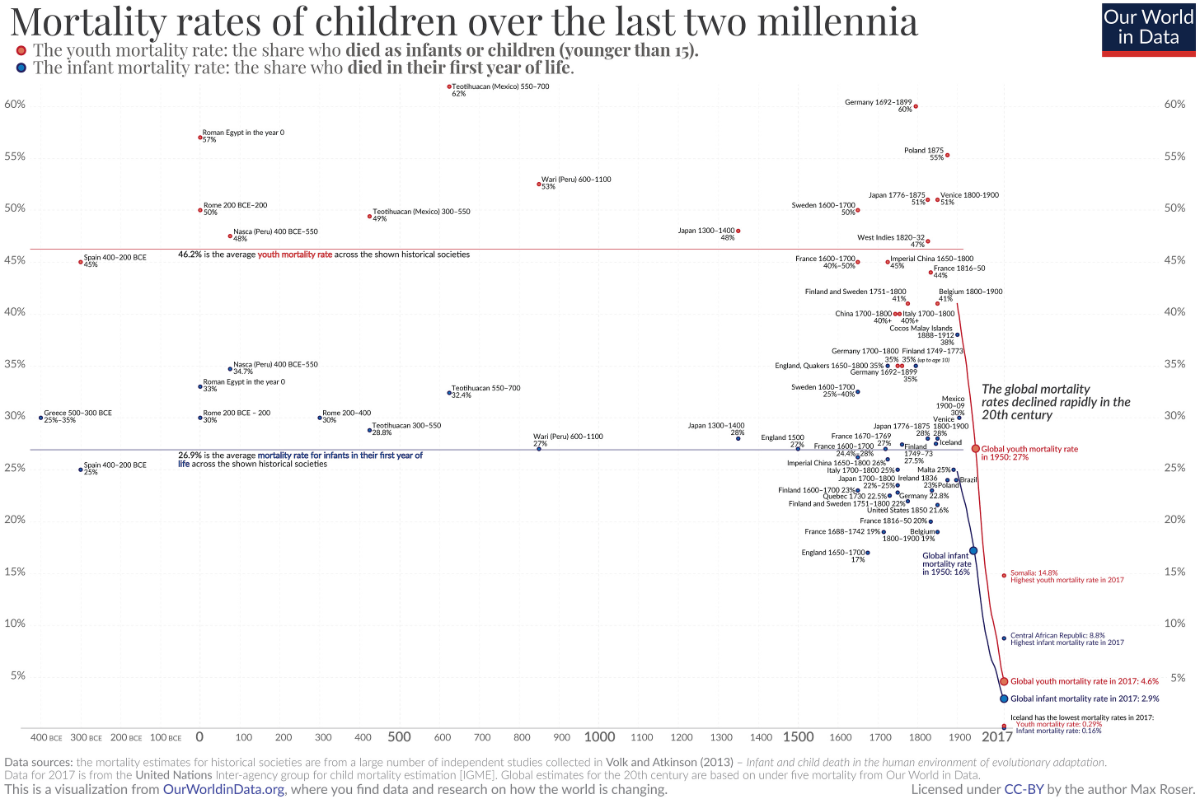
https://plato.stanford.edu/entries/well-being/#DesThe Lots of ways to think about well-being. Who's to say that a higher divorce rate today is a sign that the world is going to hell in a hand basket? Was society better off when wives were basically forced to stay with abusive partners? Is that better for the kids? Each case is unique, but I'd rather see women be able to escape abusive partners. I definitely don't take divorce lightly, and I think it's better for couples to be slightly unhappy and learn how to get along and appreciate one another while they raise kids, because divorce might give those people even less happiness than they had before. But sometimes divorce is completely awesome for the kids. After reading "Lost Connections" by Johann Hari, I think we do overprescribe depression meds as a kind of bandaid for the many problems that tend to lead people into depression. He writes convincingly about "junk values" that we've developed over time ... kind of like Cheetohs for the soul. It's a problem. Modern society isn't perfect. If you think we're really in decline, and that there's a golden age in some other place and time, then let's use our theoretical time machine and some thought experiments. 1. You're a black woman. Name a time in the past that you'd rather live in. 2. You're a young kid with a physical disability. Is there a better time to be alive? 3. You were born into a family with no money. Would it be better to be poor in the 1800s? 1910s? 1970s? Preachers love to paint a world on fire where everything is falling apart. They love to beat that drum in the faith I was taught as a kid. And I ate it all up. The world, what an evil dirty rotten place! They harped on porno like it was going to wreck the very foundations of all human society. Then I read an Economist issue a few years back which pointed out how as porn use rates rocketed upwards from the 1950s through today, rates of sexual violence against women fell. You won't hear that from any pulpits, however. Progress is also in the eye of the beholder I suppose. Here's a couple of pictures of progress that I saw today in Liberty's newsletter. In previous eras (before 1900), when child mortality was high, parents had to cope with the likelihood that their kids would die by disassociating/detaching somewhat from their kids as a psychic protection from all the pain that would flood into their lives if they over-invested all that loving feeling that neuro-typical parents naturally have for their kids. Parents in the old days were more strict/harsh/stern/authoritarian instead of authoritative/assertive/nurturing/caring. It's an important shift.
-
Moral philosophy transplanted from Disney thread
nafregnum replied to nafregnum's topic in General Discussion
Well, at the level of the gene that's the only true purpose. To us as humans it's wonderfully more complex. You could read "The Moral Landscape" by Sam Harris or a synopsis of his arguments for a good-enough definition of flourishing and well-being. There could be multiple mountaintops of high flourishing in the moral landscape. In other words, many cultures might come up with very good sets of morals for increasing well being among their people. But when you show me an ancient culture that killed their children to bury under their homes, or that used voodoo spells to attack their neighbors, I'd argue that they haven't gotten very high on the well being scale yet, and some improvements could be made. -
Moral philosophy transplanted from Disney thread
nafregnum replied to nafregnum's topic in General Discussion
"There is no Justice. There's just me," -- Death (from Terry Pratchet's comedic Discworld#4 book "Mort") Modifying that a bit: "There is no Justice. There's just... us." The fundamental trouble facing your formulation of "god values = real, unbeliever values = zero standing" is that your god didn't actually ever say anything about the use of embryonic stem cells in research, or a thousand other new questions. Humans climbed the mountain of knowledge a lot higher than back when prophets were claiming to speak for god. Now there are moral conundrums which were unknown to anyone 1,000+ years ago. The believers are left in the _same_ position as everyone else, because god either grew tired of us and stopped bestowing awesome wisdom on us or he never was up there in the first place and we were accepting the writings of well meaning storytellers as the words of god. What does god say about X, Y, or Z new issue? All you get are a bunch of interpreters of god who are so bold as to stand up and claim they know the mind of god and we all better listen up and obey. There's something wrong with the model where god tells that other guy over there (bishop/pastor/pope), and then he tells you what god said. Since god isn't unequivocally phoning in these instructions to each of us, how can you claim that atheist values are in a -1 position compared to the +1 position of believer values? -
Moral philosophy transplanted from Disney thread
nafregnum replied to nafregnum's topic in General Discussion
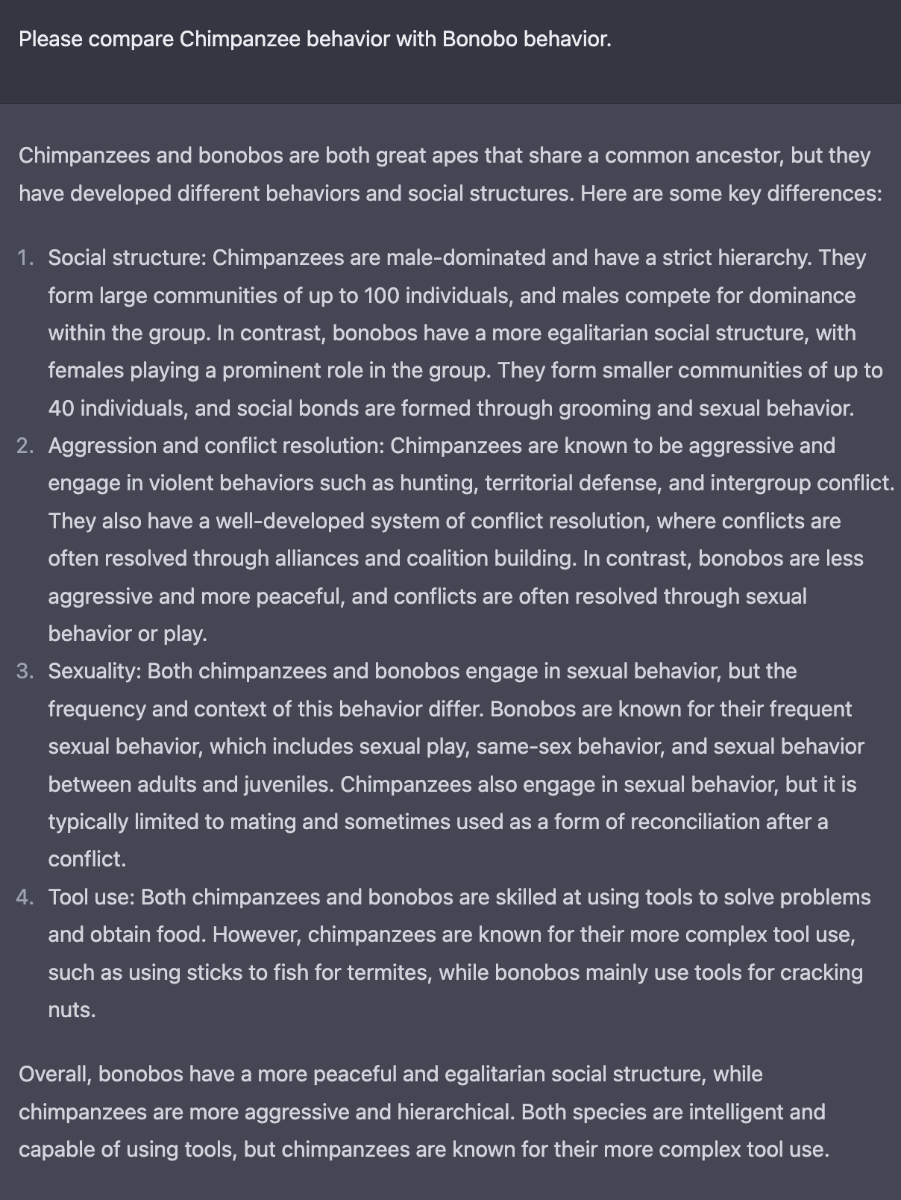
Consider yourself lucky then. You were not an impressionable child who was taught that Job was a real historical figure, as I was. Job was a historical figure in my religious upbringing and not one single adult ever hinted that they saw it otherwise. Why? As best I can tell, it's because they really liked the verse where Job seems to imply that he knows about future Jesus when he says "I know that my redeemer lives" in Job 19:25-27 ... anything in the Old Testament stories that could be cherry picked and pushed into service as a Jesus prophecy had to be real history, all the way back to Adam and Eve who were commanded to offer sacrifices, because the sacrifices were a type and shadow of Christ's future sacrifice which was going to end all sacrifice the the shedding of blood. In my upbringing, it was literal history all the way back to "in the beginning" ... Later in life, in my mid twenties, the literalism slowly began to crumble away. I felt cheated and let down by hundreds of adults in my tradition who I thought should've been able to fight their way out of an intellectual paper bag. Now, many years later, I don't blame them so harshly. They were all just following their biological imperatives to survive and thrive as members of a group: The Asch conformity experiments show that it is very hard to disagree with a room full of people who all "see" that line A is longer than line B ... how much harder would it be for people to disagree with a much larger group consensus (all my family and friends were in the same faith) when dealing with questions about things you can't even see and measure. The "spirit" moves through a congregation. The few dozen people before you cry out "I feel it!" and now it's your turn to testify but you didn't feel anything. A lot of brain chemicals related to group survival are making you feel like fitting in with your people is a life or death choice, because way back on the Savannah it really was life or death whether you fit in with your group. That's why being alone triggers stress hormones. They're telling a person "You're alone. You might be attacked and killed out here." https://en.wikipedia.org/wiki/Asch_conformity_experiments I'd suggest a slight reformulation: Evolution provided the "starter pack" for our moral sentiments, before we had spoken language. After we had spoken language, we gained our superpower, the ability to "transcend" the biological programming by enabling us to make over-the-air software updates (moral innovations) ... culminating many thousands of years later in our current idea of human rights. Evolution provided many species of social animals with drives and instincts which enable them to act in coordinated ways so that they began to "succeed as a group" ... Millions of years ago, before humans with spoken language, there was the subconscious mind: this incredible biochemical computer, fine tuning itself through seemingly infinite small experiments to find the optimal formula for success within each group species in each external context. Chimpanzees evolved in an area that didn't have limitless calories to eat, so the optimal formula for them was to form male war parties to patrol territory and use violence against other groups to expand their territory and acquire new resources (more fig trees) ... In contrast, the Bonobo apes (extremely similar to Chimps) evolved in an environment that had an abundance of calories. ChatGPT can describe their behavioral differences better than I can: I don't give charity to groups that I see as enemies to me or my groups, because it doesn't feel good to do that. The charity I give comes from my super-abundance, so I'm not risking my survival or the survival of my family by giving it. The fundamental unit of evolutionary competition is not the animal or the group, but the gene. Each gene is "competing" to be the most copied in future generations. Zoom out to the level of looking at us as groups and you can see that the animals which defend their own group members have a genetic advantage. Cue the story where one biologist (J.B.S. Haldane) does some calculations on the back of an envelope and announced to his friends that "he was prepared to lay down his life for eight cousins or two brothers." The gene is the only unit of survival that makes it to the next round. The living organisms of today will all die and their survival into the future is represented by the genes that got copied into tomorrow's living organisms. Morality is a part of the many strategies that provide an "edge" in this relentless competition between genes to be copied into the future. I really like something Neal Postman once wrote: "Children are the living messages we send to a time we will not see." Progress from my human point of view is human flourishing and well-being. Progress from the planet's point of view might be a giant asteroid to wipe most of us out. If the Nazis won, I tend to hope that "Sic Semper Tyrannis" would soon have cured (killed) them one way or another. Just like when Chimps have overly domineering alphas, coalitions eventually get formed to do away with rotten bastards.
-
Moral philosophy transplanted from Disney thread
nafregnum replied to nafregnum's topic in General Discussion
You folks are too good. First, @Longnose has ChatGPT take our conversation and rap about morality, then @formthirteen has it sarcastically define philosophy in the best way ever, and then @DooDiligence tops it off with "Blessed are the cheesemakers." -- too, too good, thanks for some good laughs this morning. By the way, from the options given about how God is variously defined, I do like the formulation of "God is everything, the whole universe, all being, including all people dead, living, and yet to be." Thich Nhat Hanh has a quote I like which sort of leads to this idea: -
Moral philosophy transplanted from Disney thread
nafregnum replied to nafregnum's topic in General Discussion
As an aside, I gotta say I appreciate all the thoughtful contributions. According to Wiio's law, it's pretty hard for this kind of communicating to succeed, and by succeed I mean "I understand another's perspective better" and not "I won an internet debate" ... I personally am not aiming to change minds. I want to explore the space and understand+appreciate how other folks see it, and also to describe what the landscape looks like from where I am standing. I'm not out to shame anyone or heap dishonor on anyone's ancestors, etc... https://jkorpela.fi/wiio.html -
Moral philosophy transplanted from Disney thread
nafregnum replied to nafregnum's topic in General Discussion
https://moralfoundations.org/ Jonathan Haidt has some interesting theories and research, covered in brief on that page but in more depth in his book "The Righteous Mind: Why Good People are Divided by Politics and Religion" The gist of it is that evolution baked into us a basic framework of "moral taste buds" -- we can tell when something is fundamentally unfair, or when someone is being disloyal or cheating, etc. Troops of monkeys with an overly vicious alpha will naturally form a coalition to do away with the tyrant. Sic semper tyrannis, since before humans walked the earth. I remember hearing about a study with monkeys where two monkeys are separated but they can see each other, and they each have to do the same task in order to get a reward. The first monkey is given some grapes, a favorite food for them. The second monkey sees this. Then the second monkey is given some cucumber slices instead of grapes for its reward. The second monkey brain must emotionally be screaming "UNFAIR!" because it takes the cucumber slices and throws them in the face of the lab tech. Being able to detect when things seem fair will tend to lead toward survival of the group, so genes which help us detect fair treatment have been kindly baked in through evolution, or they're god-given by his/her magnificent evolutionary process. We've got a lot of pro-social genetic behaviors baked in like that. We experience a thing called "Elevation Emotion" when we witness acts of moral beauty. Just witness this pizza delivery guy who saved a bunch of kids from a burning house and try not to feel elevation emotion. That feeling is baked in to most of us (minus perhaps the psychopaths) But that's just the beginning. Biological evolution gets you to cave man level where life is pretty much like the Hobbes quote "solitary, poor, nasty, brutish, and short." Then comes the cultural dynamics. By the power of language we have shared stories and myths. Using these shared stories, we humans have been improving on our genetic hardware by installing new moral ideas as software "Necktop Apps" (Daniel Dennett's fun term) ... we build agreed sets of guidelines and hard rules for the really important stuff ... but it has morphed over time. We have evidence that very ancient people used to kill children and bury them under the foundation stones of new dwellings. Perhaps their gods told them that it helped ward off evil spirits. Warding of evil spirits was an important concern through the ages. People in England during Shakespeare's time would put three big scratch marks on their fireplace mantles to repel witches who might otherwise descend into the house through the chimney. Even up through the middle 1800s in American folk religious belief, people used "Lamen parchments" with religious power words on them like "Tetragrammaton" and seven pointed stars and funky line drawings, and amulets on necklaces and coin shaped talismans. Why did they stop sacrificing kids? In the Abrahamic tradition it's arguable that they stopped because of the story of Abraham and Isaac and the ancient interpretation which is essentially: "This story proves it's okay to stop killing kids, and kill rams and sheep instead." To our modern minds it is so far out of context that it just looks like Abraham had a psychotic break and turned murderous on his kid. Just because something is "made up" as you say, it doesn't mean it has no power. Money is "made up" and yet Osama Bin Laden, a great hater of all things USA, had suitcases full of dollars. Why? Because if everyone else in the world agrees that you can trade suitcases full of green paper for real physical goods, then it's real. The superpower of humans is our ability to have millions or billions of people share the same ideas and act according to them. Take the story of Job in the Old Testament. I don't think that guy really existed and I don't think god and satan placed bets on how far he could be pushed, etc. But whether or not Job was a real person is like the least interesting question you could ask about the text. The interesting questions are along the lines of, "What were the authors grappling with and how did this story serve their community? What can we learn from the story?" Can anyone name one single way in which the story of Job is _more_ powerful if there is a real human versus an allegory. Our lives are uncertain and temporary. Against this backdrop, the human mind craves certainties. I admit I grew up believing Job was a totally real person, but I find the story so much more interesting when I'm not painted into that corner of believing an all powerful being did a good guy so dirty just because of a bet. There are plenty of hints that Job wasn't real, by the way, which is why I changed my mind. (There are multiple different endings to the story right there in the text of the old testament, for example -- and this is a pretty good indication that some editing was taking place.) One more way to look at it: Aesops Fable of the Tortoise and Hare. Does the power of that fable derive from the fact that a real tortoise one day had a race with a hare and won because he kept at it slow and steady? Nope. But when you're having a hard slog of it one day, you might remember the old story and feel a bit of inspiration to just keep plugging away at your task and eventually complete it. The inspiration came from the story, not from a literal physical race. At least when the atheists think there's a right thing to do they can be expected to give you their rationale. Because they aren't leaning their moral authority against the idea of a god, they basically _have to_ back up their arguments and try to be convincing. On the other hand, I have often experienced an exasperating form of know-it-all-ism where religionists think they get to declare "This is what is right, both for me and for you. Because god." And then they walk off like they think they just dropped the mic. I don't think any human deserves that much unquestioned loyalty. That kind of environment would be an incubator for religious tyrants. When you boil it all down, why would you say our sense of morality needs to be founded on a god, I mean the kind that exists even when nobody believes in him/her? Why does that provide anything better than what we've got which is a set of moral rules that have evolved with our civilizations? If there really does exist an unambiguous Absolute Morality with a real god backing it up, then which god is it and what are the North Star rules? And more to the point, why would those rules be _more_ valid if the god is real? -
Moral philosophy transplanted from Disney thread
nafregnum replied to nafregnum's topic in General Discussion
Thanks for your thoughtful reply! There's a lot to agree with here. To be fair to ChatGPT, I think it only "missed" England because my question was only about the practice of slavery in the new world. Here's what it says about the case of England and Christianity: I think it's a wonderful thing that people of faith were there to push for abolition. Because of the structure of 1800s English society, I doubt very much that unbelieving humanists would've had even a shred of a chance of pulling the levers of power to accomplish such a goal. The world needs people of good will in every variety to stand together in advancing every great cause. The place where I feel the evidence is a little too thin has to do with any claims that a god exists who ever unambiguously communicated anything to humans that didn't sound likely to have come from humans themselves. I became personally convinced by books like "The Evolution of God" and "God: A Human History" that the human idea of god has gone through a good deal of shifting and changing. Each culture seems to have created gods in their own image. Cave dwelling people appear to have a "god of the hunt" ... Greeks had small gods over all kinds of little things, one for each town, etc. But when they became a state with top leadership then the gods developed top leadership too, up on Olympus. The organization of the gods appeared to reflect the same power dynamics of each civilization. Particularly troubling to me is the way the god of the Old Testament and the Koran appear to have a surprising amount of similarity with the evolved mating and dominance strategies observed in male primates. Dominant males receive submission displays from others like avoiding eye contact or making oneself small before them -- these look like humility displays: bow the head to god or the preacher who is god's representative. Dominant males make themselves look really big -- kings and popes wear big crowns and hats. In Revelation 4:10 a bunch of elders lay their crowns down at the lord's feet. A submission display. God repeatedly tells the people to go make war on other cities and kill all the males and old ladies but take the girls and women with them. That's text book primate male mating strategy. For a fully detailed look at these similarities, I recommend the book "Alpha God: The Psychology of Religious Violence and Oppression." Lately I've been enjoying the notion that our notion of god in each historical time and place appears to be a ChatGPT distillation of the morals and ethical standards of the people who that god ruled over. Like a crowd-sourced idea of the ultimate leader. A pretty fair point. Servitude and slavery are human practices that varied greatly through place and time. There remain difficulties, like why an omnipotent all knowing being would ever give parenting tips like this: Deuteronomy 21: 18 “If a man has a stubborn and rebellious son who will not obey the voice of his father or the voice of his mother, and who, when they have chastened him, will not heed them, 19 then his father and his mother shall take hold of him and bring him out to the elders of his city, to the gate of his city. 20 And they shall say to the elders of his city, ‘This son of ours is stubborn and rebellious; he will not obey our voice; he is a glutton and a drunkard.’ 21 Then all the men of his city shall stone him to death with stones; so you shall put away the evil from among you, and all Israel shall hear and fear. I'm inclined to think that if this was the wisdom on tap for how to treat your own sons then life would have been less forgiving for those ebeds. That's fair enough. A population that doesn't read the bible can't do better than follow the humans dressed up in the bishops robes and trust that all is according to god's grand design. Humans believing in god typically just believe that god is on their side and hates the people they hate. My favorite Dawkins quote: "How thoughtful of God to arrange matters so that, wherever you happen to be born, the local religion always turns out to be the true one." I'm not sure we disagree on the human rights thing. @stahleyp had just been making extremely compressed claims like "If no god, anything goes, so egregious evils like slavery are good. And human rights don't exist at all if there's no god." My view is that human rights are not innate because god says so, and my main support for that view is just that god never used any of his prophets to make such a declaration, and that if one side is allowed to construe a few verses as humanistic and supportive of human rights, then it ought to keep its eyes open to all the verses where that same god seems to argue against human rights. We had a concept of justice and fairness before the written code of Hammurabi. In there it is claimed that the king gets his authority to rule from the gods. I don't know if the rules are claimed to come from god or if the authoritative claim rests on Hammurabi, but either way it doesn't read like a very inspired document to our modern sensibilities, however much it may have represented moral progress in their times. If you beat my son or one of my wives and they died, then I'd have the right to beat one of your sons or wives to death. I remember laughing when I first heard the rules read aloud, they're so comical to our modern sensibilities. My argument is: God didn't grow up and start acting moral. We did. We humans made progress. Often times we were aided by the ability to find some scriptural support for moral advancement, but just as frequently these advances were violently opposed and persecuted by religious dogmatists who were deluded that an unchanging god had wanted their preferred status quo to last forever. My purpose isn't to convince anyone out of their good beliefs. I think thoughtful people can examine all the data and still come to different conclusions. Ultimately, every set of words is a poor summarization of reality, but I did make an attempt to be fair to both sides and I provided a lot more to engage with than stahleyp's question which was "So human rights do not actually exist beyond what other humans say, right? Slavery is actually okay (or anything else) as long as a society allows it?" To restate my own view in a nutshell: "I think human rights are a very good idea that we humans have developed over time, and yes, sometimes we've been supported by what the ancients wrote down as god's words, but if nobody believed in a certain human right then it wouldn't exist as a natural fact. There are a lot of gods which humans stopped believing in over time. They really did exist while they were believed in, insofar as they influenced human behaviors, but to the extent that they stop influencing any human behavior they turn from "living gods" to stone statues and history. By this definition the God of Christianity definitely still exists, as does Allah. In the here and now on earth, there isn't really much difference between a really-real-existing kind of god and a culturally-agreed-upon-mental-formation kind of god, because both kinds actually do inspire people to action." I do enjoy the back and forth effort to find words that fairly state each person's view. It's more fulfilling than scoring fake internet points by trying to dunk on people for flaws we may think we see in their incompletely stated views. Hoping that nothing I've written is taken as an attempt to belittle or offend. -
Moral philosophy transplanted from Disney thread
nafregnum replied to nafregnum's topic in General Discussion
Adding this other idea from the thread, because I agree with the kernel of concern which I would restate as "Our by-the-people form of government only works if we maintain a culture of honesty." It's the same inside company cultures: if corrupt employees are not fired, the dishonesty spreads. @Dave86ch has a really cool pair of essays over on his blog about the ability of ChatGPT to take in a group of writings and "interview it" by asking questions of it within that specific set of writings ... he took a 12,000 page compilation of speeches and writings from Lee Kuan Yew, the father of modern Singapore who helped the country go from a per capita income of around $400 in 1960 to over $70,000 in 2021. It's almost eery to be able to "make friends with the eminent dead" in this way. https://dscompounding.com/2023/02/27/ai-and-community-consciousness-chapter-two/ Question: What are the qualities of a good citizen? Answer: A good citizen is someone who is productive, strives for excellence, and is motivated to make a positive impact on their community. They should be willing to work hard to improve their own life and the lives of those around them. They should also be respectful of the law and customs of their community, and be willing to help others in need. Finally, they should be committed to making the world a better place for everyone. Charlie Munger has a story about how corruption can take hold within the culture of a company. We can imagine this writ large in a society too: https://jameslau88.com/2020/05/12/charlie-munger-on-worldly-wisdom-revisited-december-29-1997/ -
@stahleyp was having fun over in the Disney thread, about whether you need to have a god in order to have a grounds for moral certainty between what is right and what is wrong. I was having fun reading the back and forth the last few days, and hope I don't spoil that party by trying to start a different thread. I think human rights only exist to the extent that we believe they do, much like the gods in the Discworld novels. Kind of like money: it is only valuable if we all mostly agree that it has value. If nobody believed in human rights, would a god step in and enforce human rights? I'm not trying to disrespect whichever god(s) forum members believe in -- philosophically I tend to agree with William James about both gods and human rights when he said: "If there be any life that it is really better that we should lead, and if there be any idea which, if believed in would help us to lead that life, then it would be really better for us to believe in that idea, unless, indeed, belief in it incidentally clashed with other greater vital beliefs." I think most people today would not say slavery is okay, whether they believe in gods or not. Speaking of god and slavery: I was under the impression that in the past, when almost everyone believed in a god, the situation was worse. Each group tended to believed that god approved of their slave holding practices. Unfortunately, very few of the gods of the past ever came out against slavery. Greeks, Romans, Christians, Muslims, Mongols, Vikings, and quite a few more societies had gods who were either approving or silent about slavery. Human rights exist as a thing because humans got together and decided to say so, not because they exist as a fact of nature. If a god unequivocally said so, I'd like to see the chapter and verse. I'm not aware of any universal declaration of human rights that came down from the gods, unless we are allowed to claim that anything we like was inspired by our god. I googled "history of human rights" and found these few paragraphs: http://hrlibrary.umn.edu/edumat/hreduseries/hereandnow/Part-1/short-history.htm To bring ChatGPT into it: Me: Please summarize the development of the idea of human rights. ChatGPT: The idea of human rights has developed over time through various cultural, religious, and philosophical traditions. Ancient Greek and Roman philosophy established the idea that all individuals possess inherent worth and dignity. In the Abrahamic religions, individuals are created in the image of God, and therefore have inherent value and rights. The Enlightenment era emphasized the importance of individual freedom, and philosophers such as John Locke and Jean-Jacques Rousseau argued that individuals have natural rights that must be protected by the state. The American and French Revolutions further emphasized the importance of individual rights and freedoms. In the 20th century, the concept of human rights was enshrined in international law with the adoption of the Universal Declaration of Human Rights by the United Nations in 1948. This declaration recognized that all human beings are entitled to certain rights and freedoms, regardless of their race, religion, or other characteristics. Since then, human rights have continued to be developed and expanded upon through international treaties and conventions, and through the work of human rights advocates and organizations. Today, the concept of human rights is a fundamental part of the global discourse on justice and equality. ... and on Christianity and slavery ... Me: Please summarize the contribution of Christian religious thought to the practice of chattel slavery in the new world from 1493 until 1865 ChatGPT: Christian religious thought played a complex and contradictory role in the practice of chattel slavery in the New World from 1493 until 1865. On one hand, many Christians opposed slavery and worked to abolish it, citing the belief in the inherent dignity and worth of all human beings. On the other hand, Christian religious thought was used to justify and reinforce the institution of slavery in various ways. In the early years of European colonization, many Christian leaders believed that slavery could be justified as a means of converting non-Christian people to Christianity. However, as the institution of slavery became more entrenched and profitable, Christian justifications for it became increasingly strained. Some Christian leaders continued to defend slavery on biblical grounds, citing passages that appeared to support it, while others opposed it on moral and ethical grounds. Despite the mixed opinions among Christian leaders, slavery became deeply intertwined with Christian religious practice in the New World. Many slave owners used Christianity to justify their ownership of human beings, while slaves themselves often used Christian beliefs and practices to resist their enslavement and assert their humanity. Overall, while some Christians opposed slavery and worked to abolish it, Christian religious thought was also used to justify and reinforce the institution of chattel slavery in the New World, with lasting impacts on both the religious and social landscape of the Americas. ... one more ... Me: Are there any religions which were always opposed to slavery? ChatGPT: There are several religions that have historically been opposed to slavery. Here are a few examples: Jainism: Jainism is an ancient Indian religion that emphasizes non-violence and respect for all forms of life. The religion has always been opposed to slavery and other forms of exploitation. Buddhism: Buddhism also originated in India and has always emphasized the importance of treating all beings with kindness and compassion. The Buddha himself spoke out against the practice of slavery. Quakers: The Society of Friends, also known as Quakers, emerged in England in the 17th century and were among the first religious groups to formally oppose slavery. Quakers played an important role in the abolitionist movement in the United States and other parts of the world. Baha'i Faith: The Baha'i Faith is a relatively modern religion that emerged in Iran in the 19th century. The religion emphasizes the unity of all humanity and the importance of treating all people with dignity and respect. Baha'is have always been opposed to slavery and other forms of oppression. It's important to note that while these religions have been opposed to slavery, their followers have not always lived up to these ideals. Slavery and other forms of exploitation have persisted in many societies, even those where religions that oppose these practices have been present.
-
It seems both sides are running low on ammo... https://www.economist.com/china/2023/03/02/chinese-arms-could-revive-russias-failing-war "For decades Russia pumped arms to China. On average it sent $2bn-worth every year between 2001 and 2010, with a bonanza $7bn deal in 2015. Now the tables have turned. Russia has lost over 9,400 pieces of equipment, including more than 1,500 tanks, during its botched invasion of Ukraine. It is desperately short of ammunition. America says it has intelligence suggesting that China is considering whether to supply Russia with weapons. That could change the course of the war. It would also trigger a deeper crisis in China’s relationship with America and Europe."
-
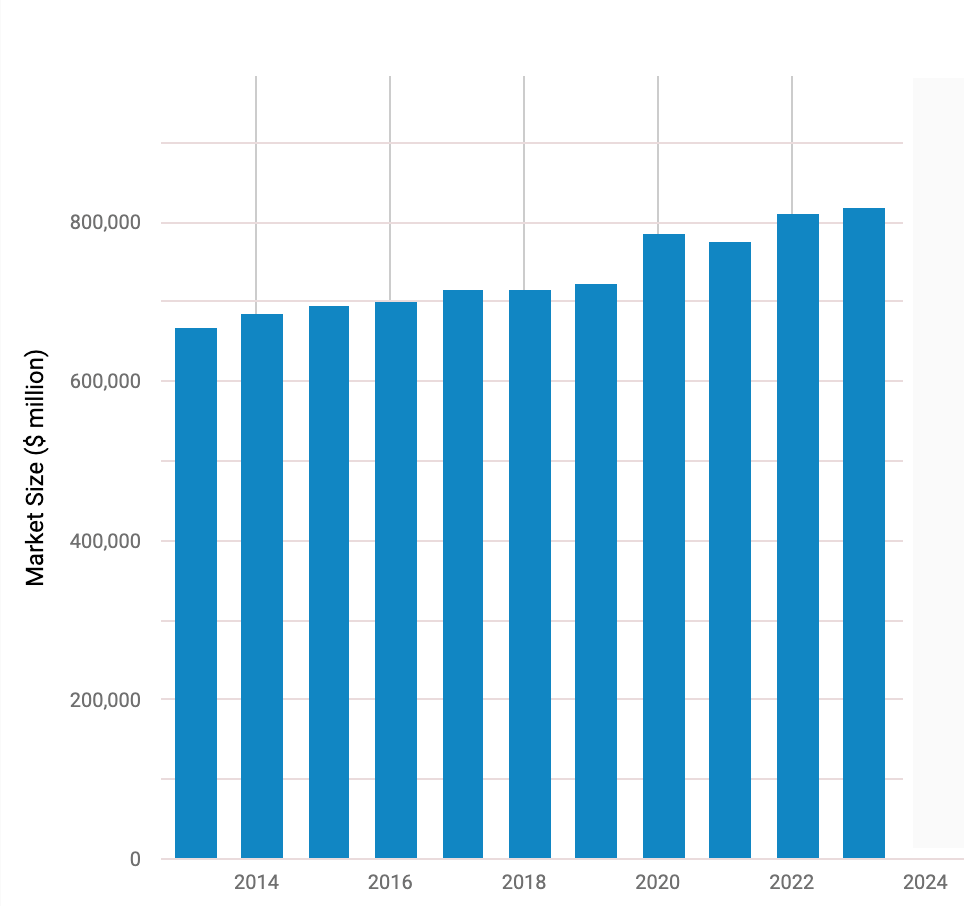
Forgive me please, reasonable people of all political leanings. My intent in mentioning SNAP had nothing to do with starting quarrels. Without wishing to offend any of you, I think the intelligent statement SD made is good enough that I'd be super grateful to shift the focus to questions related to investing: Q1. Is the impact really 2.5 billion per month or was my napkin math wrong? I found this FRED graph that makes it look like SNAP during COVID was giving out a lot more. The 2019 number was $54.7B and the 2021 number was $150.4B. We probably won't see the 2022 number until October (implied from the Updated field on the graph) If the SNAP number for 2023 drops down around $60B/year then that'd be a $90B drop from 2021 levels, meaning possibly as much as $7.5B/month, though that seems hard to believe for some reason. https://fred.stlouisfed.org/series/TRP6001A027NBEA Q2. Will the disappearance of $2-7B/month of grocery money have a real effect in the US economy? Will its effect extend to other industries or will grocery stores be the main losers? Are restaurants going to take a gut punch as millions of people tighten their belts and eat only at home? https://www.ibisworld.com/industry-statistics/market-size/supermarkets-grocery-stores-united-states/ It appears the grocery industry has around $800B in revenue per year. Losing $25B to $75B in the 10 remaining months of 2023 compared to 2022 is a loss of around 3 to 9% of revenue. Will that have an disinflationary influence on food prices? I'm inclined to think so. But it'll hurt grocery store profits, right? I went to check the price of Kroger puts, just out of curiosity. So here's the July expiration puts, to satisfy anyone else's curiosity since I just looked it up. They report Q4 on March 6, and I am guessing they'll talk about the end of the COVID SNAP benefits as they forecast leaner times ahead. This graph from the ibisworld.com link seems to think 2023 will see 0.9% growth in the size of the grocery industry as a whole, but that bump in 2020, 2021 and 2022 looks to me like that was probably the COVID emergency allotments, and perhaps 2023 will see real declines in grocery spending. Q3. The biggest question for me as an investor is whether all this is priced in already. I never really look at grocery store stocks, and I don't know how quick the market is at pricing in this kind of thing. Kroger has a P/E of 13 and a dividend yield of 2.3% so it doesn't seem expensive. Maybe there are some overpriced "darlings" of the grocery industry I don't know about that have further to fall because of the upcoming reductions in grocery spending. The Rube Goldberg machine of macro economics is a riddle wrapped in a mystery inside an enigma, but it's still fun to make _some_ guesses. Q4. What other interesting side effects do you foresee?
-
It looks like starting in March, lower income US consumers will have around $2.5B less per month to spend: 12% of the US population depends on SNAP (food buying assistance for low income households), and as of beginning of March, the COVID emergency allotment payments will end for the 35 states which were still paying them. Losses will vary across households but an average 3 person household will see a $197 decrease in SNAP assistance. By my napkin math, the total impact size seems like around $2.5B per month. Not sure how that compares to the size of all the layoffs in big tech, but it feels like it must be quite a lot more than those? Is it big enough to be a disinflationary factor? I wish I knew. Is that big enough that we might be able to detect an increase in crime rates? For avoidance of doubt about my intent: I wholeheartedly support the SNAP program. I grew up just a poor boy from a poor family, and food stamps made it possible to eat and survive on what little income my mom could make. My heart goes out to all these people who will surely be feeling much more financial pain than I would over the loss of $200/month.
-
While I was trying to find a quote, I ran across some good comments from Allan Mecham -- he says he just has a basket of favorite companies which he thinks are run well, and he ends up just trading in and out of those because he already understands them from reading their reports and watching them for multiple years -- just sits still and waits for one of them to hit a speed bump one quarter and buys if the market overreacts and offers a good price. https://acquirersmultiple.com/2017/01/allan-mecham-look-for-cockroachlike-businesses/ It seems similar to the idea you're working on, but it might give a person a little more conviction to hold through any temporary pain. Buying at max pessimism is the goal, but so hard in practice, because by definition it's not "maximum" until even you are feeling pessimistic too. I could feel the pessimism hitting Target in 2016 or '17 when Amazon bought Whole Foods and TGT got whacked just because everyone thought Amazon was gonna kill all retail. It was a good entry point for a long-term holding, but might not have been the "best" business I could've bought at the same time. The CNN site has a "Greed and Fear" index meter. I wish I had the same meter for each individual stock. Anybody know of a site that does that?
-
As opposed to "What's the Fed gonna do next?", I think this kind of "macro" has to be at least as actionable as weather reports following the path of a hurricane. Sure, a hurricane can change direction and make landfall somewhere else, but that doesn't mean weather reports are useless noise. So, as mortgage rates in Australia and Canada begin to climb, what will happen? - Mortgages become more expensive. Real estate prices see downward pressure. Some areas suffer more than others, depending on demand as people move to where they can afford to live. - If rents go higher, do people move further from big cities out into the suburbs? - In general, people have less money to spend? - Maybe foreclosures go up? In the aggregate, what behaviors change when people are feeling the pinch? - Less eating out at restaurants? - Cut back on travel plans? - Start shopping at DollarTree and Walmart type stores? - More people do their own car maintenance? Some of you could add some good insights to add to these bullet points based on your wide reading and long experience. I remember reading that Allan Mecham (who used to run a fund called Arlington Value) wrote that AutoZone would benefit during downturns because as people have less money to spend, those who know how will start doing their own oil changes. I always thought that was an interesting detail to notice, and I often find myself trying to think of new insight like that. If a mortgage debt hurricane is threatening Vancouver and Australia, how would you prepare for the financial storm?
-
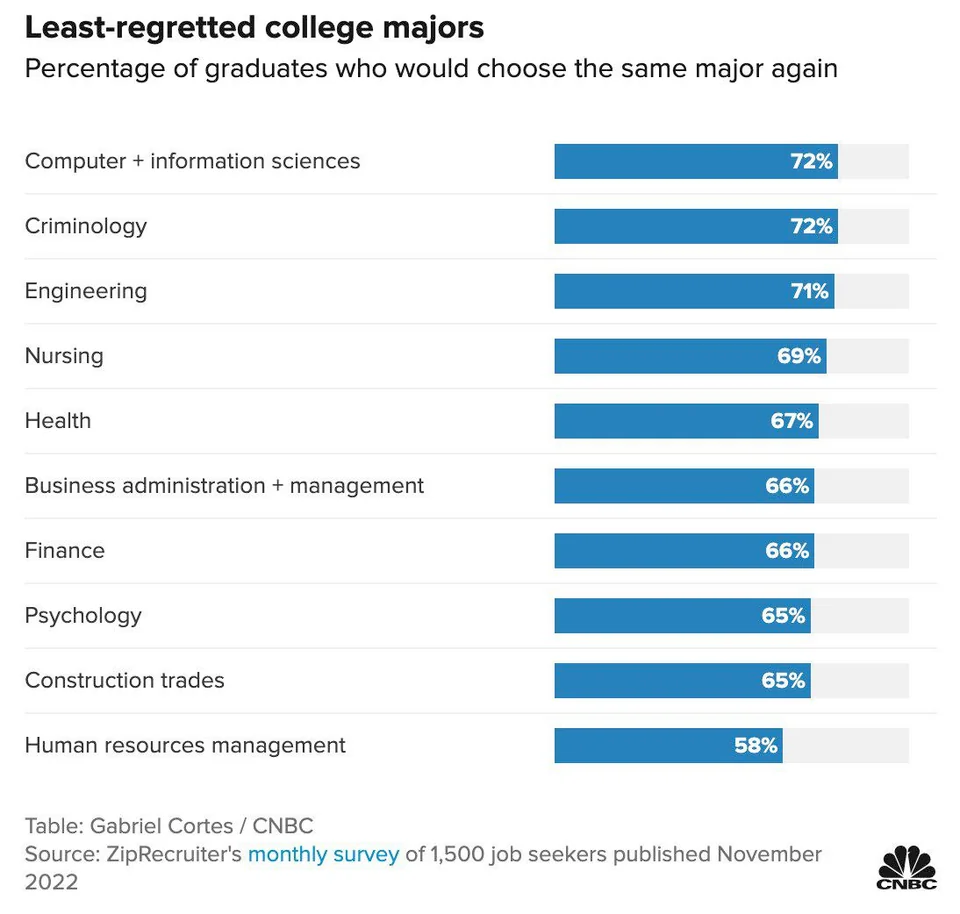
You might like this -- the "least regretted" chart from this post:
-
I thought this was an interesting neutral opinion and commentary, similar to a lot of what's been said here as well: https://adventuresincapitalism.com/2023/02/01/i-just-dont-know/